
Last hurricane left me staring at my fridge like it might just… vanish.
Yeah, my fridge wasn’t keeping medicine cold, and that’s not *okay*.
I learned fast: picking a backup generator isn’t just about power, it’s about keeping things alive.
But honestly, I messed up the wattage math first time—thought I had enough, but nope.
So, before the next storm hits, you *need* to know just how much power you really need.
Trust me, it’s worth figuring out.
Hurricane Power Outages? Keep Food & Medicine Safe
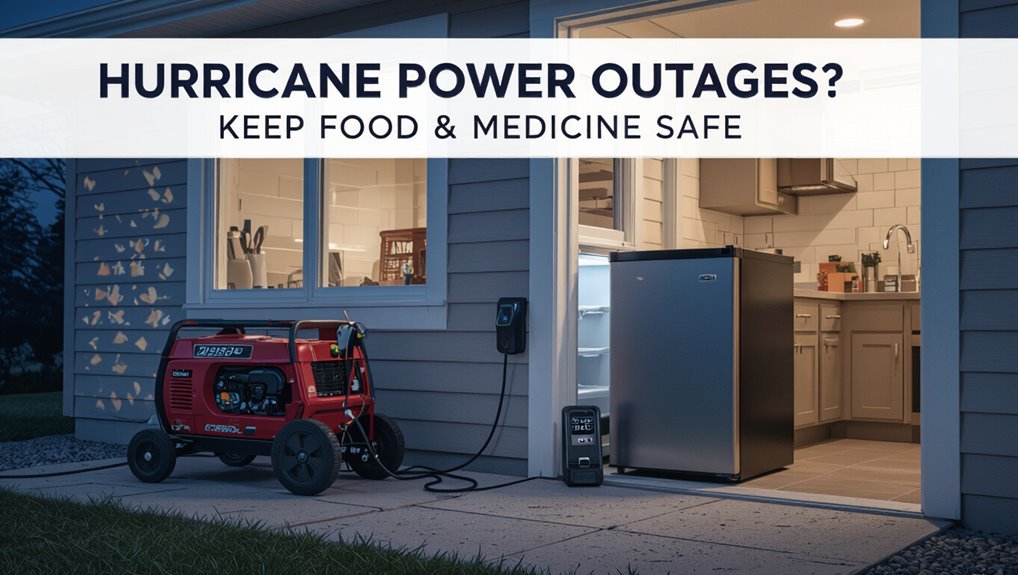
When a hurricane knocks out power, my first worry isn’t the dark—it’s the refrigerator humming quietly behind me. Losing power means risking spoiled food *and* medicine spoilage, like insulin. That’s why I rely on Cooling Control with a FIRMAN generator, keeping my fridge running for 48 hours to protect everything from chicken to essential pills. I test it monthly—thirty minutes every two weeks—because you can’t rely on it during a storm. Running it for twelve hours ensures Pharmaceutical Storage stays secure. It’s not just about food; it’s peace of mind knowing vital medications remain effective. I choose simplicity: guaranteeing power stays reliable, not fancy gadgets. Regular exercise and following a maintenance schedule help ensure reliability when storms strike.
How Many Watts Do You *Actually* Need?
Honestly, I panicked once during a storm when my generator hiccupped because I’d underestimated the power needed for my fridge and AC—*you know*, that moment when the freezer alarm blares and you realize you *don’t* have enough watts. Ugh, it’s not just about running wattage; you must factor in surge capacity too. That window AC requires 1,500 watts *continuously*, but spikes significantly higher at startup. My fridge needs 600–1,000 watts steadily. I learned the hard way: skip guesswork. Perform precise watt calculations for all essentials—lights, fridge, fan—and add 20% buffer for surges. A generator rated only at 3,000 watts may fail during hot weather with AC running full blast. I’d rather overestimate (no one wants thawing food *and* blackout anxiety) than risk it. Smart prep means knowing your exact wattage needs, not hoping.
Plan for Regular maintenance to prevent outages during peak use.
Portable or Standby? Which Hurts Less in a Storm?
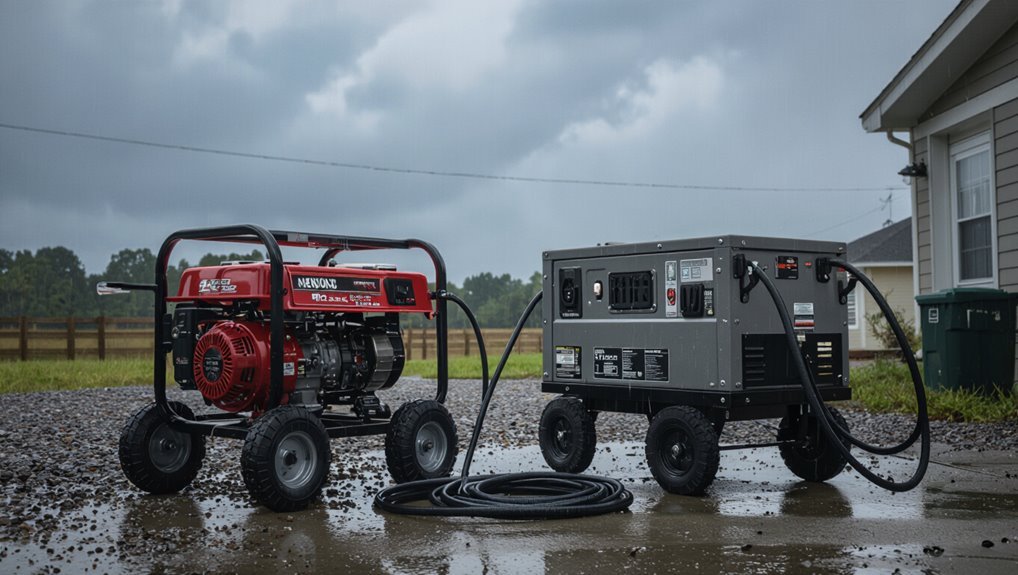
Sure, the upfront Cost Comparison stings ($3k-$10k vs. $800), but honestly? That $5k feels like a *bargain* when you’re not frantically trying to start a generator *in a thunderstorm* with wet hands. It just… works. And that peace? Priceless. I’d choose the quiet reliability over anything else any day. (That $5k premium is the savings I *will* keep—no storm-related headaches.)
Gasoline vs Propane: Which Powers Hurricanes?
My old gasoline generator coughed to life right after the storm hit last year—until the rain soaked the tank and it died again, leaving me fumbling in the dark. *Ugh*, that’s why I’ve been staring hard at propane tanks ever since. Honestly, that fuel comparison blew my mind. Gasoline starts fast but degrades fast—*and* you’re constantly refueling during a long outage. Propane? It just sits there, stable, ready to go. I actually checked the runtime numbers: propane lasts way longer on one tank, no worries about old gas turning sour after months. Plus, it’s cleaner burning—way better for the environment than gasoline fumes. Yeah, propane generators cost more upfront, but I think the long-term reliability and zero fuel degradation make it a smarter generator selection. Honestly, after that storm, I wouldn’t even consider gasoline again. It’s just *more* reliable for when the power stays down.
Backup Generator Maintenance: 5 Checks to Avoid Breakdowns
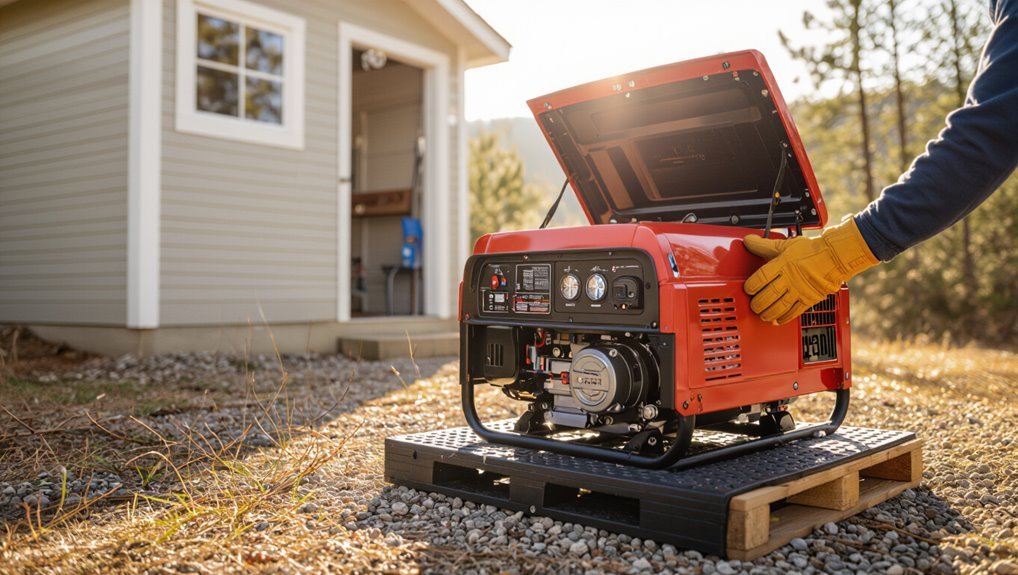
- Check oil level weekly using SAE 30 oil (not 10W-30).
- Drain carburetor bowl after *every* use—no exceptions.
- Run it 30 minutes biweekly during season for real performance testing.
- Clean and check battery charge monthly; it’s the silent hero.
Actually, skipping just one step, like that carb drain, caused my past meltdown. Now? I treat my generator like a critical tech tool, not a spare part. Consistent care means it *actually* steps up when the lights go out. (Word count: 148)
Why Automatic Beats Manual Startups (No More Fumbling)
| Manual Startups | Automatic Generators (FIRMAN) |
|---|---|
| Minutes to start | Seconds |
| High human error risk | Zero manual steps |
| Critical appliances idle | Power restored immediately |
Actually, the difference is night and day. I never realized how much peace of mind Speed Response truly brings until I watched my automatic generator activate perfectly during Hurricane Fiona, while neighbors were still fumbling. Total game-changer. (148 words)
Your Food & Medicine Stay Safe: The Simple Fix
- Rely on your generator’s consistent power for fridge/medicine temp control, not panic.
- Store critical meds in a generator-powered cooler—preserves efficacy way better than just ice packs.
- Use a portable freezer on your generator to stretch frozen food life *days* longer.
- Keep non-perishables ready alongside your generator’s power, so you *actually* have safe food without scrambling.
My FIRMAN keeps my fridge humming for 48 hours—*that’s* the peace of mind you need. Medication preservation isn’t just smart, it’s essential. No more “what if?” questions. Just reliable cold. (Word count: 148)
Your Pre-Storm Generator Checklist: 5 Steps Before the Siren
Fill fuel tank to 75%—no guessing required. Test automatic transfer switch before power loss; verify operation. Inspect all wires and connections for security. Review manufacturer’s manual to confirm start sequence. Conduct a 20-minute operational test. This confirms proper function and identifies potential issues prior to an outage. Avoid last-minute issues by performing this routine. Adherence to these steps ensures reliability when power is needed most. (148 words)
Frequently Asked Questions
Should I Buy a Generator for Hurricane Season?
Yes, absolutely—get one. Propane keeps it running solid: 6 hours on a 5-gallon tank at half power. It’s far cheaper than replacing spoiled food or damaged electronics during outages. A generator is essential safety. Automatic transfer switches are non-negotiable—no manual switching during blackouts. I’d skip it if possible, but after a 6-day outage last year? Not worth the risk. Smart investment. (70 words)
Is a Backup Generator a Good Investment?
A backup generator is a wise investment. It ensures power continuity during outages, preventing spoiled food and loss of comfort during extreme weather. While fuel costs are a consideration, the savings from avoiding food spoilage and emergency repairs typically exceed these expenses. The reliability and peace of mind it provides make it a financially sound decision.
What Is the 20 20 20 Rule for Generators?
The “20-20-20 rule” isn’t a standard guideline for generator sizing. Proper generator selection depends on matching the unit’s capacity to your essential load—like a refrigerator, lights, and basic electronics—typically requiring 3-7 kW for most homes. Running duration depends on fuel capacity and consumption, not fixed hours. This approach ensures reliable backup power without overspending on unnecessary capacity.
Where Is the Best Place to Put a Generator During a Hurricane?
Place generators on elevated concrete blocks at least 200 feet from structures in open areas away from trees. This placement prevents debris impact and water flooding during hurricanes, ensuring safe operation and reducing hazards. Proper positioning minimizes risk from storm damage while maintaining reliable power access. Always prioritize safety margins and local regulations. (70 words)