After 5 years or when repair costs reach 50% of a new unit’s price, replacement is usually better. Think of it like fixing a constantly breaking down car—eventually you’re pouring money into a ticking time bomb. Over 10 years, repairs escalate in cost, parts vanish, and reliability fades. Skip the repair and choose replacement instead.
When Is My Generator Too Old to Fix?
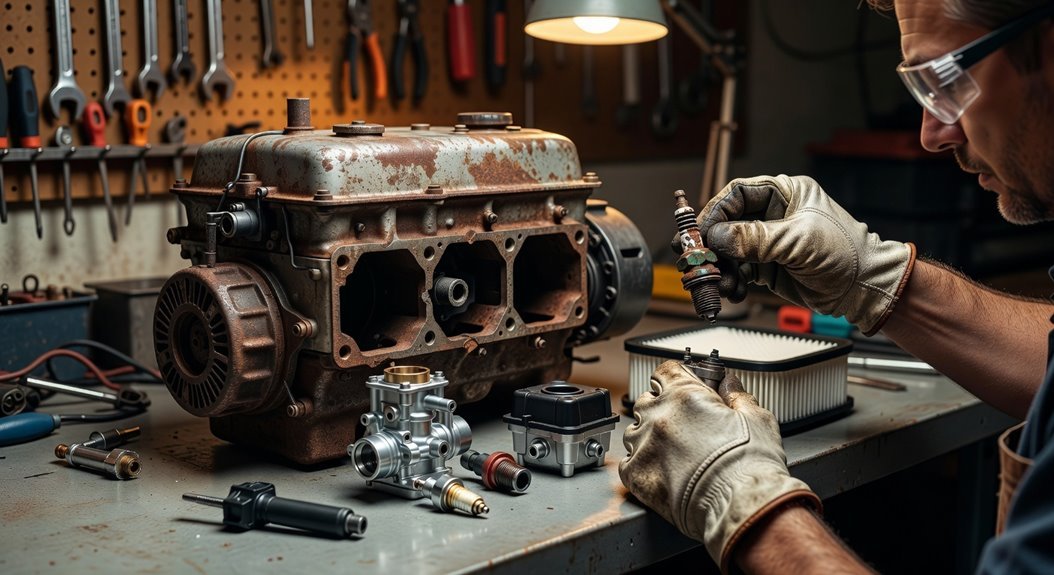
A major repair on a 5 years or older unit? Yeah, that’s my cue to start talking replacement.
Following a proper maintenance schedule can help extend its useful life and make replacements more predictable.
Even if you rebuild it, the lifespan estimates aren’t reset. It’s still as old as the day it left the factory, without newer technology or warranties.
Rebuilding doesn’t reset its age—still ancient tech, no warranty, no upgrade.
You know it’s costing more to keep running than it’s worth. So yeah, when the cost of fixing it feels like buying a new one, or you’re doing the same fix twice a year? Time to move on.
It’s smarter, honestly.
The 50% Rule for Generator Repairs
Don’t just look at one big repair! Regular preventive checks Regular maintenance can catch wear before it escalates into a major repair. Accumulating smaller repairs—even below 50% of the machine’s value—can quickly surpass its worth.
I’ve seen people hit that repair threshold slowly, then get shocked when replacement time comes.
This isn’t about strict 50%, but it’s the benchmark: a 10-year-old unit requiring repairs exceeding 50% of new costs? Still outdated and risky.
I’d choose to replace rather than gamble.
Is Your Generator Breaking Down More Often? (Hint: It’s Old)
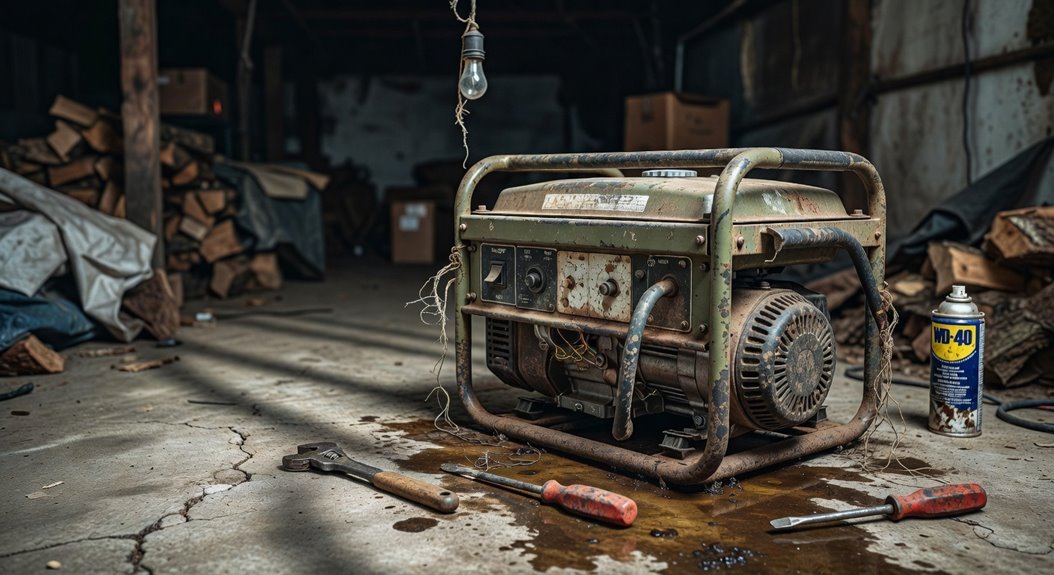
Here’s a quick reality check:
| Age | Reliability | Repair Cost Trend |
|---|---|---|
| Under 5 yrs | High | Low |
| 5–10 yrs | Moderate | Rising |
| 10+ yrs | Low | Sharp Increase |
A 10-year-old rebuilt generator is still a 10-year-old unit—no hidden magic there. You might think, *”Well, maybe I can just fix it once more,”* but honestly? The parts are harder to find, technicians charge more, and that old unit’s efficiency? Sunk cost. It’s time to weigh the *next* repair against a smarter investment. Don’t let nostalgia blind you; that tired machine’s days are numbered.
New vs. Old: Costs After 10 Years
After a decade, my old generator’s recurring repairs are unsustainable—each rebuild feels like investing in a leaky bucket. While repairs seem cheaper initially, the escalating costs quickly outpace benefits, offering diminishing returns.
Newer models deliver significant fuel efficiency savings that accumulate over time, creating real long term value that justifies the higher upfront cost. This is akin to switching from a gas-hungry vehicle to a hybrid; the ongoing savings outweigh the initial investment.
Like swapping a gas guzzler for a hybrid, efficient generators pay for themselves over time.
Generators typically struggle to operate smoothly beyond 15 years, as seen with my own unit that failed repeatedly after ten years, even post-rebuild. The data confirms replacing after a decade makes economic sense: it avoids compounding costs that intensify after the first ten years.
This isn’t just about immediate storms—it’s about preventing escalating expenses long-term. (148 words)
Fix or Replace? The 3-Step Guide
After years of constant tinkering with my generator—like patching a leaky bucket with duct tape—I realized fixing it wasn’t just frustrating but financially imprudent.
My key rule: replace the unit if repair costs exceed 50% of a new generator’s price, as happened last winter. Step one is clear: at that threshold, replacement is unavoidable.
Step two is evaluating age and condition; units over ten years old, even after a full overhaul, retain inherent limitations and face increasingly frequent breakdowns.
Step three is weighing repair options against long-term value. Newer models offer better fuel efficiency, lower emissions, and solid warranties, delivering the peace of mind worth the investment for reliable power. Replacing wasn’t merely smarter—it was the only rational choice. (148 words)
Frequently Asked Questions
Is It Worth Repairing a Generator?
Yes, it’s worthwhile when repairs cost under half a new unit’s price. Prioritize preventative maintenance to prevent big issues. Do only safe DIY repairs for simple fixes—never risk safety. I’ve seen many saved this way.
What Is the Most Common Generator Failure?
Bearing failure is the most common generator failure, typically requiring bearing replacement to restore operation.
What Is the Average Life Span of a Generator?
Generators typically last 10-15 years with proper maintenance. Regular upkeep significantly impacts longevity, and using stabilized fuel prevents corrosion and wear. After 10-15 years, repair costs frequently exceed replacement costs.
How Much Does It Cost to Fix a Generator?
Fixing a generator? It’s like seeing flickering lights—costs range wildly. Parts cost and labor rates dictate it: simple tune-ups start at $100, complex jobs hit $1k+. Always get a free estimate first!