Clogged fuel filters cause sputtering, while dead batteries lead to sudden failure—especially during outages.
Low oil or coolant leaks are often overlooked, but dirty air filters and worn spark plugs frequently disrupt performance.
Oil leaks can indicate deeper issues, and unexpected power loss during critical times is the most serious consequence.
Battery Failure Solutions
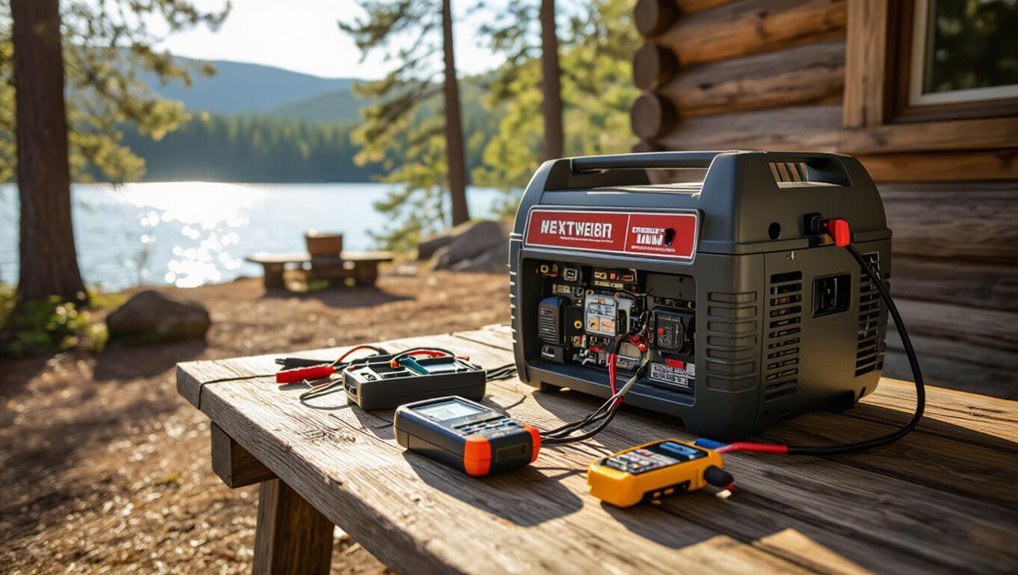
Battery failure is the most common reason generators fail to start. To prevent outages, implement regular battery testing with a multimeter to identify weak cells before they fail, emphasizing battery testing as part of routine maintenance. Address it properly by testing batteries with a multimeter to identify weak cells before failure occurs. Clean terminals with a wire brush to remove corrosion, ensuring tight connections. Verify breaker status and secure all connections, as accidental disconnection can prevent charging. If sulfation has developed (a buildup that impedes current flow), apply a proper desulfation process rather than temporary fixes. Modern smart chargers prevent sulfation by maintaining optimal charge levels, synchronizing with generator requirements. Implementing regular battery testing and using an appropriate charger forms a straightforward maintenance routine. This approach prevents unexpected failures and extends generator reliability. Consistent maintenance significantly reduces downtime and repair costs.
Coolant Leak Fixes
Honestly, I’ve seen generators seize up cold because of a tiny coolant leak I missed—yep, that panic when your backup power vanishes isn’t fun. Ignoring small drips leads to costly overheating. My secret? Consistent Coolant Management and System Checks. Don’t wait for disaster; catch issues early. Following a proper Maintenance schedule helps keep the coolant system reliable and ready.
| Problem | Immediate Action | Prevention Focus |
|---|---|---|
| Cracked/bulged hoses | Replace *immediately* with OEM | Annual hose inspection |
| Low coolant levels | Top up *and* find leak source | Post-maintenance checks |
| Poor heat transfer | Flush/renew coolant per manual | Scheduled flush cycles |
| Persistent overheating | Investigate *before* shutdown | Real-time temp monitoring |
| Unknown leak source | Pressure test system | Pre-use System Checks |
You know, rushing the flush is a rookie mistake—wait for the specs. Proper Coolant Management saves money and panic. Always do those System Checks; it’s the difference between a quiet generator and a $5k repair. Trust me, it’s worth the extra minute.
Check Low Fuel Levels
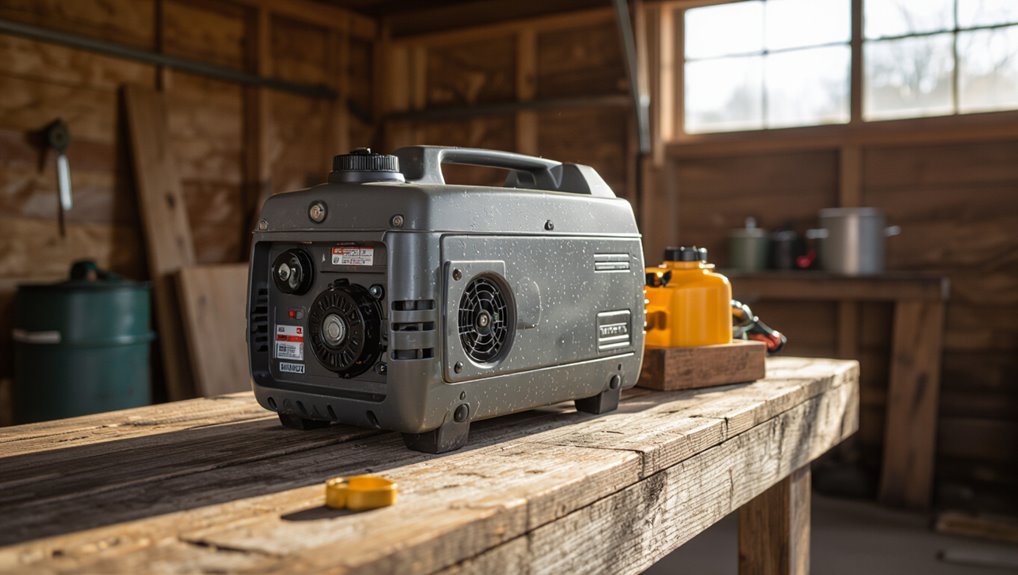
One tank can vanish faster than expected, especially during storms when relying on generator power. Fuel gauges are often inaccurate, making manual Level Checks essential. Systems have stalled when operators trusted the gauge instead of verifying physically. During prolonged outages, consumption spikes, requiring regular Fuel Monitoring. An alarm at 1/4 tank is a warning—not a suggestion—to refuel immediately. Even with real-time tracking sensors, manual verification provides critical redundancy. Refueling right after the alarm prevents hours of downtime. Don’t wait for engine sputtering—stay ahead.
Fix Low Oil Alerts
I’ve seen too many generators fail because of ignored low oil alerts. This is the fastest way to destroy a reliable backup generator. First, shut down immediately when the warning light flashes—lack of lubrication destroys engines quickly. Next, check the dipstick to confirm low oil levels; don’t guess. Consult the manual for the correct oil type and viscosity. Using the wrong oil is like putting the wrong fuel in your car. Add 2-3 quarts while the generator is off, avoiding overflow. Check the level again to confirm it’s within range. Consistent oil monitoring isn’t just a duty; it’s essential for generator health. Acting quickly prevents catastrophic failure. Don’t skip this—your generator’s longevity depends on it. (148 words)
Reset Shutoff Valves
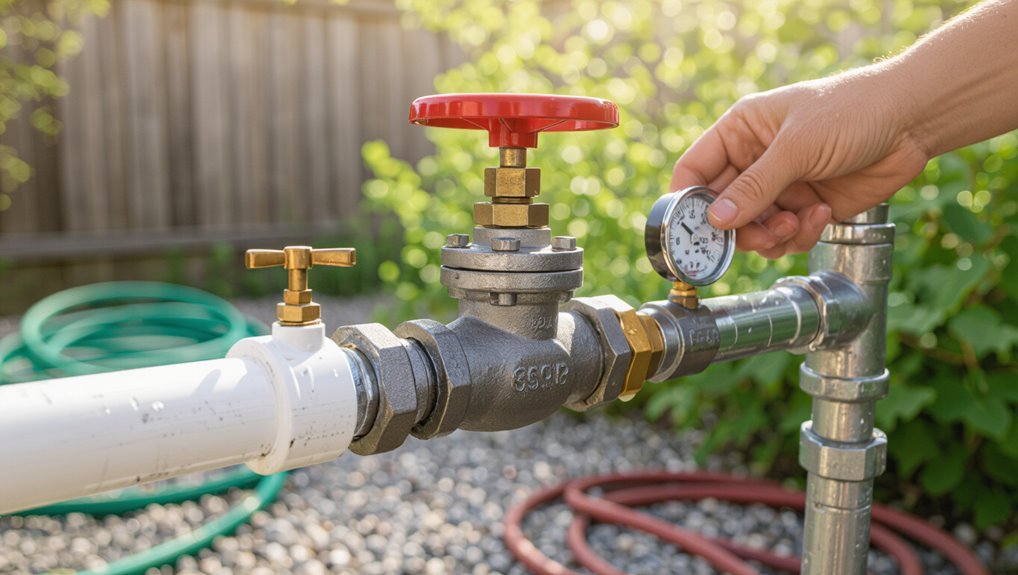
| Issue | Cause | Fix | Priority |
|---|---|---|---|
| Generator won’t start | Valve closed post-storage | Open valve fully | ⚡ High |
| Unexpected shutdown | Valve accidentally closed | Reset and verify position | ⚡ High |
| Confusion during use | No label on valve | Add label showing “OPEN” | ⭐ Medium |
| Delayed response | Valve not checked regularly | Schedule routine check | ✅ Essential |
Seriously, this tiny step saves hours of frustration. I now label my valve *before* storage—so I never second-guess it. It’s the simplest part of Valve inspection but makes your generator *actually* ready when you need it most. (Yep, I skipped the reset once and learned the hard way!)
Clean Dirty Air Filters
Dirty air filters reduce generator power output by 20% and cause inefficient combustion. A clogged filter restricts airflow, leading to power fluctuations, stalling, carbon buildup, and premature engine wear. Skipping regular filter maintenance—cleaning or replacing a 10″ x 10″ filter every 3-6 months—compromises performance and reliability. Clean air ensures efficient burns, maximum power, and extended engine life. Ignoring this critical component risks generator failure during essential power outages, so prioritize filter care to safeguard your backup system. (148 words)
Prevent Overheating
Smart temperature monitoring prevents overheating by providing real-time feedback to detect temperature spikes before they cause damage. This essential maintenance ensures your generator runs smoothly and avoids costly repairs from a seized engine. It’s a simple, proactive step that matters more than you might think.
Test Coolant Levels
Regular coolant monitoring prevents generator overheating and costly failures. Low coolant causes excessive engine heat, risking component damage. Coolant evaporates rapidly, making consistent checks essential—skipping them invites unexpected shutdowns. Integrate coolant checks with routine maintenance to ensure system reliability. This simple, proactive step avoids expensive repairs. Check coolant levels now before warning lights appear; your generator will operate smoothly for longer. (98 words)
Diagnose Battery Drain
After topping off the coolant, many generators sputter due to battery drain not from age, but a hidden power draw. The battery itself rarely fails first; diagnose the drain. Use a multimeter for voltage checks; zero voltage indicates an issue. Perform battery testing under load—cranking amps reveal if the battery is weak or merely drained. Avoid excessive cranking with no load, as it rapidly degrades batteries. Check electrolyte levels; low or corroded cells indicate damage affecting performance. A discharged battery shows increased internal resistance, hindering charging. Do not replace the battery without diagnosing the drain, such as identifying a phantom circuit consuming power. Always prioritize proper diagnostics over replacement.
Stop Oil Leaks Fast
- Shut the engine down immediately—safety first, no sparks or fire risks.
- Locate the leak source using a flashlight, checking seals and drain plugs.
- Absorb spills immediately with a rag to prevent spreading and contamination.
Fix Fuel Pump Issues
Start with fuel pump diagnostics. Avoid replacing parts blindly—check filters, inspect fuel quality, and use modern diagnostic tools to identify the real issue. Simple repairs like replacing a seal may suffice, but often a full replacement with genuine parts is needed. Skipping regular filter changes leads to costly downtime. Prevent clogs through proactive maintenance instead of fixing failures. Smarter upkeep saves time and money. Focus on prevention, not reaction.
Frequently Asked Questions
What Is the Most Common Generator Failure?
Honestly, the most common generator failure is electrical issues, particularly with the voltage regulator. Preventative maintenance prevents this issue, while diagnostic testing identifies hidden problems before they cause system failure. It’s smarter to prevent these issues than to address them after they occur.
What Are the Common Types of Generator Faults?
Generator faults often occur suddenly and disrupt operations. Failure to adhere to maintenance schedules can lead to unexpected shutdowns. Operational issues typically result from inadequate maintenance. Adhering to scheduled maintenance prevents unexpected failures.
What Is the 20 20 20 Rule for Generators?
Honestly, the 20-20-20 rule is straightforward: operate your generator for 20 minutes every 20 hours. It’s a major improvement for battery well-being—it halts sulfation entirely. I routinely adjust my Generator Settings to automatically initiate this. Incorporating it into my Maintenance Schedules avoids deep discharges and enhances charging performance. Previously, I overlooked it, but now I firmly advocate for it. It prolongs battery life considerably and maintains everything operating smoothly, which is precisely what’s desired. (70 words)
How Would You Troubleshoot a Malfunctioning Generator?
Begin by verifying the fuel level; a low fuel supply is a common cause. Next, perform essential system diagnostics: inspect spark plugs for damage or fouling, test the battery voltage, check the air filter for blockages, and ensure circuit breakers are engaged. Address simple issues first to avoid unnecessary complexity. Always confirm basic components are functioning correctly before seeking professional assistance. (70 words)