If your generator’s blowing smoke, don’t panic—it’s usually a sign something’s up! I’ve learned smoke color is key; white often means unburnt fuel or, more seriously, a coolant leak. Black smoke? That typically points to too much fuel not burning right, maybe dirty injectors or bad timing. It’s kind of like your generator is trying to tell you what’s wrong. Checking fuel quality and oil levels is always a good first step, though. There’s a lot more to uncover about pinpointing the exact cause, and understanding these clues will get you started.
Decoding Generator Smoke: Color as Your First Diagnostic Step
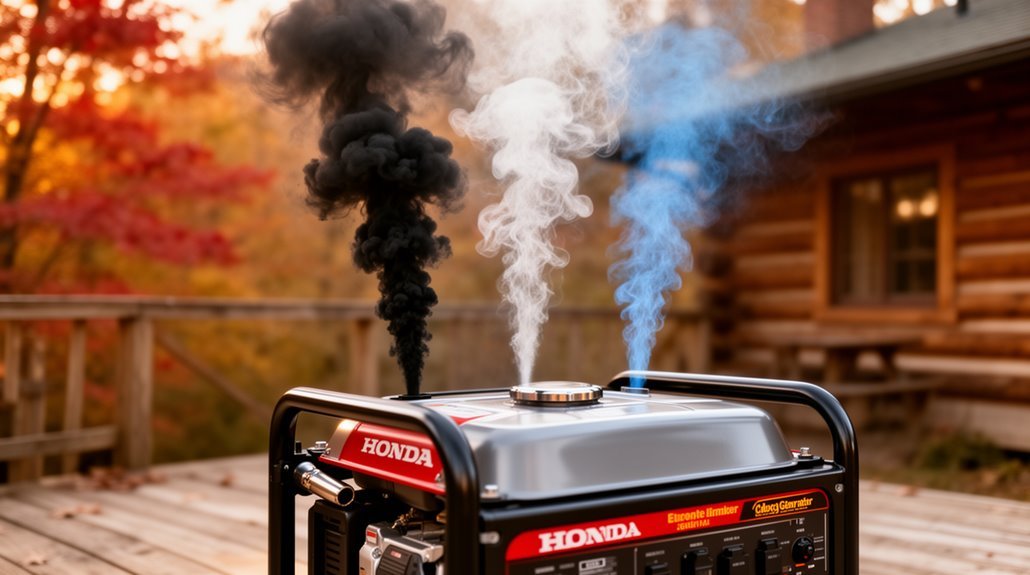
Really understanding these smoke patterns is key.
White smoke is trickier—it *could* be unburnt diesel, but let’s not jump to conclusions just yet.
Short puffs when it’s working hard are usually fine, but persistent smoke needs looking at.
A proper combustion analysis can pinpoint the issue, but start with the color; it’s honestly the quickest indicator, you know?
And don’t forget, bad fuel can cause all sorts of problems!
Regular oil changes and attentive maintenance keep the engine healthy in the long run oil maintenance.
White Generator Smoke: Is It Coolant or a Fuel Problem?
Okay, so white smoke can be a bit of a puzzle with generators, can’t it? It usually points to either unburnt fuel or—and this is a bit more serious—coolant leaks entering the combustion chamber. Don’t panic just yet, though! It’s something we can usually figure out.
I’ve found that fuel issues are a common culprit. Sometimes it’s just poor fuel quality, but other times it’s a deeper problem.
Here’s what to evaluate:
- Fuel Injectors: Faulty injectors can cause incomplete combustion.
- Coolant Leaks: A cracked head or bad gasket lets coolant in—you might even smell a sweet, burnt odor.
- Low Compression: This makes it hard to ignite the fuel properly.
If it *is* coolant, that needs immediate attention. Honestly, low temps can also make the smoke worse, as the engine struggles to fully burn fuel initially. Let’s get to the bottom of this! Remember that regular maintenance helps prevent many engine issues, including unexpected white smoke.
Black Smoke From Your Generator: Fuel Overload & Engine Check-Ups
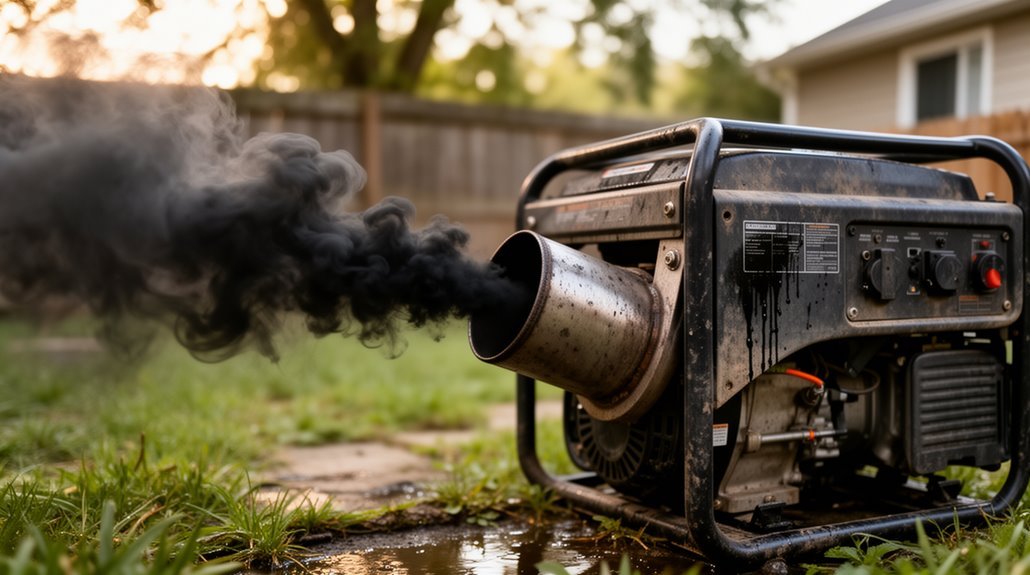
So, we talked about white smoke potentially meaning coolant or fuel issues, and honestly, figuring that out can be tricky.
Now, let’s look at black smoke – it usually signals incomplete combustion. I’ve found this often comes down to too much fuel not burning properly; think of it like trying to light a bonfire with too many logs at once.
A major culprit could be dirty fuel injectors or issues with engine timing. If those are off, you won’t get a clean burn.
Poor fuel quality, or even contaminated fuel, really messes things up too. A clogged fuel system is a common problem, especially if you haven’t used it in a while.
While a quick puff during a power surge *might* be okay, sustained black smoke means you need to check your fuel system and engine—it’s not something to ignore!
Beyond the Smoke: Diagnosing Generator Noises & Performance Issues
- Fuel quality is on point.
- Oil isn’t overfilled (a common mistake!).
- Piston rings are sealing correctly.
Don’t ignore those subtle signs!
Preventative Generator Maintenance: Stopping Smoke Before It Starts
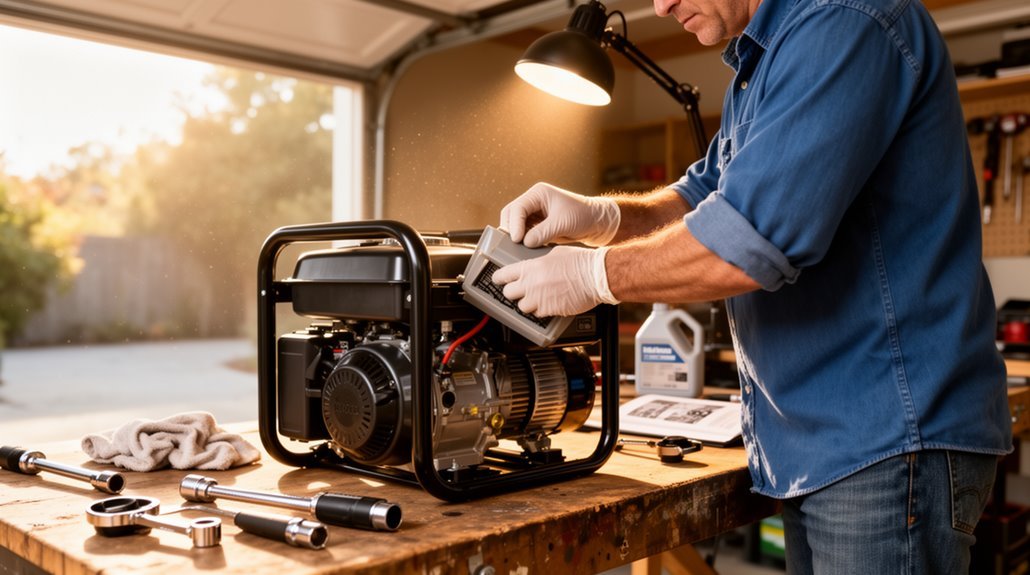
Don’t underestimate the simple stuff either! Using quality fuel is huge; old or contaminated gas is a major culprit.
And honestly? Filter cleaning is something I always prioritize. A clogged air filter really strains the engine, and that can mess with combustion.
Plus, always check those fuel hoses for leaks. It’s like giving your generator a little check-up to guarantee it’s happy and healthy – and smoke-free!
Frequently Asked Questions
Why Is My Generator Bringing Out Smoke?
I’m seeing smoke because something’s not quite right internally. It’s often due to an improper fuel mixture, or even oil leakage burning during operation. Don’t ignore it—it signals a deeper issue needing attention!
How to Know if a Generator Is Overheating?
I’d know if my generator’s overheating by noticing louder operation or coolant leaks—even a sweet smell! Checking temperature gauges is essential, and ensuring proper cooling systems function is necessary; restricted airflow quickly raises temperatures, causing problems.
What Does It Mean When a Generator Backfires?
Popping problems probably point to poor performance! It means combustion’s chaotic; likely, ignition timing’s off or you’ve got valve issues. I suspect incomplete fuel burning’s happening, creating sputtering sounds—it’s rarely a simple fix, so I’d check those areas first.
What Does White Smoke Mean on a Generator?
It usually means something’s not burning completely! I suspect either coolant leaks into the engine, or perhaps oil burning—both causing incomplete combustion. Don’t ignore it; these issues need checking before further damage occurs, you know?