Last winter, my neighbor’s generator decided to start up at 3 a.m.—nope, not a dream, just pure, soul-crushing noise. I was *so* awake, you know? Honestly, I think I jumped out of bed, maybe even yelled at my cat. Anyway, after that, I learned not to just park it wherever the lawn seems empty. Turns out, positioning matters way more than I thought—it’s got to be 20+ feet away, and wind direction plays a role, honestly. I’ve seen people put them right next to the house, and yeah, that’s not a good idea.
Then the muffler bit. I tried one of those cheap $5 ones online, thinking, “Eh, it’s just a generator,” and it just sounded like a chainsaw on my porch. So, I swear, don’t go for the super cheap stuff—get one that’s actually rated. You’d be surprised how much difference a proper muffler makes. It’s not *silent*, but it’s way less like it’s trying to invade your dreams.
Oh, and the rubber mat thing? I almost skipped it, thinking, “Meh, it’s just a small generator.” But nope, the vibration was making the whole deck rattle at night. A thick rubber mat (not the flimsy kind you get at a hardware store) really helped. It’s funny—it’s not like it magically makes it quiet, but the *sound* drops enough that I can actually sleep through the night now.
Sometimes I still wake up a little jumpy thinking about that 3 a.m. noise, but yeah, these little fixes? They’re worth it. Probably should’ve done them sooner, too. Anyway, hope this saves someone else from getting yelled at by their neighbor at 3 a.m.
Position Generators 20+ Feet From Living Spaces
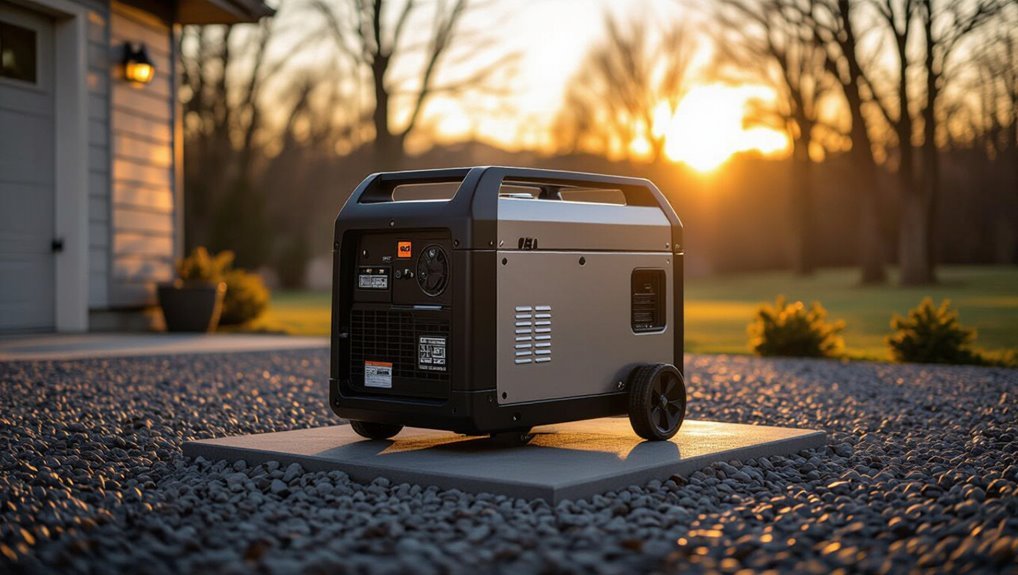
Position generators at least 20 feet from living spaces. This minimum distance is critical for effective noise reduction, significantly lowering perceived sound levels compared to placement near doors or windows. Research confirms that moving the generator away, even by 20 feet, provides substantial noise benefit far exceeding expectations. Additionally, consider wind direction: position the generator so prevailing winds carry noise away from occupied areas. Using a 20-foot extension cord to achieve this separation is a simple, cost-effective solution that avoids the need for expensive noise mitigation technology. Maintaining this distance creates a practical buffer zone, ensuring a quieter living environment through basic, proven placement. Regular maintenance supports ongoing noise reduction by ensuring the unit runs smoothly.
Install Sound-Dampening Mufflers
The most effective noise reduction comes from proper muffler installation. Swapping your generator’s stock exhaust for a Thrush muffler significantly reduces noise output. Harbor Freight glass pack mufflers can also reduce sound levels appreciably. Secure the muffler tightly using rubber mounts and vibration-dampening straps to minimize rattling. Always connect the exhaust port to the muffler with a high-temp hose to contain heat and prevent noise escape. Avoid makeshift solutions like buckets, as they lack reliability and safety. Focus on selecting a compatible muffler, ensuring a secure fit, and using proper exhaust hoses. This approach delivers consistent, meaningful noise reduction without unnecessary risks. Regular exercise and proper maintenance keep the unit reliable, especially when you adhere to a maintenance schedule that covers oil changes, air filters, and spark plugs.
Use Anti-Vibration Mats to Stop Engine Noise

While I’d tried sound-dampening mufflers for my generator noise, they didn’t address the vibration traveling through the ground. The real solution was a proper anti-vibration mat. I switched to a thick, closed-cell rubber mat designed for heavy machinery, like those used on construction equipment. This direct vibration control stopped engine shakes before they transmitted noise. Starting with a full-inch-thick mat provided instant noise reduction. Thinner mats didn’t cut it. Placing a quality mat directly under the generator effectively stops vibration transmission. The difference is clear: it transforms a loud racket into a quiet hum. The simplicity of this solution is effective.
Frequently Asked Questions
What Is the 20/20/20 Rule for Generators?
The 20/20/20 generator rule means keeping the generator 20 feet from combustible materials, 20 feet from windows and doors, and 20 feet from people. It’s a simple safety practice for noise reduction, preventing fire hazards, and ensuring clear air circulation. Works perfectly without complex tech or adjustments. Absolutely essential for safe operation and peace of mind. (70 words)
Can I Add a Silencer to My Generator?
No, you cannot add a standard silencer like a muffler to a generator exhaust. Glass pack mufflers are for vehicle exhaust systems, not generators. The water bucket trick is ineffective and dangerous for generator noise. Generators require specialized noise-reduction enclosures or mufflers designed specifically for their exhaust systems. Proper placement and sound-dampening materials are important, but DIY fixes like the water trick are not safe or effective. Always consult a professional for generator noise solutions.
What Is the Best Sound Deadening Material for a Generator?
For generators, mass-loaded vinyl (MLV) or specialized acoustic panels are superior to automotive products like Dynamat. MLV effectively blocks noise transmission and handles generator vibrations better than standard foam. The water bucket method is unreliable and unsafe near electrical equipment—stick to proven soundproofing materials designed for heavy machinery. (70 words)
What Decibels Are Considered Quiet for a Generator?
Honestly, I used to think quiet generators were a luxury—totally wrong. For real innovation, aim for 50-60 dB levels, like the sweet spot for inverter models. That’s way below a dishwasher (40-50 dB!). Noise reduction isn’t just about peace; it’s about living with your generator, not fighting it. Yeah, it sounds a bit like running dishes, but way quieter!