
Like Noah preparing for the flood, I’ve learned the hard way that storm readiness isn’t optional when you live in hurricane country. After three days without power last year, I realized my generator setup wasn’t cutting it. I think most homeowners underestimate what’s really needed beyond just having the equipment. There’s a whole system to take into account, and I’m about to share what I wish someone had told me before that storm hit.
Create a Priority Plan for Electrical Needs
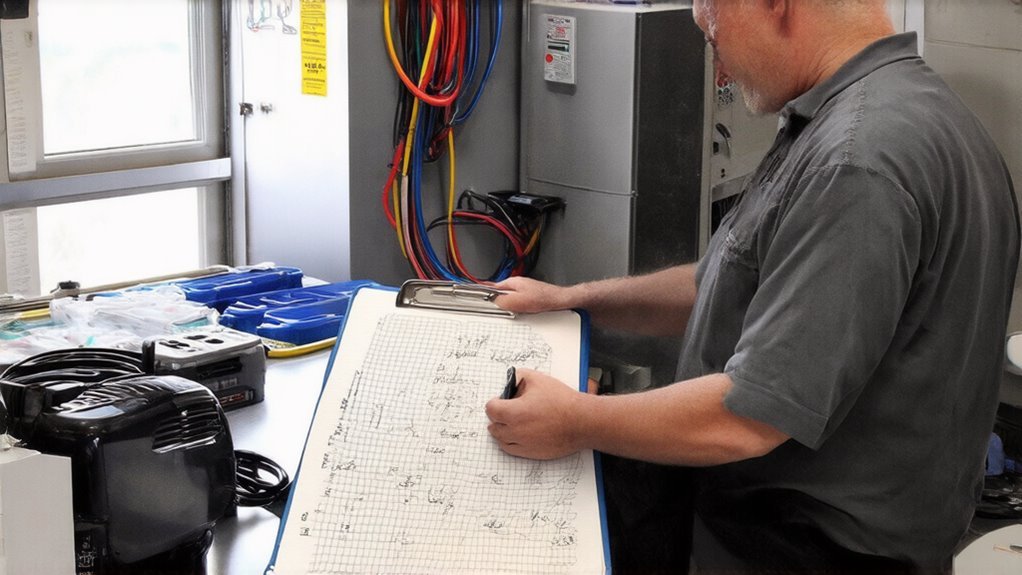
When preparing for potential power outages, I think it’s crucial to establish a priority list of the electrical items you absolutely need to keep running.
Not everything in your home requires immediate backup power, and your generator has capacity limits.
Start by identifying essential electrical priorities—refrigeration for medications or food, medical devices, heating systems, and perhaps a few lights.
Calculate the power requirements for each item by checking their wattage ratings.
I’ve found that installing a transfer switch makes switching between utility and backup power much simpler.
It’s also worth doing a quick walkthrough with everyone in your household so they understand how the system works when you need it most. Additionally, make sure to consider running watts vs. starting watts for appliances with motors, as this can significantly impact your generator’s capacity during outages.
Commit to Regular System Maintenance
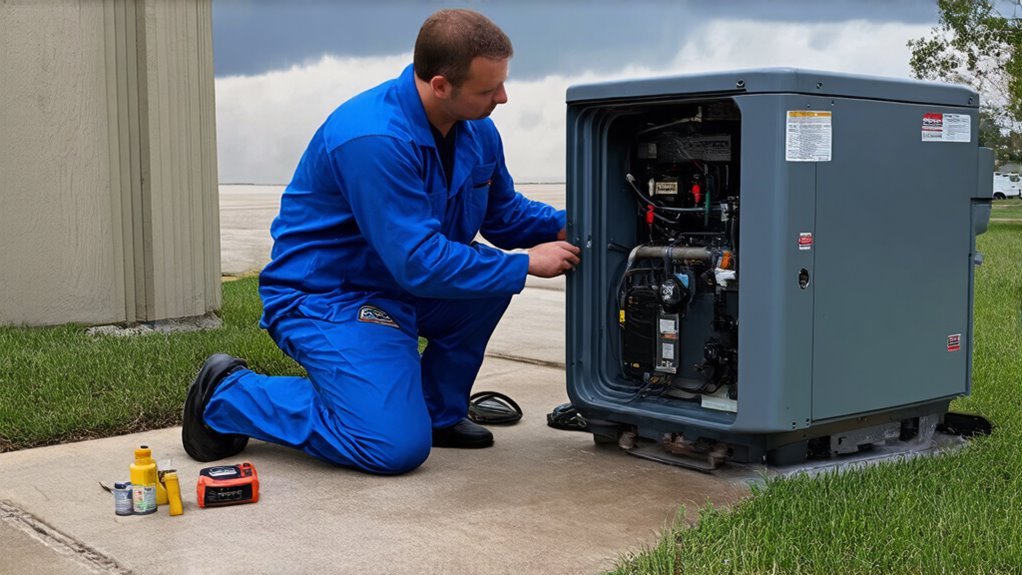
Having a priority list is important, but I’ve learned that even the best generator plans fall apart without proper maintenance. I make sure to check my generator every few months – examining spark plugs, filters, and connections – because I’ve seen how neglect leads to failures at the worst possible moments.
I keep a maintenance schedule on my phone with reminders. Perhaps the most essential thing I do is change the oil regularly, which really boosts generator longevity. Routine oil changes enhance generator performance and prevent issues down the line.
I think it’s worth investing in professional service once a year too. Trust me, the peace of mind from a well-maintained system is worth every minute spent on upkeep.
Replace Your Generator Battery Every 36 Months
**
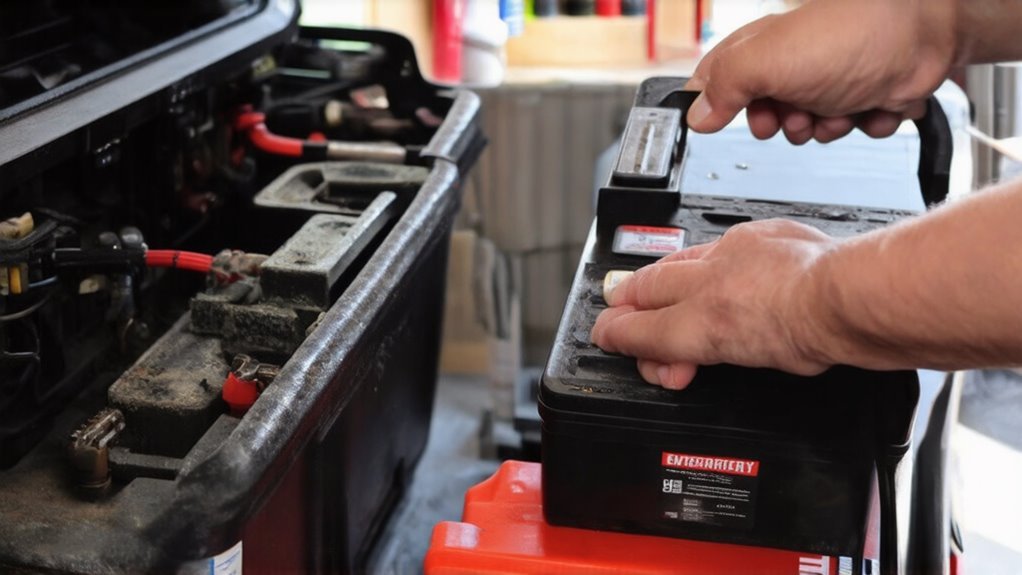
One critical mistake I’ve seen too many homeowners make is neglecting their generator battery until it’s too late.
Overlooking generator battery maintenance is a costly error most homeowners don’t realize until darkness falls.
I think we all tend to forget that even standby generators rely on batteries to start up when the power goes out.
In my experience, most generator batteries have a lifespan of about three years.
After that, performance monitoring becomes essential – watch for slow cranking or warning lights during your monthly tests.
Perhaps keep a spare battery on hand, especially during storm season.
Trust me, there’s nothing worse than discovering your generator won’t start because of a dead battery when you need it most. Additionally, monitoring battery health regularly can help prevent unexpected failures.
Monitor Your Generator Remotely With Smart Technology
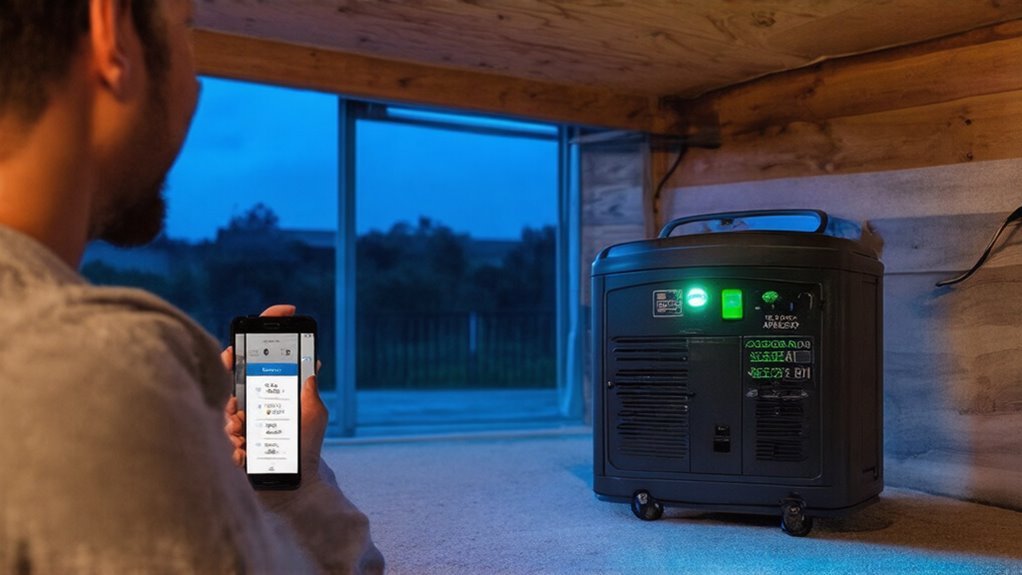
Modern technology has completely transformed how I manage my backup power system, and it might do the same for you. With remote access capabilities, I can check my generator’s status from anywhere using my smartphone—whether I’m at work or on vacation during storm season.
| Feature | Benefit | Cost Impact |
|---|---|---|
| Smart alerts | Instant notifications of issues | Prevents costly repairs |
| Fuel monitoring | Tracks consumption patterns | Optimizes fuel usage |
| Performance data | Identifies efficiency problems | Extends unit lifespan |
| Weather integration | Prepares system before storms | Reduces downtime |
I think the peace of mind these monitoring tools provide is perhaps their greatest value—knowing exactly what’s happening with your backup power system in real-time. Additionally, leveraging smart portable generator systems can enhance your overall preparedness during unexpected power outages.
Keep Gas Lines Clear and Accessible
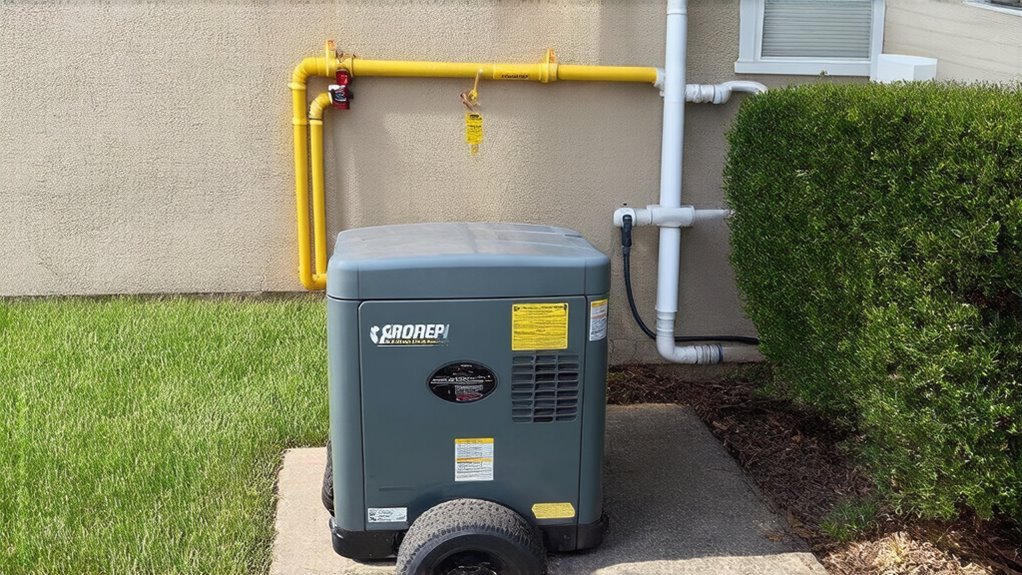
While smart technology keeps us connected to our generators, there’s a physical aspect of maintenance that’s just as important. I can’t stress enough how critical regular gas line inspection is for your backup power system.
I always make it a point to check for debris around my generator’s fuel lines, especially after windy days. Fallen branches, leaves, or even small animals can create blockages that might go unnoticed until it’s too late.
Obstruction removal isn’t complicated, but it’s something I think many homeowners overlook. Proper grounding and bonding practices can also help ensure that your generator operates safely and efficiently. Perhaps schedule a professional inspection before storm season hits—it’s definitely worth the peace of mind.
Install Your Generator Before Storm Season Begins
Because severe weather can strike with little warning, I’ve learned the hard way that installing a generator isn’t something you want to rush.
Trust me, waiting until storm clouds are gathering is a recipe for disaster.
I always recommend adding “generator installation” to your pre-storm checklist at least 3-4 months before storm season begins.
The installation timeline can stretch longer than you’d expect, especially when contractors get swamped with last-minute requests.
Plus, you’ll want time to familiarize yourself with operation procedures.
I think having those extra weeks to test your system makes all the difference when the real emergency hits. Additionally, comprehensive coverage ensures you’re protected against any potential failures during power outages.
Maintain Adequate Fuel Reserves
Since power outages can last for days during severe weather, I’ve learned that fuel management is absolutely critical for continuous generator operation.
Proper fuel planning during severe weather can mean the difference between power and darkness.
I always keep enough fuel stored safely to last at least 72 hours, which for my unit means about 15-20 gallons.
I think proper fuel storage containers are worth the investment.
Remember, gasoline degrades over time, so I rotate my supply every few months. I use fuel stabilizer too, which helps extend shelf life for emergency use.
Perhaps the most overlooked aspect is having a plan for refueling during extended outages.
When roads are impassable, you’ll be grateful for those extra containers. Additionally, following proper fuel management practices can significantly reduce the risks of generator failure during emergencies.
Select an Optimal Generator Location
When it comes to positioning your backup generator, location truly matters more than most people realize. I’ve seen poorly placed units fail during storms because owners overlooked critical installation guidelines. Your generator needs proper clearance and protection while remaining accessible. It’s essential to maintain a safe distance of at least 20 feet from any doors, windows, and vents to prevent carbon monoxide risks.
| Consideration | What to Look For | What to Avoid | Why It Matters |
|---|---|---|---|
| Distance | At least 5ft from structures | Near windows/doors | Carbon monoxide safety |
| Surface | Level, concrete pad | Soft/uneven ground | Prevents shifting |
| Access | Clear pathways | Tight spaces | Easy maintenance |
| Weather | Partial covering | Full enclosure | Prevents overheating |
I think the best spot balances generator safety with convenience. Perhaps consider consulting a professional for the best placement at your home.
Frequently Asked Questions
How Loud Are Backup Generators During Operation?
I’ve found backup generator noise varies considerably. Modern units produce 60-70 decibels (similar to vacuum cleaners), while older generator sound levels can exceed 100 decibels. Consider noise-reducing enclosures for quieter operation.
Can a Generator Be Safely Used During Heavy Rainfall?
When it rains cats and dogs, I’ll assure you generators can be used safely. Proper waterproof housing and strategic generator placement under cover, away from standing water, are absolutely essential for safe operation.
What Permits Are Required for Residential Generator Installation?
I’ll need electrical and sometimes gas permits for my generator installation. Local building departments also regulate installation locations based on noise ordinances and safety codes. Always check my city’s specific requirements first.
How Quickly Will a Generator Start After Power Failure?
I’ll tell you that automatic generators start up and restore power within 10-30 seconds after failure, while manual generators require you to start them yourself, delaying power restoration considerably.
Can Backup Generators Power Air Conditioning Systems?
Like a cool breeze on a sweltering day, your backup generator can power air conditioning systems! I’d guarantee your generator capacity matches your air conditioning requirements, as these systems demand substantial electricity.