
Always top off your backup generator’s propane tank well before a storm to ensure it operates during power outages.
A low fuel level renders the generator useless when needed most.
Check Propane Tank Level
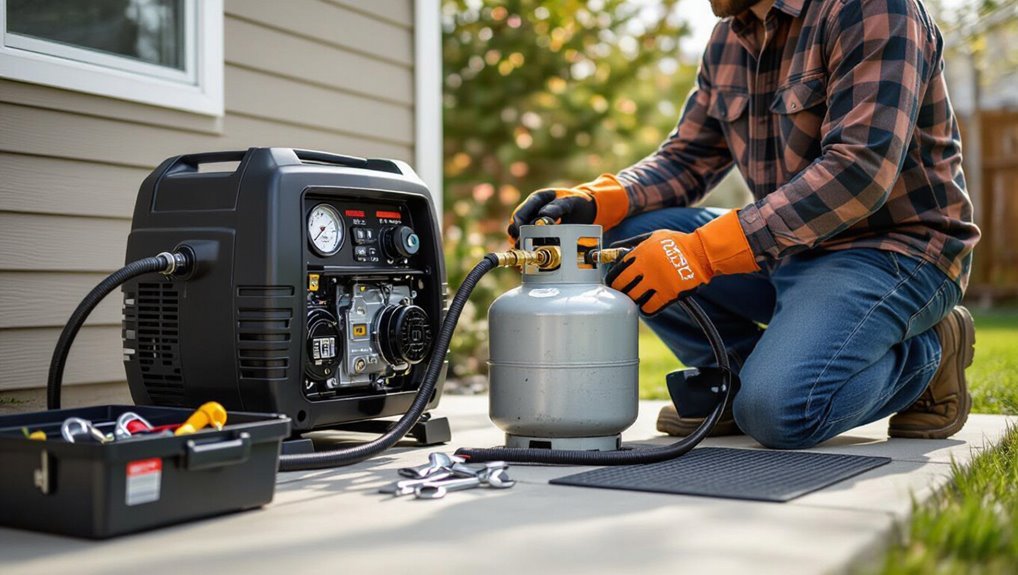
You know that worry when your generator is running out during a storm? It happens. Check your propane tank regularly to avoid this. Maintain levels between 30-40% for reliable power. This is more than paperwork—it’s your first line of defense. Look for sputtering or wet spots; stop immediately and call a professional. Never store propane near flames or in enclosed spaces. Keep it in a well-ventilated area instead. Propane levels and routine checks are simple but essential. They ensure your backup power works when you need it. Treat this as smart preparation, not just a chore. Regular follow-up with the manual for maintenance intervals and part checks helps ensure reliability fuel maintenance.
Test Auto-Switch to Power
After verifying your propane tank, test your auto-switch system to ensure it functions properly during power disruptions. Simulate a brief outage to confirm your system activates within 25 seconds, directing power smoothly to essentials like your refrigerator and lighting. Verify that generator configurations match your home’s voltage and amperage requirements to prevent operational issues or damage. Check that it automatically switches back to grid power within 7 minutes post-disruption using a multimeter to confirm clean power transition. Always record timestamps, voltage readings, and outcomes; this data reveals patterns and confirms system reliability when power fails. Maintain a maintenance log to track ongoing upkeep and performance over time.
Confirm Grounding and Ventilation
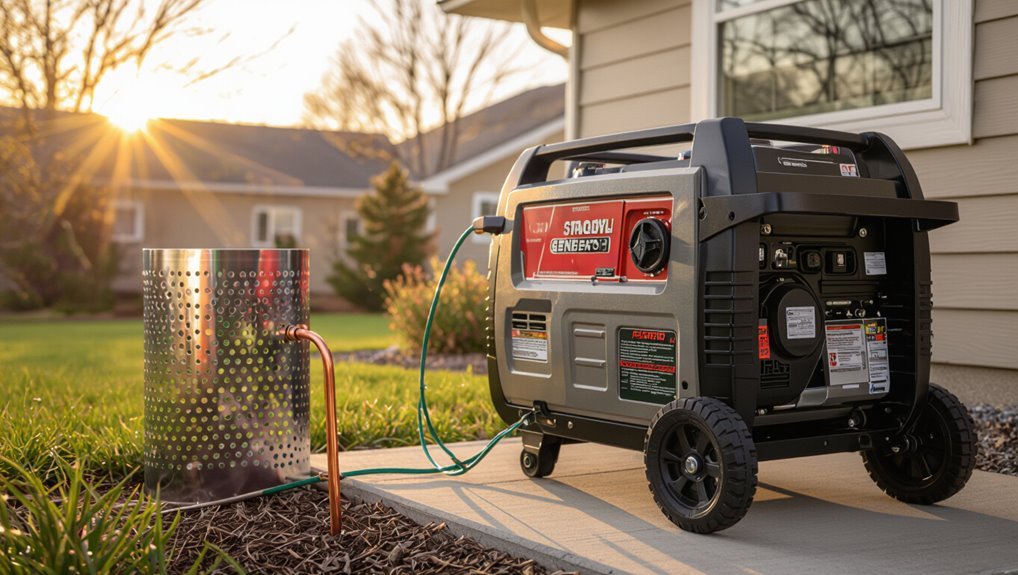
After testing an automatic transfer switch, it’s tempting to skip the grounding check, but don’t. Proper grounding reduces the risk of electric shock and helps protect connected equipment. Inspect the terminal connections and check for corrosion before storm season.
Next, check ventilation. Make sure the exhaust has plenty of clearance and that nothing is blocking the vents. If the generator could overheat or push exhaust toward the house during a storm, move it now rather than when the power is out.
Check Backup Generator Batteries
Check the starter battery regularly, because a flat battery is a common reason a generator won’t start after a storm. A multimeter reading of about 12.6V or more indicates a fully charged 12V lead-acid battery; a lower reading means it needs charging. Batteries lose charge in storage, so a monthly check is a good habit.
Here’s a quick snapshot of what those readings mean:
| Voltage | Condition | Action Needed |
|---|---|---|
| 12.6V+ | Healthy | Maintain as-is |
| 12.0-12.5V | Deteriorating | Check maintainer |
| <12.0V | Critical failure | Replace immediately |
A battery maintainer keeps the battery topped up while the generator sits unused. Plan to replace the battery every few years, and sooner if it struggles to hold a charge.
Fix Starting Issues Fast
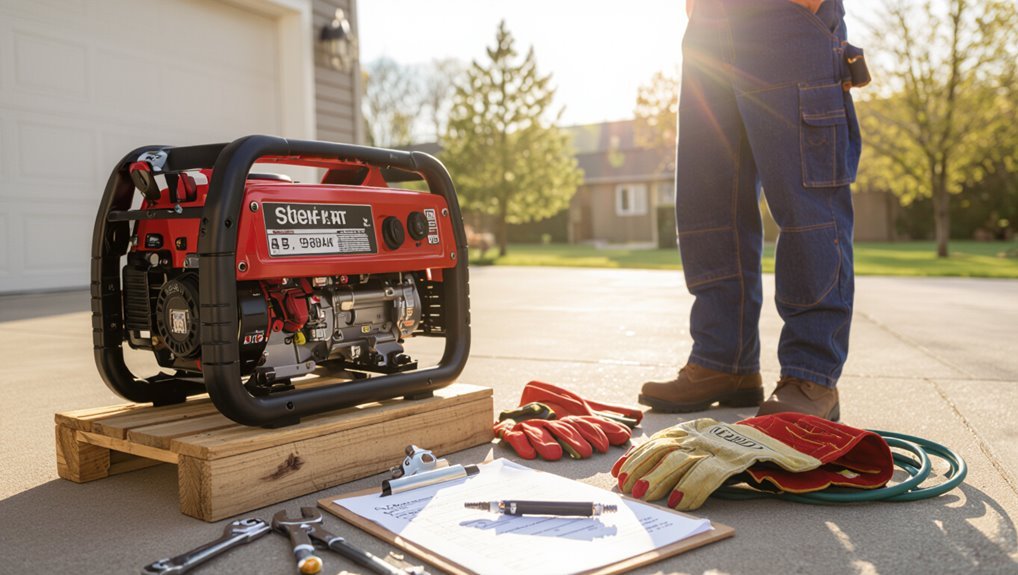
Power outage leaves your generator silent? Fix it fast with these steps. First, check fuel flow—ensure the valve is fully open. Next, inspect the spark plug for damage or fouling; it’s essential for starting. If the generator won’t crank, reset the control panel immediately. Use a phone app to scan diagnostics—most models deliver instant results in under two minutes. No waiting for a technician. Verify fuel and spark first, then scan. Act now to restore power before the next storm. Keep your backup generator operational.
Clear Debris Around Generator
- Clear leaves and branches from all vents (left, right, back) immediately after storms.
- Remove ice/snow buildup promptly to prevent fan blade blockage from mud and debris.
- Prioritize daily debris removal around the unit during high-wind seasons.
- Maintain a 3-foot clearance zone around the generator for proper airflow.
This simple maintenance prevents overheating and ensures reliable operation during power outages.
Maintain Monthly Checklist
While summer storms may seem distant, neglecting your generator’s monthly checklist can leave you unprepared during power outages. Proactive maintenance prevents failures. Begin with battery status: operate the unit for 24 hours to confirm readiness. Then inspect fuel lines for leaks, verify secure transfer switch connections, and clean air vents with compressed air to prevent dust buildup. Always document all checks in the logbook for seamless transitions. Dust accumulation and weakened batteries compromise performance during actual storms. Maintain a clean unit, verify connections regularly, and stay prepared.
Monitor Backup Generator Alerts
Remote monitoring can catch problems before they leave you without power. Systems such as QuietConnect send alerts to your phone, so a fuel or oil issue can be dealt with before it damages the engine. Proactive monitoring turns your generator’s status into information you can act on.
Most monitoring apps let you set alert thresholds, so you’re notified only when something needs attention rather than for every minor fluctuation. Run-hour and fuel tracking also help you plan maintenance before something breaks.
- Real-time fuel consumption alerts stop waste and signal problems immediately
- Customizable thresholds (such as low oil) mean you only get critical notifications
- Automatic run hour tracking guides perfect maintenance timing
- Data-driven insights prevent failures, not just react to them
Building monitoring into your routine helps you stay ahead of problems instead of reacting to them.
Frequently Asked Questions
How to Run a Generator During a Storm?
When running a generator during a storm, place it outside, well away from doors and windows, so exhaust fumes can’t get into the house. Do quick operational checks first (oil level, fuel and voltage), then keep an eye on it while it runs, especially for low oil level alarms. Set up this way, it can power essential appliances and medical devices as reliable backup.
What Should You Stock up on Before a Storm?
Generators need prep—store propane fuel for 72 hours; don’t panic when tanks run low. Use a heavy-duty 100ft extension cord safely to reach your fridge; cheap cords melt. Prioritize safety—never skimp. Stock water and batteries too. Fuel and cord are essential for storm readiness. Preparation brings peace of mind.
What Is the 20 20 20 Rule for Generators?
The 20-20-20 rule is an eye care practice, not a generator specification: every 20 minutes, look at something 20 feet away for 20 seconds. It prevents digital eye strain during prolonged screen use. This rule has no relation to generator sizing, circuit requirements, or fuel management. The original text mistakenly applied this eye health guideline to generators, confusing it with actual electrical recommendations for backup power systems.
Can I Put a Tarp Over My Generator?
Don’t cover a running generator with a tarp. It traps heat and restricts the airflow the engine needs to stay cool. Keep it ventilated so it stays cool and ready.