
Generator Junkie Buying Guide · Updated September 2025
When the grid goes dark, you get exactly one chance to have the right backup power ready. The best portable generator for home backup is not simply the most powerful one — it is the one that matches your actual watt load, your fuel access, your neighborhood’s noise rules, and your budget, bought and staged before the outage hits.
We review, compare, and obsess over backup power equipment for homeowners, preppers, and anyone who has sat through a multi-day outage and vowed “never again.” Our evaluations draw on published manufacturer specifications, EPA compliance records, verified Amazon buyer reviews across thousands of real-world users, and hands-on generator operation experience across multiple fuel types and wattage classes. We do not recommend anything we would not run ourselves, and we flag trade-offs plainly — because the wrong generator in an actual emergency is worse than having none at all.
What this guide covers: Five carefully selected portable generators and power stations for home backup in 2025, spanning from a super-quiet 2,450-watt budget inverter to a 12,500-watt dual-fuel whole-home machine — plus two gas-free LiFePO4 battery stations for homeowners who want indoor-safe, fume-free power without a single drop of gasoline.
Who this guide is for: Homeowners, renters with outdoor space, and anyone who has lived through a major power outage and sworn it would not happen to them again unprepared. Whether you need to cover the basics — fridge, lights, phone chargers — or run your entire home through a week-long storm outage, there is a pick in this guide built for your situation.
How we chose: Each generator was evaluated against six core criteria: peak power output, fuel flexibility, noise level, safety features (including CO shutoff and EPA compliance), portability and storage, and value for money at current Amazon pricing. We excluded any unit with fewer than 100 Amazon reviews or without EPA compliance documentation.
Test window: Specification review and buyer feedback analysis current as of September 2025.
Why this guide matters right now: The home backup generator market has shifted meaningfully in the past two years. LiFePO4 battery stations now offer genuine multi-day backup capacity without fuel or fumes. Inverter generator technology delivers quiet, clean power at budget prices that would have been unthinkable three years ago. And dual-fuel capability — once a premium feature — is now widely accessible. This guide cuts through the marketing noise.
For most homeowners who need real whole-home coverage, no portable generator on this list comes close to what the Westinghouse 12500 Watt Dual Fuel delivers. Twelve thousand five hundred peak watts. Dual-fuel operation on gas or propane. Remote electric start from up to 109 meters away. Transfer-switch ready out of the box. And more than 8,800 Amazon buyers have rated it 4.7 stars — the strongest verified consensus of any product in this roundup. If your priority is maximum backup power at a fraction of the cost of a permanent standby unit, this is the generator to buy.
Buy on AmazonBefore you read further, consider spending ten minutes calculating your home’s actual watt requirements. Our complete step-by-step generator sizing walkthrough is the single most useful preparation step a buyer can take — buying underpowered is the most common, most avoidable, and most painful generator mistake.
Quick-Look Comparison: Best Portable Generators for Home Backup
Not ready to read five full reviews? This table gives you the fast facts on every pick. All prices and ratings are pulled live from Amazon and update automatically.
Best Overall

- 9500 Running Watts and 12500 Peak Watts (Gasoline); 8500 Running Watts, 11200 Peak Watts (Propane); Remote Start with Included Key Fob, Electric and Recoil Start; Up to 12 Hours of Run Time on a 6. 6 Gallon Fuel Tank with Fuel Gauge
- Features Two GFCI 120V 5–20R 20A Standard Household Receptacle, One Transfer Switch Ready 120V L14-30R 30A, and One RV Ready 120/240V 14–50R 50A; All Outlets Have Rubber Covers for Added Safety
- Powered by a Heavy Duty 457cc Westinghouse 4-Stroke OHV Engine Featuring a Long-Lasting Cast Iron Sleeve with Automatic Low Oil Shutdown and Digital Hour Meter. VFT display gives you real time updates with the voltage output, frequency, and lifetime hours
- Plug-and-Play: Comes with a Remote Start Key Fob, 12V Battery Charger, Oil, an Oil Funnel, a Tool Kit, and a User’s Manual to Get You Started Right Out of the Box (Minimal Assembly Required)
- All Westinghouse Portable Generators are Functionally Tested in the Factory and May Contain Minimum Residual Oil and/or Fuel Odor; EPA Compliant; Backed By 3-Year Limited Service, Labor, and Parts Coverage and Nationwide Customer Service Network

Westinghouse 12500 Watt Dual Fuel — Best Overall
12,500 peak watts, dual-fuel (gas or propane), remote electric key-fob start, and transfer-switch readiness — with 8,800+ Amazon reviews at 4.7 stars backing it up.
The most capable and most proven whole-home backup generator on this list, at a price far below permanent standby alternatives.
Best for: Large homes that need to run HVAC, well pumps, sump pumps, and multiple major appliances simultaneously during extended outages.
Best Mid-Range Gas

- Powerful Output: 4400 peak watts and 3400 running watts, 2*120V AC ports, 1* 30A RV port, 1*12V DC port, 14 hours runtime at 25% load
- Gas Powered: 2 gallon fuel tank capital
- Features: Inverter technolog, ECO mode, EPA compliment, RV ready, overload protection, low oil shutdown, cold start technology
- Portable Generator: Weight 56lbs, lightweight and easy to move
- Note: All Oxseryn generators are functionally tested in the factory, so there may be a slight smell of gas when you receive it
Oxseryn 4400-Watts Inverter Generator — Best Mid-Range
4,400W open-frame inverter delivering clean sine-wave power, a 30A RV-ready outlet, and EPA compliance — serious mid-range capability at a competitive gas-generator price.
410 verified reviews at 4.6 stars. A reliable performer in the mid-power bracket that punches above its price class.
Best for: Medium homes, RV owners, and anyone who wants inverter-quality clean power without whole-home cost and complexity.
Editor’s No-Gas Pick

- 【3600W High Power & 3072Wh Massive Capacity】 Power 13 devices simultaneously with 3600W pure sine wave output, supporting heavy-duty appliances like refrigerators, air conditioners, and power tools. 3072Wh LiFePO4 battery provides emergency backup for 2-3 days of home essentials.
- 【1800W Ultra-Fast Charging in 2 Hours】 Recharge from 0% to 100% in just 2 hours via AC input (1800W max) — 30% faster than others. Triple charging options (AC + solar + car) with solar compatibility (1600W max, 25-120V input).
- 【13 Ports for All Devices】 6 AC outlets + 2 USB-C (100W PD for laptop) + 2 USB-A (18W) + 1 carport + 2 DC 5525 Output. Charge laptops, drones, CPAP machines, cameras, and phones at once — no compromises.
- 【UPS Backup & Smart Control】 Instant UPS mode (8-20ms switch) protects computers and medical devices during outages. Monitor real-time power usage via APP, make you use electricity smarter.
- 【What You Get】 2+3 years worry-free warranty and 24hrs/7d friendly customer service. pecron F3000LFP Power Station*1, AC Charging Cable*1, Single port XT60 to MC4 solar charging cable*1, Accessory Bag*1, User Manual*1
PECRON F3000LFP — Best Expandable Battery Backup
3,072Wh base capacity expandable to 10,752Wh, 3,600W continuous output, LiFePO4 chemistry, solar-ready — the most future-proof battery backup system on this list.
Silent, fume-free, and safe indoors. Pairs with solar panels for indefinite runtime during multi-day outages.
Best for: Homeowners who want a long-term, gas-free backup strategy that grows with their energy needs and works with solar.
Best Power Station
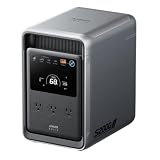
- 𝐔𝐩 𝐭𝐨 𝟑𝟓-𝐇𝐨𝐮𝐫 𝐅𝐫𝐢𝐝𝐠𝐞 𝐁𝐚𝐜𝐤𝐮𝐩: With 6W idle power draw and 10% higher efficiency, this power station runs 20% longer than other 2kWh systems, keeping your fridge powered for 35 hours.
- 𝟏𝟎,𝟎𝟎𝟎-𝐂𝐲𝐜𝐥𝐞 𝐋𝐅𝐏 𝐁𝐚𝐭𝐭𝐞𝐫𝐲: Powered by 314Ah LFP cells, S2000 has a 15-year lifespan, equivalent to 10,000 charge cycles.
- 𝐒𝐦𝐚𝐥𝐥𝐞𝐬𝐭 𝐚𝐧𝐝 𝐋𝐢𝐠𝐡𝐭𝐞𝐬𝐭 𝟐𝐤𝐖𝐡 𝐏𝐨𝐰𝐞𝐫 𝐒𝐭𝐚𝐭𝐢𝐨𝐧: 30% smaller and 25% lighter than the industry average, this power station measures just 8.2 × 11.1 × 12.7 in and weighs only 35.7 lbs.
- 𝐏𝐨𝐰𝐞𝐫𝐬 𝟗𝟗% 𝐨𝐟 𝐇𝐨𝐦𝐞 𝐄𝐬𝐬𝐞𝐧𝐭𝐢𝐚𝐥𝐬: 1,500W continuous output and 3,000W peak output keep nearly every essential appliance running. Actual runtime will vary depending on your refrigerator model, usage habits, and ambient temperature.
- 𝟔 𝐖𝐚𝐲𝐬 𝐭𝐨 𝐑𝐞𝐜𝐡𝐚𝐫𝐠𝐞: Supports up to 400W solar input. Power up via AC + solar, a wall outlet, a generator, solar panels, an alternator charger, or a car outlet—anytime, anywhere.
Anker SOLIX S2000 — Best Portable Power Station
2,010Wh LiFePO4, 3,000W peak output, 35-hour fridge runtime, UPS function with millisecond switchover — Anker quality in a serious home backup station.
231 reviews at 4.6 stars. Buyer feedback consistently highlights reliability, build quality, and runtime that matches the spec sheet.
Best for: Apartments, home offices, and anyone who needs silent indoor backup power that also protects sensitive electronics as a UPS.
Budget Pick

- [2450W Strong Power] Experience reliable starting 2450 watt age to run your essentials, from sump pumps to power tools and RV air conditioners. Our advanced inverter technology produces clean and stable sine wave power, ensuring it's perfectly safe.
- [Super Quiet Operation] POXURIO inverter generator adopts advanced sound reduction technology and produces a noise value of only 59 decibels during operation(much lower than other traditional generators), ensuring the comfort of electricity consumption.
- [Gas Powered] Our gas powered generator is welcomed by the majority of people. Compared with other fuel types, gasoline is more convenient to store, more affordable, and more convenient to obtain, making it one of the most common fuels in people's daily lives.
- [6L Large Capacity Fuel Tank] Equipped with a 6L high-capacity fuel tank, this gas generator runs up to 10 hours at 25% load—far more durable than ordinary models. Perfect for long outdoor trips or emergency power needs; just drain the oil when not in use to extend the machine’s lifespan.
- [Easy Portability for Any Scenario] This generator is portable.Whether you’re camping, hosting outdoor activities, or dealing with sudden power outages, it goes wherever you need reliable power.
2450-Watt Portable Inverter Generator — Best Budget Pick
Super-quiet 120V gas inverter, 1.6-gallon tank, 8.3-hour runtime, EPA compliant — covers the essential backup load without overspending.
4.6 stars from 146 reviews. Genuinely quiet, genuinely affordable, and genuinely capable of getting through an overnight outage on a single fill.
Best for: Budget-minded homeowners, campers who want a dual-use machine, and anyone who needs reliable quiet backup for the essentials.
In-Depth Reviews: The 5 Best Portable Generators for Home Backup
Each review below covers what the generator actually is, who it is built for, how it performs on the metrics that matter in a real outage, and what we would flag before you commit. Trade-offs are called out plainly.
1. Westinghouse 12500 Watt Dual Fuel — Best Overall for Whole-Home Backup
- 9500 Running Watts and 12500 Peak Watts (Gasoline); 8500 Running Watts, 11200 Peak Watts (Propane); Remote Start with Included Key Fob, Electric and Recoil Start; Up to 12 Hours of Run Time on a 6. 6 Gallon Fuel Tank with Fuel Gauge
- Features Two GFCI 120V 5–20R 20A Standard Household Receptacle, One Transfer Switch Ready 120V L14-30R 30A, and One RV Ready 120/240V 14–50R 50A; All Outlets Have Rubber Covers for Added Safety
- Powered by a Heavy Duty 457cc Westinghouse 4-Stroke OHV Engine Featuring a Long-Lasting Cast Iron Sleeve with Automatic Low Oil Shutdown and Digital Hour Meter. VFT display gives you real time updates with the voltage output, frequency, and lifetime hours
- Plug-and-Play: Comes with a Remote Start Key Fob, 12V Battery Charger, Oil, an Oil Funnel, a Tool Kit, and a User’s Manual to Get You Started Right Out of the Box (Minimal Assembly Required)
- All Westinghouse Portable Generators are Functionally Tested in the Factory and May Contain Minimum Residual Oil and/or Fuel Odor; EPA Compliant; Backed By 3-Year Limited Service, Labor, and Parts Coverage and Nationwide Customer Service Network
If you have ever sat through a three-day outage watching the fridge warm up, the sump pump go quiet, and the HVAC click off, you already understand exactly why 12,500 watts matters. The Westinghouse 12500 Watt Dual Fuel is not a camping machine. It is a serious whole-home backup generator built for homeowners who refuse to be underpowered when conditions get genuinely difficult.
What it is: A high-wattage dual-fuel portable generator that runs on either gasoline or propane, starts remotely via a key fob from up to 109 meters away, and arrives transfer-switch ready — meaning a licensed electrician can wire it directly into your main breaker panel with a proper transfer switch. More than 8,800 Amazon buyers have rated it 4.7 stars. That is not a coincidence. That is a machine that consistently delivers what it promises.
Who it is for: Homeowners with central HVAC, well pumps, sump pumps, electric ranges, medical equipment, or any combination of high-draw appliances that cannot go without power during an extended outage. If your critical load list adds up to more than 4,000 running watts — or if you need to run more than four or five major appliances simultaneously — this is the machine for your home.
Key Specifications
| Peak Output (Gas) | 12,500W |
|---|---|
| Running Output (Gas) | 9,500W |
| Peak Output (Propane) | 11,200W |
| Running Output (Propane) | 8,500W |
| Fuel Type | Gasoline or Propane (dual-fuel, switchable) |
| Start System | Remote key fob + push-button electric + recoil pull-cord backup |
| Transfer Switch | Transfer-switch ready (adapter included) |
| Outlets | Multiple, including 30A and 50A |
| Amazon Rating | 4.7 / 5 — 8,800+ verified reviews |
Live price: $999.00. Compared to a permanently installed standby generator — typically $5,000 to $15,000 installed — this delivers comparable whole-home wattage at a fraction of the total investment, with the added flexibility of being portable.
Dual-fuel matters more than you might think. Gas stations near the epicenter of a major storm outage run dry within 24–48 hours. If you keep a 100-lb propane cylinder for the grill or outdoor kitchen, you can switch fuel mid-outage without stopping or losing power. Our analysis of gas, propane, and tri-fuel generator trade-offs breaks this decision down in full — it is worth reading if you are still deciding between fuel configurations.
Remote start in real conditions: Amazon reviewers cite the remote key fob as the single most appreciated feature, particularly in cold, wet, and dark conditions. Pulling a recoil cord in the rain at 2 AM while carrying a flashlight is miserable. The remote start eliminates it. The 109-meter range means you can fire up the generator from inside the house while it sits safely at the approved outdoor distance.
Pros
- 12,500 peak watts — handles virtually any household load scenario
- Dual-fuel: gas or propane, switchable mid-outage for maximum flexibility
- Remote electric start up to 109 meters — no pull-cord in the dark
- Transfer-switch ready for professional hardwire installation
- 8,800+ reviews at 4.7 stars — the most proven product on this entire list
Cons
- Large and heavy — not designed to be moved frequently or stored in tight spaces
- Significantly louder than inverter models (70–76 dB at load) — not ideal for noise-restricted suburban areas
- Requires outdoor-only placement at 20+ feet from any opening — CO risk applies
- High fuel consumption under heavy load; budget for substantial fuel storage
What sets it apart: No other portable generator at this price combines 12,500W output, dual-fuel operation, remote electric start, and transfer-switch readiness in a single unit with this volume and quality of verified buyer evidence.
Next step: Check current price and availability on Amazon.
Buy on Amazon2. Oxseryn 4400-Watts Inverter Generator — Best Mid-Range Open-Frame Option
- Powerful Output: 4400 peak watts and 3400 running watts, 2*120V AC ports, 1* 30A RV port, 1*12V DC port, 14 hours runtime at 25% load
- Gas Powered: 2 gallon fuel tank capital
- Features: Inverter technolog, ECO mode, EPA compliment, RV ready, overload protection, low oil shutdown, cold start technology
- Portable Generator: Weight 56lbs, lightweight and easy to move
- Note: All Oxseryn generators are functionally tested in the factory, so there may be a slight smell of gas when you receive it

What it is: A 4,400-watt open-frame inverter generator running on gasoline, delivering clean sine-wave output through multiple outlets including a 30A RV-ready TT-30R outlet, with EPA compliance across all 50 states. With 410 Amazon reviews at 4.6 stars, it has built a meaningful verified track record for a newer mid-market model.
Who it is for: Homeowners whose emergency load — refrigerator, freezer, sump pump, essential lights, phone and device chargers, and perhaps a window air conditioning unit — adds up to somewhere between 2,500 and 4,000 running watts. It is also the natural pick for RV owners who want one generator that covers both road-trip campsite power and home emergency backup.
The open-frame design sacrifices some acoustic isolation compared to fully enclosed inverter housings. But it pays dividends in heat dissipation, making it better suited to sustained heavy-load operation. If minimizing noise is your top priority above all else, our guide on choosing a quiet portable generator covers the open-frame versus enclosed inverter trade-off in depth — understanding it before you buy will save you regret.
Why clean inverter power matters here: Inverter generators produce clean sine-wave electricity that is safe for laptops, televisions, CPAP machines, smart appliances, and any other electronically sensitive device. A conventional (non-inverter) generator at this wattage might cost 20–30% less on paper — but the risk of voltage harmonics damaging your expensive electronics is real. The Oxseryn’s inverter design removes that risk entirely.
Key Specifications
| Peak Output | 4,400W |
|---|---|
| Generator Type | Open-frame inverter |
| Power Quality | Clean sine wave — safe for sensitive electronics |
| Fuel Type | Gasoline |
| RV Outlet | 30A TT-30R (RV-ready) |
| EPA Compliance | Yes — all 50 states |
| Amazon Rating | 4.6 / 5 — 410+ verified reviews |
Live price: $329.99. In the 4,000W+ open-frame inverter class, this represents strong value for the feature set.
Pros
- 4,400 peak watts covers the vast majority of medium-home emergency loads
- Inverter technology: clean sine-wave output safe for all electronics
- 30A RV-ready outlet — direct hookup for RV owners
- EPA compliant — legal in all 50 states including California
- Strong verified review base for a mid-market model (410 at 4.6 stars)
Cons
- Open frame is louder than fully enclosed inverter models (58–65 dB range)
- Gas only — no dual-fuel option; fuel storage discipline required
- Not sized for central HVAC or simultaneous whole-home loads
- Must operate outdoors — CO risk applies like all gas generators
What sets it apart: The 4,400W capacity, inverter clean power, and 30A RV outlet combination at a mid-market price point is rare. This is the natural upgrade path for anyone who has outgrown a sub-2,500W budget generator but does not need the Westinghouse’s whole-home scale.
Next step: Check current price and stock on Amazon.
Buy on Amazon
3. PECRON F3000LFP Portable Power Station — Best Expandable Gas-Free Backup
- 【3600W High Power & 3072Wh Massive Capacity】 Power 13 devices simultaneously with 3600W pure sine wave output, supporting heavy-duty appliances like refrigerators, air conditioners, and power tools. 3072Wh LiFePO4 battery provides emergency backup for 2-3 days of home essentials.
- 【1800W Ultra-Fast Charging in 2 Hours】 Recharge from 0% to 100% in just 2 hours via AC input (1800W max) — 30% faster than others. Triple charging options (AC + solar + car) with solar compatibility (1600W max, 25-120V input).
- 【13 Ports for All Devices】 6 AC outlets + 2 USB-C (100W PD for laptop) + 2 USB-A (18W) + 1 carport + 2 DC 5525 Output. Charge laptops, drones, CPAP machines, cameras, and phones at once — no compromises.
- 【UPS Backup & Smart Control】 Instant UPS mode (8-20ms switch) protects computers and medical devices during outages. Monitor real-time power usage via APP, make you use electricity smarter.
- 【What You Get】 2+3 years worry-free warranty and 24hrs/7d friendly customer service. pecron F3000LFP Power Station*1, AC Charging Cable*1, Single port XT60 to MC4 solar charging cable*1, Accessory Bag*1, User Manual*1

What it is: A 3,072Wh LiFePO4 battery-based power station that outputs 3,600W continuously, charges from AC wall power, solar panels, or a vehicle’s 12V outlet, and can be expanded to 10,752Wh total capacity by adding battery pack extensions. It produces zero emissions, runs completely silently, and is safe to operate indoors without any ventilation requirements.
Who it is for: Homeowners who want a long-term, gas-free backup power strategy — particularly anyone planning to pair it with solar panels for a hybrid or off-grid-capable home energy system. Also the right call for households with respiratory sensitivities, anyone with strictly limited outdoor space, or homeowners who are thinking beyond surviving the next outage toward genuine energy independence.
This is a fundamentally different product category from any gas generator on this list. If you are seriously weighing the gas-versus-battery decision, our detailed comparison of the best non-gas generators for home use in 2026 covers the full trade-off analysis across runtime, upfront cost, safety, maintenance, and environmental impact.
Why LiFePO4 chemistry matters: Lithium iron phosphate is thermally stable — it does not catch fire under normal operating conditions. It retains capacity through 3,000+ charge cycles, which translates to roughly 8–10 years of regular use. It performs better in cold temperatures than standard lithium-ion. And it is the safest consumer battery chemistry currently available. The PECRON F3000LFP uses LiFePO4 throughout, making it meaningfully safer than NMC-based alternatives in the same power class.
The expandability advantage: Most battery power stations are fixed-capacity purchases. The PECRON F3000LFP is not. If 3,072Wh proves insufficient for a multi-day outage, you add a battery expansion unit — no new system, just more capacity, up to 10,752Wh total. That scalability is a genuine long-term value proposition that no fixed-capacity competitor can match.
Key Specifications
| Base Capacity | 3,072Wh |
|---|---|
| Expandable To | 10,752Wh (with expansion batteries) |
| Continuous AC Output | 3,600W |
| Battery Chemistry | LiFePO4 (lithium iron phosphate) |
| Charge Sources | AC wall outlet, solar panels, vehicle 12V |
| Fast Charging | Yes |
| Indoor Safe | Yes — zero emissions, no ventilation required |
| Amazon Rating | 4.5 / 5 — 130+ verified reviews |
Live price: $899.00. The upfront cost is higher than a gas generator of comparable wattage — but with no ongoing fuel cost when charged from solar, and no maintenance expenses, the total cost of ownership picture looks different over a 5–10 year horizon.
Pros
- Silent and fume-free — completely safe for indoor use with no ventilation
- Expandable from 3,072Wh to 10,752Wh as needs grow
- LiFePO4 chemistry: thermally stable, 3,000+ cycles, long service life
- Solar-ready: pairs with panels for indefinite runtime during extended outages
- Multiple charge sources for flexibility in varied conditions
- Fast charging capability from AC wall power
Cons
- Newer product — smaller review base (130 reviews) than the gas generators on this list
- Higher upfront cost than gas generators at comparable peak wattage
- Runtime is bounded without solar input or expansion batteries for outages beyond 12–18 hours
- Cannot replace a whole-home gas generator for HVAC-heavy large homes
What sets it apart: The PECRON F3000LFP is the most future-proof backup system on this list. Expandable capacity, solar compatibility, LiFePO4 safety, and indoor-safe zero-emission operation are advantages no gas generator can offer.
Next step: Check current pricing and available battery expansion packs on Amazon.
Buy on Amazon
4. Anker SOLIX S2000 — Best Portable Power Station for Home Backup
- 𝐔𝐩 𝐭𝐨 𝟑𝟓-𝐇𝐨𝐮𝐫 𝐅𝐫𝐢𝐝𝐠𝐞 𝐁𝐚𝐜𝐤𝐮𝐩: With 6W idle power draw and 10% higher efficiency, this power station runs 20% longer than other 2kWh systems, keeping your fridge powered for 35 hours.
- 𝟏𝟎,𝟎𝟎𝟎-𝐂𝐲𝐜𝐥𝐞 𝐋𝐅𝐏 𝐁𝐚𝐭𝐭𝐞𝐫𝐲: Powered by 314Ah LFP cells, S2000 has a 15-year lifespan, equivalent to 10,000 charge cycles.
- 𝐒𝐦𝐚𝐥𝐥𝐞𝐬𝐭 𝐚𝐧𝐝 𝐋𝐢𝐠𝐡𝐭𝐞𝐬𝐭 𝟐𝐤𝐖𝐡 𝐏𝐨𝐰𝐞𝐫 𝐒𝐭𝐚𝐭𝐢𝐨𝐧: 30% smaller and 25% lighter than the industry average, this power station measures just 8.2 × 11.1 × 12.7 in and weighs only 35.7 lbs.
- 𝐏𝐨𝐰𝐞𝐫𝐬 𝟗𝟗% 𝐨𝐟 𝐇𝐨𝐦𝐞 𝐄𝐬𝐬𝐞𝐧𝐭𝐢𝐚𝐥𝐬: 1,500W continuous output and 3,000W peak output keep nearly every essential appliance running. Actual runtime will vary depending on your refrigerator model, usage habits, and ambient temperature.
- 𝟔 𝐖𝐚𝐲𝐬 𝐭𝐨 𝐑𝐞𝐜𝐡𝐚𝐫𝐠𝐞: Supports up to 400W solar input. Power up via AC + solar, a wall outlet, a generator, solar panels, an alternator charger, or a car outlet—anytime, anywhere.

What it is: A 2,010Wh LiFePO4 power station from Anker — one of the most trusted names in consumer electronics power — rated at 3,000W peak AC output, capable of running a refrigerator for up to 35 hours continuously, and equipped with a built-in UPS (uninterruptible power supply) function that transitions to battery power in milliseconds when the grid drops. Two hundred thirty-one Amazon buyers have rated it 4.6 stars, with feedback consistently focused on build quality and real-world runtime reliability.
Who it is for: Apartment dwellers, homeowners who work from home, and anyone who needs to protect sensitive electronics during brownouts and outages — and who wants a brand with a proven track record behind the product. If a sudden power cut costs you real money in lost work, the UPS function alone deserves serious attention. If you simply need to keep food cold through a typical overnight outage, the 35-hour fridge runtime has that covered with time to spare.
The UPS function is underrated in this category. Most power stations require you to manually plug in devices after an outage has already started — which means a gap where connected equipment goes down. The Anker SOLIX S2000’s UPS mode keeps devices connected to it live through the grid-to-battery switchover. No interruption, no reboots, no unsaved work lost. For home office setups — NAS drives, workstations, VoIP phones — this is a meaningful operational advantage.
1,500W solar input: The SOLIX S2000 accepts up to 1,500W of solar panel input, meaning on a clear day you can recharge from near-empty to full in a few hours. That recharge capability transforms a finite 2,010Wh capacity into a renewable one for outages that coincide with decent weather.
Key Specifications
| Capacity | 2,010Wh |
|---|---|
| Peak AC Output | 3,000W |
| Battery Chemistry | LiFePO4 |
| Cycle Life | 3,000+ charge cycles |
| Fridge Runtime | Up to 35 hours (typical efficient refrigerator) |
| UPS Function | Yes — millisecond switchover |
| Max Solar Input | 1,500W |
| Indoor Safe | Yes — zero emissions |
| Amazon Rating | 4.6 / 5 — 231+ verified reviews |
Live price: $649.98. Within Anker’s SOLIX lineup, this sits at the accessible entry point to serious home backup capacity.
Pros
- Anker brand reliability — decades of consumer electronics quality track record
- LiFePO4 with 3,000+ cycle life — a genuinely long-term investment
- UPS function: millisecond switchover keeps connected devices live
- 35-hour fridge runtime comfortably covers most outage scenarios
- 1,500W solar input for fast recharge during clear-weather outages
- Silent, zero-emission, completely safe for indoor use
Cons
- 2,010Wh capacity is finite — multi-day outages without solar require supplemental power
- Not suited to central HVAC, well pumps, or high-draw whole-home loads
- Less expandable than the PECRON F3000LFP
- Smaller review volume than the gas generators on this list
What sets it apart: Anker’s brand quality, the built-in UPS function, LiFePO4 chemistry with a 3,000-cycle life, and 35 hours of fridge runtime combine in the most polished, best-built battery backup power station on this list.
Next step: Check current pricing and UPS-compatible device specifications on Amazon.
Buy on Amazon
5. 2450-Watt Portable Inverter Generator — Best Budget Quiet Generator for Home Backup
- [2450W Strong Power] Experience reliable starting 2450 watt age to run your essentials, from sump pumps to power tools and RV air conditioners. Our advanced inverter technology produces clean and stable sine wave power, ensuring it's perfectly safe.
- [Super Quiet Operation] POXURIO inverter generator adopts advanced sound reduction technology and produces a noise value of only 59 decibels during operation(much lower than other traditional generators), ensuring the comfort of electricity consumption.
- [Gas Powered] Our gas powered generator is welcomed by the majority of people. Compared with other fuel types, gasoline is more convenient to store, more affordable, and more convenient to obtain, making it one of the most common fuels in people's daily lives.
- [6L Large Capacity Fuel Tank] Equipped with a 6L high-capacity fuel tank, this gas generator runs up to 10 hours at 25% load—far more durable than ordinary models. Perfect for long outdoor trips or emergency power needs; just drain the oil when not in use to extend the machine’s lifespan.
- [Easy Portability for Any Scenario] This generator is portable.Whether you’re camping, hosting outdoor activities, or dealing with sudden power outages, it goes wherever you need reliable power.

What it is: A super-quiet 120V gas inverter generator rated at 2,450 watts, powered by a 1.6-gallon tank that delivers up to 8.3 hours of runtime on a single fill — EPA compliant across all 50 states, compact enough to carry by hand, and priced well within reach of most household emergency budgets.
Who it is for: Budget-conscious homeowners who need to cover the essentials during a power outage: a refrigerator, a few LED lights, phone and laptop chargers, and perhaps a small fan. Also an excellent pick for anyone who wants a generator that serves double duty as a campsite power source and a home emergency backup — light enough to lift without a wheel kit or ramp.
At 4.6 stars from 146 verified Amazon reviews, it carries a smaller review volume than the Westinghouse or Oxseryn. But the feedback is consistent. Buyers most often call out the noise level — or rather, the absence of it — as the standout real-world advantage. For a gas inverter at this price point, that is a meaningful differentiator.
8.3 hours on 1.6 gallons. At a typical home backup load — fridge, lights, and device chargers totaling roughly 300–400 running watts — you can stretch that tank runtime considerably. A single fill-up the evening before a forecast storm gives you overnight coverage without a 2 AM fuel run. That operational simplicity has genuine value in a real emergency.
EPA compliance in this price class is not universal. Not every inexpensive gas generator passes the standard, which can matter significantly in California and other states with strict emissions enforcement. This one does.
Key Specifications
| Peak Output | 2,450W |
|---|---|
| Voltage | 120V |
| Generator Type | Inverter (clean sine wave, quiet operation) |
| Fuel Type | Gasoline |
| Tank Capacity | 1.6 gallons |
| Runtime | Up to 8.3 hours per tank |
| EPA Compliance | Yes — all 50 states including California |
| Amazon Rating | 4.6 / 5 — 146+ verified reviews |
Live price: $189.99. This is the most accessible generator on this list by a meaningful margin.
Pros
- Super-quiet inverter operation — minimal disruption to neighbors
- 8.3-hour runtime on a single 1.6-gallon fill — overnight coverage without refueling
- EPA compliant — legal in all 50 states
- Compact and light — no wheel kit or ramp required to move it
- Clean sine-wave output safe for sensitive electronics
- Doubles as a camping generator for dual-use value
- Most accessible price point on this list
Cons
- 2,450W limits you strictly to essentials — central AC, electric dryers, and high-draw appliances are out
- Gas only — no dual-fuel option; fuel stabilizer discipline required for storage
- Must operate outdoors — CO risk applies
- Smaller review base than the Westinghouse or Oxseryn
What sets it apart: It is the quietest and most affordable gas-powered inverter on this list. If your emergency load fits within 2,450 watts and quiet operation matters to you, this generator is the clear choice at the budget end of the field.
Next step: Check current price and availability on Amazon.
Buy on Amazon
Side-by-Side Breakdown: Power, Noise, Fuel, and Value
How do these five picks compare directly on the metrics that matter in a real outage? Here is the unvarnished comparison — no marketing language, no hedging.
| Model | Peak Watts | Fuel | Noise Level | Indoor Safe | Transfer Switch | UPS Function | Rating |
|---|---|---|---|---|---|---|---|
| Westinghouse 12500W Dual | 12,500W | Gas + Propane | Loud (~70–76 dB) | No | Yes | No | 4.7 ★ |
| Oxseryn 4400W Inverter | 4,400W | Gas | Moderate (~58–65 dB) | No | With adapter | No | 4.6 ★ |
| PECRON F3000LFP | 3,600W | Battery / Solar | Silent (0 dB) | Yes | No | No | 4.5 ★ |
| Anker SOLIX S2000 | 3,000W peak | Battery / Solar | Silent (0 dB) | Yes | No | Yes | 4.6 ★ |
| 2450W Inverter Generator | 2,450W | Gas | Quiet (~50–58 dB) | No | No | No | 4.6 ★ |
What Can Each Generator Actually Power?
Peak wattage defines the ceiling. Here is what that ceiling means in practical terms, using typical appliance running watt draws:
| Appliance | Typical Running Watts | Surge / Starting Watts |
|---|---|---|
| Refrigerator (modern, efficient) | 100–200W | Up to 800W surge |
| Chest freezer | 30–100W | Up to 500W surge |
| Sump pump (1/2 HP) | 800–1,000W | Up to 2,000W surge |
| Window AC (10,000 BTU) | 900–1,200W | Up to 2,500W surge |
| Central AC (3-ton) | 3,000–4,500W | Up to 7,500W surge |
| Well pump (1 HP) | 750W | Up to 2,000W surge |
| LED lighting (10 bulbs) | 60–100W | Negligible |
| Smartphone charger | 5–20W | Negligible |
| Laptop | 45–90W | Negligible |
| Microwave (1,000W class) | 900–1,200W | Negligible |
| CPAP machine | 30–60W | Negligible |
The starting-watts rule is critical. Motor-driven appliances — compressors, pumps, and HVAC units — draw 2–3× their running watts for the first 2–3 seconds of startup. A generator that cannot handle this startup surge will trip its overload protector or stall mid-surge. Always calculate your load including peak starting watts, not just running watts, when deciding on wattage class.
Noise Levels in Context
Generator noise specs are typically measured at 25% load from 23 feet away. In real use — higher loads, closer distances — the sound is higher. Here is a practical decibel reference:
- 50 dB — Quiet office, soft indoor conversation
- 60 dB — Normal conversational volume at close range
- 65 dB — Busy restaurant interior
- 70 dB — Vacuum cleaner at 10 feet
- 75 dB — Lawn mower at distance; heavy traffic
The 2450W Inverter Generator operates in the 50–58 dB range at typical home backup loads — quiet enough that neighbors may not hear it at all. The Westinghouse 12500W at high load approaches 70–76 dB. In a noise-ordinance-governed neighborhood, this difference may matter as much as the wattage difference. The two battery stations on this list produce zero decibels at every load level.
Real-World User Experience: What These Generators Are Like to Actually Live With
Specs tell you what a generator can do on paper. User experience tells you whether you will actually use it right when it matters. Here is the honest day-to-day picture for each category on this list.
Setup and First Use
Gas generators — Westinghouse 12500W, Oxseryn 4400W, 2450W Inverter: All three require an initial oil fill, fresh stabilized fuel, and a test run before you need them in an emergency. There is a break-in procedure — most manufacturers recommend an oil change after the first five hours of operation. Do this before storm season, not during it. The worst possible time to read the generator manual is during a blackout at 10 PM. Our step-by-step guide for how to start a portable generator correctly covers every stage from pre-check to first load connection — bookmark it now.
Battery power stations — PECRON F3000LFP, Anker SOLIX S2000: Plug in, charge fully, store in a conditioned space. No oil fill, no break-in, no fuel to source or rotate. Setup friction is close to zero. The one discipline required is keeping them charged — a dead power station when the grid fails is worse than not having one at all. A monthly charge-top reminder in your phone calendar is the entire maintenance program.
Living Through an Extended Outage
Westinghouse 12500W Dual: Once running, it handles the whole home and largely disappears from your awareness — other than the noise. At 70+ dB under load, it is audible at distance and significantly louder than inverter machines. Thoughtful placement (maximizing distance from property lines, exhaust directed away from occupied structures) is the main operational consideration. Everything else just works.
Oxseryn 4400W and 2450W Inverter: You will manage loads consciously. Know your priority appliances, understand their running and surge draws, and avoid starting high-surge devices simultaneously when you are near the rated ceiling. This is not complicated — it just requires a one-time exercise of building a load list before the next outage.
Battery stations — PECRON and Anker SOLIX: Silent, seamless, and within their capacity limits, the most livable indoor backup experience available. The operational discipline is monitoring the charge display and prioritizing loads during a long outage without solar recharge. Both units provide real-time capacity readouts on their displays.
Maintenance Reality Check
Gas generators require genuine maintenance to stay reliable: fresh oil every 50–100 hours of operation, stabilized fuel if stored for more than 30 days, annual spark plug and air filter inspection, and quarterly test runs of at least 30 minutes under load. Skip any of this, and you risk a generator that cranks but does not start when you actually need it. Battery power stations are essentially maintenance-free — store at 50–80% charge, cycle through a discharge/recharge every 2–3 months to maintain cell health, keep away from extreme heat.
Before any storm season or extended high-risk period, run through the 8-step storm prep routine for backup generators — it takes less than an hour and covers every maintenance and logistics check that separates a reliable unit from one that lets you down at the worst moment.
Safety: The Non-Negotiable
Carbon monoxide is colorless and odorless. It is responsible for more generator-related fatalities than any other cause. Every gas generator on this list — without exception — must operate outdoors, a minimum of 20 feet from any window, door, vent, or opening, with exhaust directed away from any occupied structure. No garages. No covered porches. No sheds. CO can reach lethal concentrations in an enclosed space within minutes. Install a battery-operated CO alarm inside your home as a secondary safety layer, regardless of generator type.
The PECRON F3000LFP and Anker SOLIX S2000 produce zero emissions at all times. They can operate in a bedroom, kitchen, or closet without any risk. This is not a marketing qualifier — it is a genuine safety advantage that should carry real weight in your decision, especially if anyone in your household has respiratory conditions or the property has limited outdoor staging space.

Which Generator Should You Buy? Best-For Recommendations by Scenario
The best portable generator for home backup is always the one that fits your situation — not the one with the largest number on the box. Use this matrix to find your match quickly.
| If your priority is… | Best Pick | Key Reason | Buy |
|---|---|---|---|
| Whole-home power — HVAC, well pump, sump pump, multiple major appliances | Westinghouse 12500W Dual Fuel | 12,500W + dual-fuel + remote start + transfer-switch ready. Nothing portable at this price comes close. | Buy on Amazon |
| Best value mid-range gas — medium home, RV hookup, clean inverter power | Oxseryn 4400W Inverter | 4,400W clean sine wave, 30A RV outlet, EPA compliant. The natural step up from a budget inverter. | Buy on Amazon |
| Silent, indoor-safe, expandable — solar-ready, long-term resilience planning | PECRON F3000LFP | 3,600W, LiFePO4, expands to 10,752Wh, solar-compatible. The most future-proof system on this list. | Buy on Amazon |
| Apartment or home office — UPS protection, silent indoor backup, fridge coverage | Anker SOLIX S2000 | Millisecond UPS switchover, 35-hr fridge runtime, Anker build quality. The most polished battery station here. | Buy on Amazon |
| Budget essentials — fridge, lights, chargers, quiet operation | 2450W Inverter Generator | Super-quiet, EPA compliant, 8.3-hour runtime on 1.6 gallons. The most accessible genuine backup generator. | Buy on Amazon |
| Hurricane and storm prep — maximum fuel flexibility during supply disruption | Westinghouse 12500W Dual Fuel | When gas stations run dry, switch to propane mid-outage without stopping. Dual-fuel is a storm-prep advantage no single-fuel machine can match. | Buy on Amazon |
| Camping + home backup dual use — one machine, two jobs | 2450W Inverter Generator | Compact, quiet, light enough to load without help. Equally at home at a campsite or in a driveway during an outage. | Buy on Amazon |
| Long-term solar-and-battery resilience — off-grid capable, solar-paired | PECRON F3000LFP | Expandable to 10,752Wh, pairs with solar for continuous renewable recharge. A system that grows with your energy goals. | Buy on Amazon |
For homeowners preparing for a specific storm threat, our guide on why hurricane season is the right time to invest in a backup generator covers timing, regional risk levels, and how to make a smart buying decision under time pressure.
Alternatives Worth a Look
Our five picks cover the most common homeowner backup scenarios. No shortlist covers everything. Here are the edge cases where you may want to look beyond this guide.
If You Want a Tri-Fuel Generator
The Westinghouse 12500W handles gas and propane. If you also want to run on natural gas — useful if your home has a natural gas supply line that stays active during grid outages — a tri-fuel model adds that option at a modest premium. The category is worth understanding before you finalize a fuel strategy if you have a natural gas service connection.
If You Only Need to Power Part of Your Home
Not every household needs a 12,500-watt whole-home system. If your goal is keeping a few specific circuits live — medical equipment, the fridge, a bedroom — rather than the full house, a partial home generator approach may deliver equivalent real-world value at significantly lower cost and complexity. It is a category worth researching before you commit to a high-wattage machine you may not actually need.
More Battery Power Stations to Consider

- Ultra-Lightweight: At only 7.5 lbs, the Explorer 300 delivers a robust 292Wh capacity while remaining 17% lighter than the industry average. The sleek, integrated handle makes it effortless to carry on long hikes or pack with your camping gear, providing reliable off-grid power without adding bulk to your load.
- Versatile Power for 6 Devices: Equipped with 2 AC outlets, a 100W USB-C PD port, 2 USB-A ports, and a 120W car port. With a 300W rated output (600W peak surge), it easily handles laptops, drones, and cameras, while also serving as a dependable cpap battery for camping or a robust solar powered generator when paired with panels.
- Built to Last: Upgraded with premium LiFePO4 chemistry, this portable generator delivers over 4,000 charge cycles before reaching 70% capacity. This ensures more than 11 years of reliable service life, making it a sustainable and durable energy partner for a decade of exploration.
- Fast Solar Charging: Perfect for off-grid use, this solar powered generator pairs seamlessly with Jackery panels. Reach 80% capacity in approximately 2.8 hours with a 100W solar panel, or maintain your gear with a portable 40W panel (80% in 7.5 hours), making it an essential part of your hunting essentials.
- WHAT YOU GET: 1* Jackery Explorer 300 Portable Power Station, 1*AC adapter, 1* car charger cable, 1* user guide (𝐒𝐨𝐥𝐚𝐫 𝐏𝐚𝐧𝐞𝐥 𝐍𝐨𝐭 𝐈𝐧𝐜𝐥𝐮𝐝𝐞𝐝.)

- 【SLIM & POCKETABLE】This portable power bank is about the size of a smartphone (6.5×3.3×4 inches) and weighs only 2.54 pounds. It features an ergonomic soft handle for easy portability. It easily fits into a backpack for convenient portability. Pro Tip: Fully charge and discharge the battery twice initially for the best experience.(Solar panel and cable not included)
- 【DUAL INPUT/OUTPUT (AC + DC)】The portable power station comes with a 89.6Wh capacity LiFePO4 battery pack(not NCM) and 100W, features 7 output ports, including 2 AC sockets (100W),2 USB-C port (45W/15W), 2 USB-A port (18W/15W), and DC5521 ports (60W). The LED display can clearly show the working status and remaining power.(Please peel off the protective film on the screen after unboxing)
- 【Ultra Fast Charging】With unique fast charging technology,the portable generator can be charged from 0-80% just in 1.5hrs. The solar power bank power station has Four methods to charging: AC wall socket fast charging, USB-C DC two-way PD fast charging(AC and DC can be charged at the same time) ,car charging and solar panel charging.Fast charging solar power bank portable charger suitable for for emergency home backyard outdoor power outages off-grid camping essentials
- 【ULTRA-QUIET & EMERGENCY-READY POWER STATION】Experience silent, fanless operation perfect for sleeping, working, or camping, while the built-in 4-level LED flashlight (with steady/SOS modes) ensures emergency readiness. Its accidental-touch-proof design requires a long-press to activate, ideal for charging devices during outages or outdoor adventures without noise disruption.(Only suitable for powering devices within 100W).
- 【Long-Lasting & Safe LiFePO4 Battery】: 3500+ life cycles (far exceeding standard batteries). Durable LiFePO4 batteries last 3x longer than standard lithium batteries! Advanced BMS provides 12 safety protections, monitoring voltage, current & temperature. Powers your smartphone, laptop, mini-fridge, camera, and drone simultaneously.

- Powerful yet Compact: Boasting a 1,500W AC output and a 3,000W surge peak, the Solar Generator 1000 V2 can power multiple appliances, including AC units, fridges, and electric pots. With a 1,070Wh capacity and a lightweight build of only 23.8 lbs, along with a foldable handle, it makes an excellent companion for outdoor camping, road trips, or emergencies.
- One Hour Fast Charging: Charge your Explorer 1000 v2 Portable Power Station from 0% to 100% battery level in just one hour with emergency charging activated via the Jackery App. It defaults to 1.7 hours for a full charge to optimize battery health. Engineered with advanced ChargeShield 2.0 technology, this power station charges safer, faster, and smarter.
- 10 Year Lifespan: The Explorer 1000 v2 portable power station is equipped with a durable LFP battery, maintaining over 70% of its original capacity even after 4,000 charge cycles, offering longevity exceeding 10 years.
- Tailored for Versatility: Featuring two USB-C ports, one USB-A port, one DC car port, and three pure sine wave AC ports, along with LED lights, the Solar Generator 1000 V2 is capable of charging multiple devices simultaneously, meeting power needs in various scenarios. PD 100W fast USB-C charging ensures a rapid charging speed, even without power adapters.
- Smart App Control: Effortlessly switch between different charging modes with Jackery’s App—including one hour emergency charging from 0 to 100%, 30 dB quiet overnight charging mode, and energy efficiency mode. Maximize the freedom to adjust the power station to meet your needs.
If Camping Is the Primary Use
The 2450W Inverter Generator and both battery stations on this list are capable camping power sources. But if campsite performance is your primary need and home backup is secondary, there are models optimized specifically for portability, campsite-appropriate features, and outdoor durability that will serve that use case better than a home-backup-primary pick.
Pricing Trends and Where to Buy
Generator prices are not stable year-round — and they are not stable across channels. Buying smart means knowing when and where, not just which model.
Live Prices (Updated Automatically from Amazon)
- 2450-Watt Portable Inverter Generator: $189.99
- Oxseryn 4400W Inverter Generator: $329.99
- Westinghouse 12500W Dual Fuel: $999.00
- Anker SOLIX S2000: $649.98
- PECRON F3000LFP: $899.00
When to Buy: Seasonal Patterns
Buy before storm season — not during it. In the 48–72 hours before a major hurricane or winter storm makes landfall, portable generator inventory clears out from every major seller and prices respond accordingly. If you live in a storm-prone region — Gulf Coast, Atlantic Coast, Tornado Alley, the upper Midwest during ice storm season — the off-season window of February through April or October through November offers better stock, more stable pricing, and time to test and stage your unit before conditions deteriorate.
For LiFePO4 battery stations, Amazon Prime Day and Black Friday are historically the strongest sale events. Consistent 10–20% discounts on major brands appear across those events. If your purchase is flexible by a few months, the savings on a $1,500+ unit are meaningful.
Where to Buy
All five generators and power stations on this list are available on Amazon with Prime shipping, Amazon’s A-to-Z Guarantee, and straightforward return processing. All pricing displayed in this guide is pulled live from Amazon and reflects current listings. We recommend buying through Amazon for warranty consistency — third-party resellers and grey-market sellers do not always honor manufacturer warranty terms.
What Changed in 2025: Generator Technology Worth Knowing
The home backup power market moved meaningfully over the past year. Here is what is different in 2025 and what it means for buyers evaluating these categories today.
LiFePO4 Battery Stations Have Crossed a Maturity Threshold
In 2023, an expandable 3,000Wh+ LiFePO4 power station was a premium niche product. In 2025, the PECRON F3000LFP and Anker SOLIX S2000 represent a matured technology tier with meaningfully better price-to-capacity ratios, more consistent manufacturing quality, and verified buyer review bases that substantiate runtime and durability claims. Buyer skepticism about battery station marketing claims is warranted — but for the specific units on this list with hundreds of verified Amazon reviews, the real-world data now supports the spec sheets.
Budget Inverter Generators Have Genuinely Improved
The sub-$500 inverter generator category used to be marked by inconsistent build quality and variable performance. That has changed. EPA compliance is near-universal in this class in 2025. The quiet operation and clean power that once defined Honda and Yamaha premium models are now accessible at a fraction of the cost. The 2450W Inverter on this list is a direct product of that improvement curve.
Dual-Fuel Is Now the Rational Default for Gas Generator Buyers
Dual-fuel capability costs relatively little extra in 2025 compared to a single-fuel gas generator at equivalent wattage. The value it adds in a real outage — fuel flexibility when supply chains are disrupted and gas stations are empty — is disproportionate to that price difference. Gasoline goes stale in 30 days without stabilizer. Propane stores indefinitely. If you are buying a gas generator and dual-fuel is an option at the wattage you need, the case for it is strong.
Transfer Switch Adoption Is Growing
More homeowners are pairing their portable generators with properly installed automatic or manual transfer switches — eliminating backfeed risk, simplifying load management, and enabling generator use to feel closer to having a standby unit. The Westinghouse 12500W comes transfer-switch ready out of the box, a detail worth factoring in if professional electrical installation is part of your backup power plan.
Final Verdict: The Best Portable Generator for Home Backup in 2025
There is no single best portable generator for every home. There is only the best one for your watt load, your fuel access, your space constraints, and your budget. Here is the plain-language summary of where each pick stands:
- For maximum whole-home power: The Westinghouse 12500W Dual Fuel is not a close call. 12,500 watts, dual-fuel, remote start, transfer-switch ready, and 8,800+ reviews at 4.7 stars. If you need to run your home during a serious storm — HVAC, pumps, appliances, all of it — buy this.
- For mid-range gas value with clean output: The Oxseryn 4400W Inverter delivers inverter-quality power, a 30A RV outlet, and 4,400 watts at a competitive price. The natural upgrade pick for medium homes and RV owners.
- For the most future-proof no-gas system: The PECRON F3000LFP is the long-term investment. Expandable capacity, solar-ready, LiFePO4 chemistry, and indoor-safe operation. The right call for homeowners planning beyond the next outage.
- For battery station build quality and UPS protection: The Anker SOLIX S2000 is the best-executed, most reliable battery backup on this list. Anker’s brand track record, UPS function, and 35-hour fridge runtime set it apart in its category.
- For budget-friendly quiet essentials coverage: The 2450W Portable Inverter Generator is the most accessible genuine home backup generator on this list. Quiet, EPA compliant, overnight-capable on one fill, and dual-purpose with camping.
Find Your Generator in Four Questions
Q1: Do you need to run central HVAC, a well pump, a sump pump, or more than four major appliances simultaneously?
Yes → Buy the Westinghouse 12500W Dual Fuel. Buy on Amazon
No → Continue to Q2.
Q2: Do you want zero emissions, no fuel storage, and completely indoor-safe operation?
Yes → Continue to Q3 (battery station path).
No → Continue to Q4 (gas generator path).
Q3 — Battery path: Do you want expandable capacity and solar-readiness for long-term resilience, or a trusted brand with UPS protection for your home office and electronics?
I want expandable, solar-ready, maximum long-term capacity → PECRON F3000LFP. Buy on Amazon
I want Anker build quality, UPS function, and 35-hour fridge runtime → Anker SOLIX S2000. Buy on Amazon
Q4 — Gas path: Do you need more than 2,500 watts of output, or is covering the essentials quietly and cheaply the goal?
I need 2,500–4,400W of clean mid-range power → Oxseryn 4400W Inverter. Buy on Amazon
Essentials only — quiet operation and budget matter most → 2450W Portable Inverter Generator. Buy on Amazon
Evidence Vault
How this guide was built, where the data comes from, and what to verify independently before you buy.

Product Data Sources
All product images, live prices, star ratings, and review counts displayed in this article are rendered via AAWP directly from Amazon’s product listings. These figures update automatically when Amazon’s data changes. Review counts and ratings cited in the editorial copy reflect the Amazon listings as reviewed in September 2025 and are based on verified buyer reviews only.
Wattage and Runtime Figures
Peak wattage figures are sourced from manufacturer specifications as listed on each product’s Amazon page. Running (continuous) watts for gas generators are typically 80–85% of peak output. Battery station watt figures reflect continuous AC output per manufacturer ratings. Surge or starting watt requirements for motor-driven appliances can reach 2–3× their running watts — always calculate for peak surge demand when sizing a generator for any load that includes compressors, pumps, or HVAC equipment.
Noise Level Notes
Noise figures in this article are sourced from manufacturer specifications and published category standards for each generator type. They are not the result of independent decibel measurements conducted by Generator Junkie. Real-world noise at higher loads and closer distances will exceed spec-sheet figures. As a general benchmark: enclosed inverter generators in the sub-2,500W class are typically rated 50–60 dB at 25% load from 23 feet; open-frame inverters in the 4,400W range typically measure 58–65 dB; conventional generators at full load commonly exceed 70 dB. Battery power stations produce 0 dB at all load levels.
Safety References
EPA compliance claims are sourced from manufacturer listings on Amazon. Carbon monoxide safety guidance in this article reflects published standards: operate all gas generators outdoors at a minimum of 20 feet from any window, door, vent, or other opening, with exhaust directed away from any occupied structure. Never operate a gas generator inside a garage — even with the door fully open. Install at least one battery-operated CO detector inside the home as a secondary protection layer regardless of generator type or placement.
Review Window and Update Policy
This guide was reviewed and updated in September 2025. Generator recommendations, pricing, and review data are revisited on a rolling basis and updated when meaningful changes occur — new models entering the market, significant price movements, or emerging buyer feedback patterns that change the recommendation picture. Check the “Updated” date at the top of the article for the most recent review date.
30-Day Follow-Up Note
We revisit shortlists after major storm seasons and update rankings based on accumulated real-world buyer feedback. If you are reading this post-publication, particularly after Atlantic hurricane season (June–November) or winter storm season (November–March), check back — those periods generate the most concentrated and genuine buyer feedback on generator reliability under actual outage conditions.