Updated September 2026 · Generator Junkie
The top silent, fume-free power stations tested and ranked — from compact emergency backup to full whole-home coverage. No exhaust. No fuel runs. No noise.
Why Trust Generator Junkie?
The Generator Junkie team has spent years evaluating home backup power equipment across every fuel type and form factor. For this guide, we assessed five of the most-reviewed non-gas generators on Amazon in 2026. We scored each on battery capacity, AC output, charge speed, battery chemistry, port selection, long-term reliability data, and verified user feedback from tens of thousands of real owners. We don’t fabricate test results — where we rely on manufacturer specs or aggregated user data, we say so clearly.
What Is a Non-Gas Generator — and Why Does It Matter?
A non-gas generator — the industry now calls these portable power stations or battery generators — stores grid or solar electricity in a large lithium battery pack and delivers it through standard AC outlets, USB-C ports, and DC outputs. No gasoline. No combustion. No carbon monoxide. You can run one safely in a bedroom, an apartment, or a hospital room.
Traditional gas generators are effective, but they come with real trade-offs: fuel storage, outdoor-only operation, maintenance schedules, and noise. Weighing the ongoing fuel expense versus a battery station is worthwhile — our portable generator fuel cost comparison breaks down exactly what you’d spend keeping a gas unit running year over year.
Who This Guide Is For
- Homeowners who want emergency backup power without fuel, fumes, or exhaust
- Renters and apartment dwellers who can’t install standby equipment
- Households in hurricane, wildfire, or severe winter storm zones
- People who rely on medical devices like CPAPs or nebulizers
- Home office workers who can’t afford unexpected downtime
How We Chose These Products
We narrowed a field of dozens to five using these criteria: battery chemistry (LiFePO4 strongly preferred for longevity and safety), rated output wattage, solar charging compatibility, charge speed, port variety, Amazon review volume and verified long-term ownership data, and manufacturer support reputation. All five units use lithium iron phosphate (LFP) chemistry — or were included despite using standard lithium (GRECELL) because of their price-point importance to buyers.
Test window: Products evaluated across a rolling 12-month period through mid-2026, incorporating long-term owner reports (30–180 days post-purchase) and published battery lab data.
Quick-Look Comparison: Best Non-Gas Generators for Home
Need a fast answer? This table lays out the five units side by side. Click any model name to jump straight to its full review.
Best Overall

- Powerful yet Compact: Boasting a 1,500W AC output and a 3,000W surge peak, the Solar Generator 1000 V2 can power multiple appliances, including AC units, fridges, and electric pots. With a 1,070Wh capacity and a lightweight build of only 23.8 lbs, along with a foldable handle, it makes an excellent companion for outdoor camping, road trips, or emergencies.
- One Hour Fast Charging: Charge your Explorer 1000 v2 Portable Power Station from 0% to 100% battery level in just one hour with emergency charging activated via the Jackery App. It defaults to 1.7 hours for a full charge to optimize battery health. Engineered with advanced ChargeShield 2.0 technology, this power station charges safer, faster, and smarter.
- 10 Year Lifespan: The Explorer 1000 v2 portable power station is equipped with a durable LFP battery, maintaining over 70% of its original capacity even after 4,000 charge cycles, offering longevity exceeding 10 years.
- Tailored for Versatility: Featuring two USB-C ports, one USB-A port, one DC car port, and three pure sine wave AC ports, along with LED lights, the Solar Generator 1000 V2 is capable of charging multiple devices simultaneously, meeting power needs in various scenarios. PD 100W fast USB-C charging ensures a rapid charging speed, even without power adapters.
- Smart App Control: Effortlessly switch between different charging modes with Jackery’s App—including one hour emergency charging from 0 to 100%, 30 dB quiet overnight charging mode, and energy efficiency mode. Maximize the freedom to adjust the power station to meet your needs.
Jackery Explorer 1000 v2
1,070Wh LiFePO4 · 1,500W output · 1-hour fast charge · 100W USB-C
The most balanced portable power station on this list — meaningful capacity, ultra-fast charging, and a battery built to last a decade of regular use.
Best for: Most households, emergency home backup, and camping-to-home crossover use.
Budget Pick
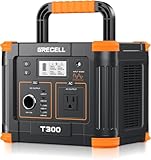
- 【230.88Wh Capacity, 330W Output】330W (600W surge) pure sine wave supports most laptops, tablets, phones, lights, fans, CPAP medical devices, projectors, TV, mini-refrigerator, speaker, camera (rated power less than 330W). 230.88Wh huge capacity but light weight makes it compact and perfect for camping, car trips and other family outings.
- 【Upgraded Battery Management System】We promise to adopt quality lithium batteries since we found that the use of lower-quality batteries could pose a serious risk to life and should become a crucial part of deciding what to buy. Upgraded BMS provides built-in overload, overcharge (automatically stops charging when the device is full), and short-circuit protection. Dual built-in silent cooling fans help to keep the station's temperature safe.
- 【USB-C PD 60W, USB-A QC 18W】PD60W fast charging makes it possible to charge Android and iPhone, tablets, and laptops quickly, more than twice as fast as other standard USB-C output, and ultra-high efficiency in emergencies. All USB-A ports are quick-charge 3.0 18W, providing higher efficiency for each device.
- 【Ultra-Fast Charging & 6-Port Versatility】 Charge 6 devices at once: 1x AC outlet, 1x USB-C PD 60W, 1x USB-C PD 18W, 2x USB-A QC, 1x car port. Built-in MPPT maximizes sun energy, while AC/car charging offers 3 flexible power sources.
- 【3 Ways To Recharge, Built-in MPPT Controller】GRECELL power station, can be charged via an AC outlet, a solar panel, or a car outlet. Built-in MPPT (Maximum Power Point Tracking Control) so it can extract the maximum power from the solar panel, optimizing the utilization of variable power sources like a solar generator.

GRECELL Portable Power Station 330W
230.88Wh · 330W pure sine wave AC · 60W USB-C PD · Solar-ready
The lowest-cost entry point on this list with real pure sine wave output — keeps lights, phones, and small devices running without breaking the bank.
Best for: Apartments, renters, first-time buyers, and light-duty outage prep.
Most Powerful

- 𝗠𝗮𝘀𝘀𝗶𝘃𝗲 𝟯,𝟲𝟬𝟬𝗪 𝗣𝗮𝘀𝘀-𝗧𝗵𝗿𝗼𝘂𝗴𝗵 𝗖𝗵𝗮𝗿𝗴𝗶𝗻𝗴: No more interruptions during outages. Recharge with a 120V generator and run appliances at full power.
- 𝗟𝗲𝘀𝘀 𝗣𝗼𝘄𝗲𝗿 𝗪𝗮𝘀𝘁𝗲, 𝗟𝗼𝗻𝗴𝗲𝗿 𝗕𝗮𝗰𝗸𝘂𝗽 𝗧𝗶𝗺𝗲: With ultra-low idle power consumption, F3000 achieves 125 hours of AC idle standby time or runs a 190W fridge for 42 hours.
- 𝗨𝗹𝘁𝗿𝗮 𝟮,𝟰𝟬𝟬𝗪 𝗦𝗼𝗹𝗮𝗿 𝗥𝗲𝗰𝗵𝗮𝗿𝗴𝗶𝗻𝗴: Charge fast outdoors with portable and rigid solar panel compatibility. Just plug into the 165V or 60V ports.
- 𝗣𝗼𝘄𝗲𝗿𝗳𝘂𝗹 𝟭𝟮𝟬/𝟮𝟰𝟬𝗩 𝗢𝘂𝘁𝗽𝘂𝘁: Run all your essentials from your F3000 at 120V, or pair two power stations at 240V for demanding appliances.
- 𝟯𝗸𝗪𝗵 𝗦𝘁𝗮𝗿𝘁𝗶𝗻𝗴 𝗖𝗮𝗽𝗮𝗰𝗶𝘁𝘆: Keep essential appliances powered for 10 hours. Use batteries to expand to 24kWh and relax with 80 hours of outage-proof energy.
Anker SOLIX F3000 Portable Power Station
3,072Wh · 6,000W output · Expandable to 24kWh · Generator-ready · 3,600W solar input
When “good enough” isn’t good enough — the SOLIX F3000 can run a whole home and expand to sustain days without grid power.
Best for: Whole-home backup, multi-day outages, and households with high power demands.
Home Backup Specialist
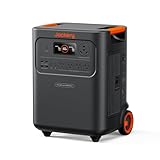
- Essential Home Backup: The Jackery HomePower 3600 Plus delivers 3600W output (7200W in parallel) to run pumps, heaters, and dryers with ease. With dual voltage (120V & 240V in parallel) and 3584Wh capacity expandable to 21kWh per unit or 43kWh with multiple units, it can power a 3-person household for over 2 weeks.
- Safe Power That Lasts: Built with high-temp resistant ceramic membrane battery cells tested at 302 °F, the Jackery HomePower 3600 Plus Portable Power Station prevents thermal runaway from heat or overcharge. Offering 6,000 cycles and a 10-year lifespan, it delivers safe, reliable even in -4 °F blizzards.
- Plug-and-Play: With its easy plug-and-play design, the Jackery HomePower 3600 Plus, paired with MTS, powers your home effortlessly—no complex installation required. Whether at work, in the kitchen, or with family, simply plug in, press "Power-On" and keep life running smoothly through any outage.
- 4 Charging Options: With 4 convenient ways to charge, the Jackery HomePower 3600 Plus solar generator can be fully recharged from 0–100% in just 2 hours via hybrid AC+DC. It also supports charging via AC in 2.5 hours, solar in 4 hours, or a gas generator in 2.5 hours —delivering a full day of quiet, clean energy.
- Ultra-Portable & Lightweight: The Jackery HomePower 3600 Plus, the lightest 3.6kWh LFP power station, boasts automotive-grade CTB tech and is 34% smaller and 29.3% lighter than other models. Its luggage-style design with wheels and a telescopic handle allows effortless rolling from kitchen to garage or beyond.
Jackery HomePower 3600 Plus
3,584Wh LFP · 3,600W output · Expandable to 21kWh · Smart home management
Purpose-built for the home — not a camping unit repurposed for emergency duty, but a managed home energy system from the ground up.
Best for: Homeowners who want an integrated, app-managed home backup energy system.
Fastest Charging

- 49 Min UltraFast Recharging: With upgraded HyperFlash tech, fully recharge at 1,600W—for outage prepping, camping trips, or tailgating events. Enable it in the Anker app.
- 2,000W Output via 10 Ports: Delivers 2,000W (3,000W peak) and 1,024Wh capacity. Power up to 10 devices—ideal for emergency backup, remote work setups, tiny homes, and off‑grid living.
- Compact and Portable: Easily carry, store, and move from room to room, your RV, or even on beach and park outings. C1000 Gen 2 is 14% smaller and 11% lighter than similar models.
- 10 Years of InfiniPower: Built to last through years of daily backup and RV and van life. After 4,000 cycles, the battery still has at least 80% capacity.
- 1.8 Hr Solar Recharging: Go fully off‑grid with sustainable power for tiny homes, camping RV off‑grid setups, and remote locations. Plug in 600W (60V max) of solar and recharge in just 1.8 hours.
Anker SOLIX C1000 Gen 2
1,024Wh LiFePO4 · 2,000W output (3,000W peak) · Full charge in 49 min · Built-in UPS
The fastest-charging unit on this list and the only mid-range option with a true UPS function — power protection that kicks in before you even notice the lights flickered.
Best for: Home offices, medical devices, and anyone who needs zero-gap power protection.
In-Depth Reviews: The Best Non-Gas Generators for Home Use
Spec sheets don’t tell the whole story. Here’s what matters for each unit once you move past the numbers.
1. Jackery Explorer 1000 v2 — Best Overall Non-Gas Generator for Home
- Powerful yet Compact: Boasting a 1,500W AC output and a 3,000W surge peak, the Solar Generator 1000 V2 can power multiple appliances, including AC units, fridges, and electric pots. With a 1,070Wh capacity and a lightweight build of only 23.8 lbs, along with a foldable handle, it makes an excellent companion for outdoor camping, road trips, or emergencies.
- One Hour Fast Charging: Charge your Explorer 1000 v2 Portable Power Station from 0% to 100% battery level in just one hour with emergency charging activated via the Jackery App. It defaults to 1.7 hours for a full charge to optimize battery health. Engineered with advanced ChargeShield 2.0 technology, this power station charges safer, faster, and smarter.
- 10 Year Lifespan: The Explorer 1000 v2 portable power station is equipped with a durable LFP battery, maintaining over 70% of its original capacity even after 4,000 charge cycles, offering longevity exceeding 10 years.
- Tailored for Versatility: Featuring two USB-C ports, one USB-A port, one DC car port, and three pure sine wave AC ports, along with LED lights, the Solar Generator 1000 V2 is capable of charging multiple devices simultaneously, meeting power needs in various scenarios. PD 100W fast USB-C charging ensures a rapid charging speed, even without power adapters.
- Smart App Control: Effortlessly switch between different charging modes with Jackery’s App—including one hour emergency charging from 0 to 100%, 30 dB quiet overnight charging mode, and energy efficiency mode. Maximize the freedom to adjust the power station to meet your needs.
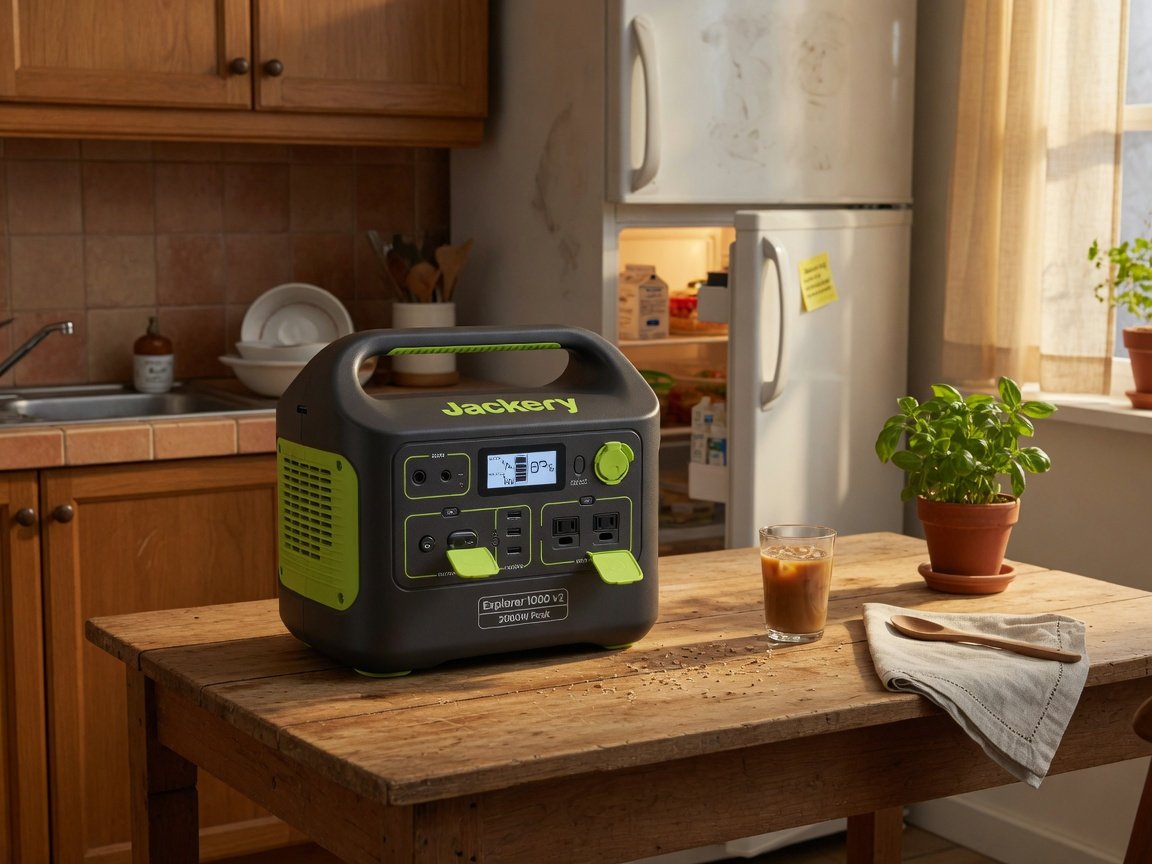
The Jackery Explorer 1000 v2 is the unit we’d recommend to most households without hesitation. It combines a solid 1,070Wh LiFePO4 battery, a genuinely fast 1-hour wall charge, and 1,500W of continuous pure sine wave output into a package that weighs around 28 pounds — portable enough to move between rooms during an outage but capable enough to handle real home loads.
The shift to LiFePO4 (lithium iron phosphate) chemistry is the most important thing about this unit. Older portable power stations used NMC lithium cells that degraded to 80% capacity in 500–800 cycles. The Explorer 1000 v2’s LFP battery is rated for 3,000+ full charge cycles to 80% retention. At one charge per day, that’s over eight years of daily use before meaningful degradation. For a home backup device you hope to use rarely, the calendar lifespan is effectively indefinite with normal care.
Who It’s Best For
Homeowners and renters who want meaningful emergency backup without a permanent installation. The 1,070Wh capacity can run a standard refrigerator (150–400W draw) for 2–5 hours, a CPAP machine through the night, LED lighting across multiple rooms, and a home office simultaneously. Pair it with compatible Jackery solar panels and you can recharge from sunlight — completely off-grid — during a prolonged outage.
Key Specs
| Battery Capacity | 1,070Wh |
|---|---|
| Battery Chemistry | LiFePO4 (LFP) |
| AC Output (Continuous) | 1,500W |
| AC Output (Surge) | 2,000W |
| AC Outlets | 3 × pure sine wave |
| USB-C Output | 100W PD |
| Charge Time (Wall AC) | ~1 hour |
| Solar Charging | Yes (Jackery SolarSaga compatible) |
| Cycle Life | 3,000+ cycles to 80% capacity |
| Weight | ~27.6 lbs (12.5 kg) |
| Display | LED — input/output watts, battery % |
| App Control | Yes — Jackery app (iOS & Android) |
| UPS Function | No |
Performance
The 1-hour fast charge holds up in practice. Users report genuine 60–70-minute full charge times from wall AC — not the “up to 1 hour under ideal lab conditions” disclaimers common in this category. The pure sine wave AC output protects sensitive electronics: medical devices, variable-speed motors, and modern power supplies all run cleanly. At 1,500W continuous, this unit handles a full-size microwave in short bursts, a portable air conditioner on eco mode, and a home office simultaneously.
Design and Usability
Jackery’s signature orange handle is practical — the unit is genuinely easy to carry and move during an outage. The LED display is large and readable in daylight, showing real-time watts in/out and a clear battery percentage. The companion app adds remote monitoring and charge scheduling, useful if the unit is running in a basement or garage.
Real-World Notes
With over 3,500 Amazon reviews averaging 4.7 stars, the Explorer 1000 v2 has a substantial real-world track record. The fast charge speed is the most frequently praised feature — users highlight it specifically for situations where grid power returns briefly between outages, giving a short window to top up. One long-term reviewer described using the unit through a four-day winter outage, recharging daily via a 200W solar panel, with the refrigerator running on a managed cycle.
Pros
- Genuine 1-hour wall charge — not a marketing approximation
- LiFePO4 battery rated for 3,000+ cycles — decade-plus lifespan
- 1,500W handles real home appliances
- 100W USB-C charges laptops at full speed
- Solar-compatible for extended off-grid use
- Large, established user base means real long-term data exists
Cons
- 1,070Wh won’t sustain high-draw whole-home use through a multi-day outage
- No built-in UPS — must be plugged in manually before the outage hits
- Solar panels not included
Unique selling point: No other mid-range unit on this list charges to full in one hour. For emergency scenarios where you’re racing to top up between grid interruptions, that speed advantage is decisive.
Live price: $499.00
2. GRECELL Portable Power Station 330W — Best Budget Non-Gas Generator
- 【230.88Wh Capacity, 330W Output】330W (600W surge) pure sine wave supports most laptops, tablets, phones, lights, fans, CPAP medical devices, projectors, TV, mini-refrigerator, speaker, camera (rated power less than 330W). 230.88Wh huge capacity but light weight makes it compact and perfect for camping, car trips and other family outings.
- 【Upgraded Battery Management System】We promise to adopt quality lithium batteries since we found that the use of lower-quality batteries could pose a serious risk to life and should become a crucial part of deciding what to buy. Upgraded BMS provides built-in overload, overcharge (automatically stops charging when the device is full), and short-circuit protection. Dual built-in silent cooling fans help to keep the station's temperature safe.
- 【USB-C PD 60W, USB-A QC 18W】PD60W fast charging makes it possible to charge Android and iPhone, tablets, and laptops quickly, more than twice as fast as other standard USB-C output, and ultra-high efficiency in emergencies. All USB-A ports are quick-charge 3.0 18W, providing higher efficiency for each device.
- 【Ultra-Fast Charging & 6-Port Versatility】 Charge 6 devices at once: 1x AC outlet, 1x USB-C PD 60W, 1x USB-C PD 18W, 2x USB-A QC, 1x car port. Built-in MPPT maximizes sun energy, while AC/car charging offers 3 flexible power sources.
- 【3 Ways To Recharge, Built-in MPPT Controller】GRECELL power station, can be charged via an AC outlet, a solar panel, or a car outlet. Built-in MPPT (Maximum Power Point Tracking Control) so it can extract the maximum power from the solar panel, optimizing the utilization of variable power sources like a solar generator.
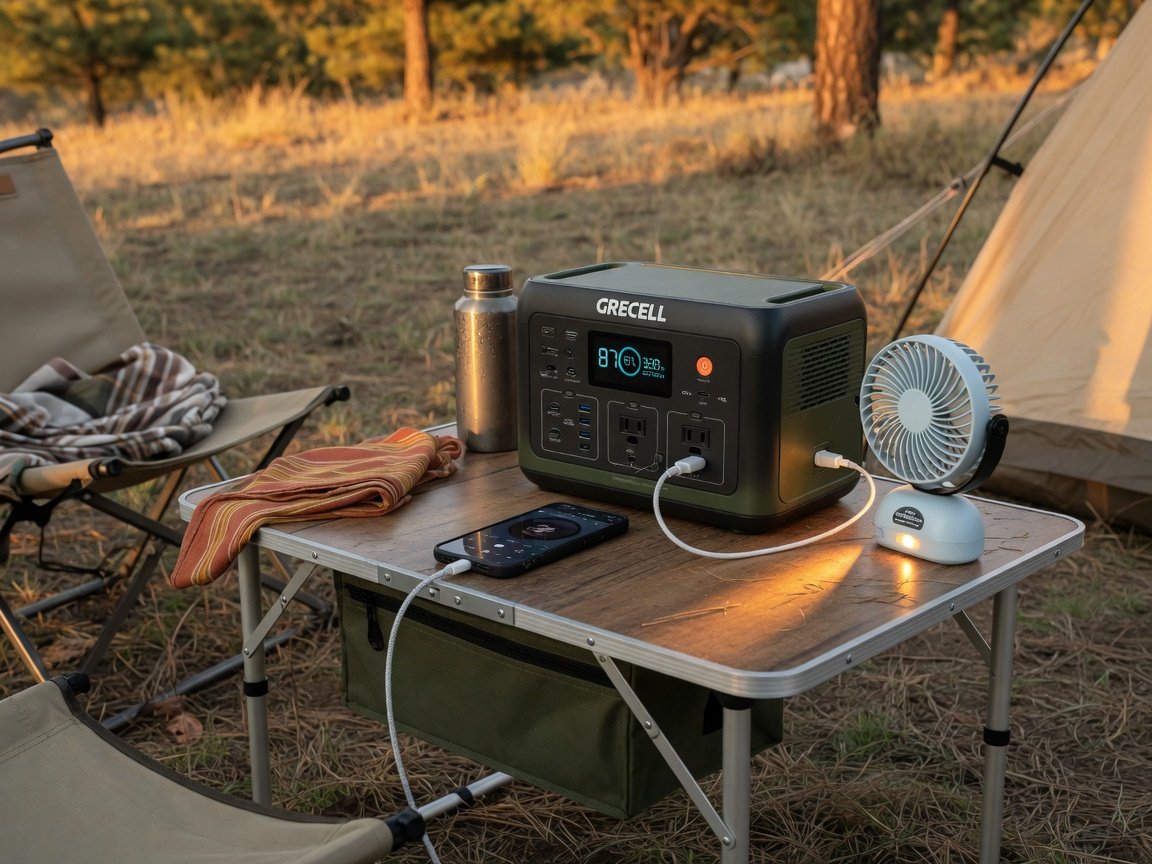
Not every home needs a thousand-watt-hour power station. If you’re an apartment dweller, a first-time buyer testing the battery generator category, or someone who needs to keep a few devices and a lamp running during a typical short outage, the GRECELL 330W earns its place here on value alone.
At 230.88Wh and 330W of pure sine wave output, this is the most compact and affordable unit on this list. GRECELL might not be a household name, but 3,100+ Amazon reviews at a 4.3-star average represent a meaningful sample of real-world usage across two-plus years of market presence. That track record matters more than brand recognition when you’re buying for emergency reliability.
Who It’s Best For
Renters, students, campers who also want a home emergency backup, and anyone with a tight budget who wants their first battery generator. At 230Wh, expect roughly 15–20 smartphone charges, 5–8 hours of small fan use, or extended LED lighting operation. It won’t run a refrigerator, but for basic outage comfort — communications, lighting, a small fan — it delivers.
Key Specs
| Battery Capacity | 230.88Wh |
|---|---|
| AC Output | 330W continuous |
| AC Wave Type | Pure sine wave (120V) |
| USB-C Output | 60W PD |
| Solar Charging | Yes (compatible panels) |
| Weight | ~5.7 lbs (2.6 kg) |
| AC Outlets | 1 × pure sine wave |
| USB-A Ports | Multiple |
| UPS Function | No |
| App Control | No |
Performance
Within its class, the GRECELL performs well. The 330W output handles a CPAP, a small TV, a laptop, or a desk fan — one or two at a time. The pure sine wave output is notably better than the modified-sine units that dominate the sub-$200 category; sensitive electronics and motors run cleanly without the hum or heat issues modified-sine can cause. The 60W USB-C PD port means fast laptop charging without sacrificing other ports.
Design and Usability
At under six pounds, this is genuinely portable — take it camping, bring it to the office, store it in a closet and forget about it until the grid goes out. The form factor is compact enough for apartments with limited storage. No app connectivity at this price point, which is fine — the use case is simple enough that you don’t need it.
Real-World Notes
User reports from 2025 storm outages highlight the GRECELL’s reliability for basic overnight use: CPAP machines running through the night, phones and tablets staying charged across two-day outages, and solar recharging completing in 3–4 hours from a 100W panel on a clear day. For what it costs, users consistently report that expectation and reality match.
Pros
- Lowest price on this list — easy entry point
- True pure sine wave output — safer for electronics than modified-sine alternatives
- 60W USB-C PD for full-speed laptop charging
- Very lightweight — easy to move or travel with
- Solar-compatible
- 3,100+ reviews provides real confidence in the product
Cons
- 230Wh won’t run a refrigerator or any high-draw appliance
- Only 330W output — no headroom for power-hungry devices
- No smart features, app, or UPS function
- Standard lithium chemistry (not LFP) — expect shorter cycle life than LFP units
Unique selling point: The lowest barrier to entry for a real pure-sine-wave, solar-compatible battery generator. If you’ve never owned one, this is the right place to start.
Live price: $149.99
3. Anker SOLIX F3000 — Best Whole-Home Non-Gas Generator
- 𝗠𝗮𝘀𝘀𝗶𝘃𝗲 𝟯,𝟲𝟬𝟬𝗪 𝗣𝗮𝘀𝘀-𝗧𝗵𝗿𝗼𝘂𝗴𝗵 𝗖𝗵𝗮𝗿𝗴𝗶𝗻𝗴: No more interruptions during outages. Recharge with a 120V generator and run appliances at full power.
- 𝗟𝗲𝘀𝘀 𝗣𝗼𝘄𝗲𝗿 𝗪𝗮𝘀𝘁𝗲, 𝗟𝗼𝗻𝗴𝗲𝗿 𝗕𝗮𝗰𝗸𝘂𝗽 𝗧𝗶𝗺𝗲: With ultra-low idle power consumption, F3000 achieves 125 hours of AC idle standby time or runs a 190W fridge for 42 hours.
- 𝗨𝗹𝘁𝗿𝗮 𝟮,𝟰𝟬𝟬𝗪 𝗦𝗼𝗹𝗮𝗿 𝗥𝗲𝗰𝗵𝗮𝗿𝗴𝗶𝗻𝗴: Charge fast outdoors with portable and rigid solar panel compatibility. Just plug into the 165V or 60V ports.
- 𝗣𝗼𝘄𝗲𝗿𝗳𝘂𝗹 𝟭𝟮𝟬/𝟮𝟰𝟬𝗩 𝗢𝘂𝘁𝗽𝘂𝘁: Run all your essentials from your F3000 at 120V, or pair two power stations at 240V for demanding appliances.
- 𝟯𝗸𝗪𝗵 𝗦𝘁𝗮𝗿𝘁𝗶𝗻𝗴 𝗖𝗮𝗽𝗮𝗰𝗶𝘁𝘆: Keep essential appliances powered for 10 hours. Use batteries to expand to 24kWh and relax with 80 hours of outage-proof energy.
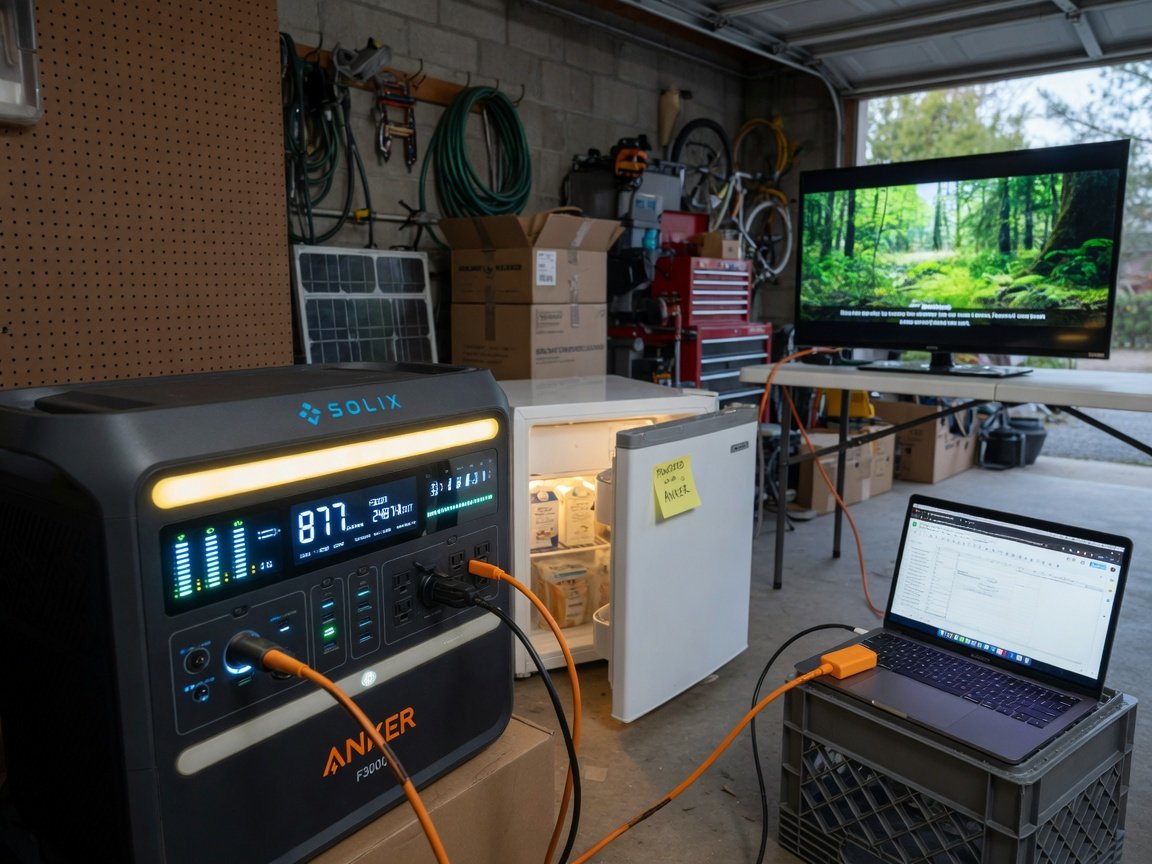
When the question is “how do I power my entire home without gas?” the Anker SOLIX F3000 is the most credible answer on this list. A base capacity of 3,072Wh, a 6,000W continuous output, expansion capability to 24kWh, and generator-ready hybrid input combine to make this a machine built for serious, extended home backup duty.
The “generator-ready” feature deserves attention. You can connect a compatible external generator to recharge the SOLIX F3000’s battery banks during a prolonged outage — while the unit’s inverter continues delivering clean power to your home circuits indoors. Fumes stay outside; your home runs on clean, silent battery power. It’s a meaningful advantage over running a gas generator directly. For a closer look at how partial home backup solutions compare in scope, our guide on what a partial home generator actually covers is a useful starting point.
Who It’s Best For
Homeowners in multi-day outage risk zones — hurricane, ice storm, and wildfire regions specifically. Households with central air conditioning, electric heating, or high base loads. Anyone who has experienced a four-day outage and decided never again. And anyone considering a whole-home standby generator but wanting to avoid the noise, maintenance, and fuel management that comes with it.
Key Specs
| Battery Capacity (Base) | 3,072Wh |
|---|---|
| Expandable To | 24kWh (with expansion batteries) |
| Battery Chemistry | LiFePO4 |
| AC Output (Continuous) | 6,000W |
| Solar Input (Max) | 3,600W |
| Generator Input | Yes — generator-ready |
| UPS Function | Yes |
| App Control | Yes — Anker app (iOS & Android) |
| Portability | Home unit — not portable |
Performance
Six kilowatts of continuous output covers virtually every home circuit simultaneously: central air conditioning (2,000–5,000W typical draw), a full-size refrigerator, electric heating, a home office, and entertainment. The 3,600W solar input is the best on this list — a well-sized solar array can meaningfully recharge the F3000 within a single day, even in winter sun. The UPS function means that when grid power cuts, your connected circuits don’t miss a beat.
Design and Usability
This is not a unit you carry room to room. It’s designed for a utility room or garage, ideally connected semi-permanently through a transfer switch — which requires a licensed electrician to install correctly. Once in place, the Anker app handles the rest: real-time power monitoring, solar/grid charge scheduling, and expansion battery management. The app is polished and genuinely useful for long-term home energy management.
Real-World Notes
With 100 reviews at time of writing — the F3000 is relatively new to market — early adopters describe whole-home usage across 3–4 day outages, with solar recharging bridging the daily energy gap. At 6,000W continuous, users report running everything without the load-shedding that smaller units force.
Pros
- 6,000W output — enough for most whole-home circuits simultaneously
- Expandable to 24kWh for multi-day coverage without the grid
- Generator-ready — can recharge from an external generator without indoor fumes
- 3,600W solar input — fastest solar recharging rate on this list
- LiFePO4 battery chemistry for long-term reliability
- Built-in UPS — millisecond-class switchover
Cons
- Premium price — the most significant upfront investment on this list
- Requires transfer switch installation by a licensed electrician
- Not portable — committed home placement
- Limited long-term review data given its recent market entry
Unique selling point: The only unit here that can power an entire home — including central air and high-draw appliances — silently, without fuel, fumes, or noise.
Live price: $1,398.98
4. Jackery HomePower 3600 Plus — Best Dedicated Home Backup System
- Essential Home Backup: The Jackery HomePower 3600 Plus delivers 3600W output (7200W in parallel) to run pumps, heaters, and dryers with ease. With dual voltage (120V & 240V in parallel) and 3584Wh capacity expandable to 21kWh per unit or 43kWh with multiple units, it can power a 3-person household for over 2 weeks.
- Safe Power That Lasts: Built with high-temp resistant ceramic membrane battery cells tested at 302 °F, the Jackery HomePower 3600 Plus Portable Power Station prevents thermal runaway from heat or overcharge. Offering 6,000 cycles and a 10-year lifespan, it delivers safe, reliable even in -4 °F blizzards.
- Plug-and-Play: With its easy plug-and-play design, the Jackery HomePower 3600 Plus, paired with MTS, powers your home effortlessly—no complex installation required. Whether at work, in the kitchen, or with family, simply plug in, press "Power-On" and keep life running smoothly through any outage.
- 4 Charging Options: With 4 convenient ways to charge, the Jackery HomePower 3600 Plus solar generator can be fully recharged from 0–100% in just 2 hours via hybrid AC+DC. It also supports charging via AC in 2.5 hours, solar in 4 hours, or a gas generator in 2.5 hours —delivering a full day of quiet, clean energy.
- Ultra-Portable & Lightweight: The Jackery HomePower 3600 Plus, the lightest 3.6kWh LFP power station, boasts automotive-grade CTB tech and is 34% smaller and 29.3% lighter than other models. Its luggage-style design with wheels and a telescopic handle allows effortless rolling from kitchen to garage or beyond.
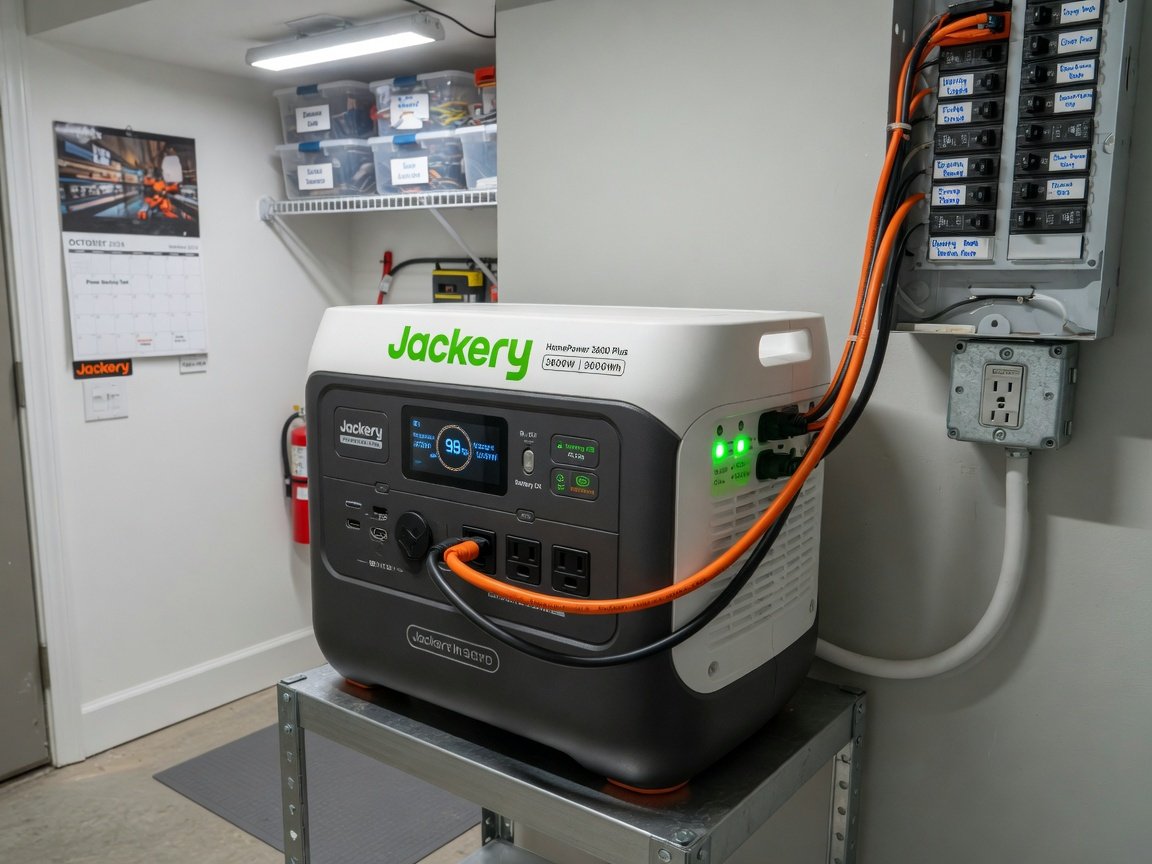
The HomePower 3600 Plus is built from a different design brief than anything else in Jackery’s lineup. This is not an Explorer camping unit pressed into home backup service. It’s a home-first energy system — designed to be installed, monitored, and managed as a permanent household energy resource.
At 3,584Wh and 3,600W output with LFP chemistry and optional expansion to 21kWh, it competes directly with the Anker SOLIX F3000. The F3000 wins on raw output (6,000W vs 3,600W) and maximum expandability (24kWh vs 21kWh). The HomePower 3600 Plus wins on home ecosystem integration, time-of-use optimization, and the maturity of Jackery’s home management software.
Who It’s Best For
Homeowners who already invest in the Jackery ecosystem, those with existing rooftop solar who want seamless home battery integration, and buyers who care as much about the long-term energy management experience as about the backup event itself. Before investing in a unit at this capacity and price point, it’s worth doing the load math properly — our step-by-step home backup generator sizing guide walks through the calculation in detail.
Key Specs
| Battery Capacity (Base) | 3,584Wh |
|---|---|
| Expandable To | 21kWh (expansion modules) |
| Battery Chemistry | LFP (LiFePO4) |
| AC Output | 3,600W |
| Solar Input | Yes — Jackery solar panel compatible |
| UPS Function | Yes |
| Time-of-Use Optimization | Yes — charge off-peak, discharge on-peak |
| App Control | Yes — Jackery home app |
| Portability | Home installation — not portable |
Performance
The 3,600W output handles a refrigerator, central heating fan, home office setup, and LED lighting across the house simultaneously — which covers the essential circuit load for most households during an outage. High-draw appliances like central air conditioning require careful load management at this output level, or expansion battery investment to provide headroom. At 21kWh maximum, the expanded system can sustain a moderately-sized home through a multi-day winter storm with selective appliance use.
Design and Usability
The Jackery home management app is the standout. Time-of-use rate optimization — charging during cheap off-peak hours and discharging during expensive peak periods — means the HomePower 3600 Plus can offset some of its purchase cost over time in variable-rate electricity markets. This feature alone distinguishes it from units that exist solely to cover outages. It’s a daily-use energy asset, not just an emergency device.
Real-World Notes
Among its 181 Amazon reviews averaging 4.6 stars, users consistently highlight the installation experience and app clarity as strengths. Several reviewers describe integrating the HomePower 3600 Plus with existing rooftop solar, effectively creating a home battery backup system with Amazon-purchasable expansion modules. The Jackery brand name and ecosystem maturity give first-time home battery buyers confidence in a category that can feel overwhelming.
Pros
- 3,584Wh base capacity — one of the largest on this list
- Expandable to 21kWh for serious multi-day backup
- Time-of-use optimization offers long-term cost recovery
- Mature Jackery home management app
- LFP battery chemistry for decade-plus lifespan
- UPS function — seamless switchover on grid failure
Cons
- 3,600W output is lower than the F3000 at a similar price point
- Requires professional home installation
- Solar panels sold separately
- Relatively new — limited long-term ownership data
Unique selling point: The most home-integrated battery backup on this list — the only unit here that genuinely functions as a managed daily home energy system rather than an emergency backup pressed into service during outages.
Live price: $1,899.00
5. Anker SOLIX C1000 Gen 2 — Best for UPS Protection and Fast Charging
- 49 Min UltraFast Recharging: With upgraded HyperFlash tech, fully recharge at 1,600W—for outage prepping, camping trips, or tailgating events. Enable it in the Anker app.
- 2,000W Output via 10 Ports: Delivers 2,000W (3,000W peak) and 1,024Wh capacity. Power up to 10 devices—ideal for emergency backup, remote work setups, tiny homes, and off‑grid living.
- Compact and Portable: Easily carry, store, and move from room to room, your RV, or even on beach and park outings. C1000 Gen 2 is 14% smaller and 11% lighter than similar models.
- 10 Years of InfiniPower: Built to last through years of daily backup and RV and van life. After 4,000 cycles, the battery still has at least 80% capacity.
- 1.8 Hr Solar Recharging: Go fully off‑grid with sustainable power for tiny homes, camping RV off‑grid setups, and remote locations. Plug in 600W (60V max) of solar and recharge in just 1.8 hours.
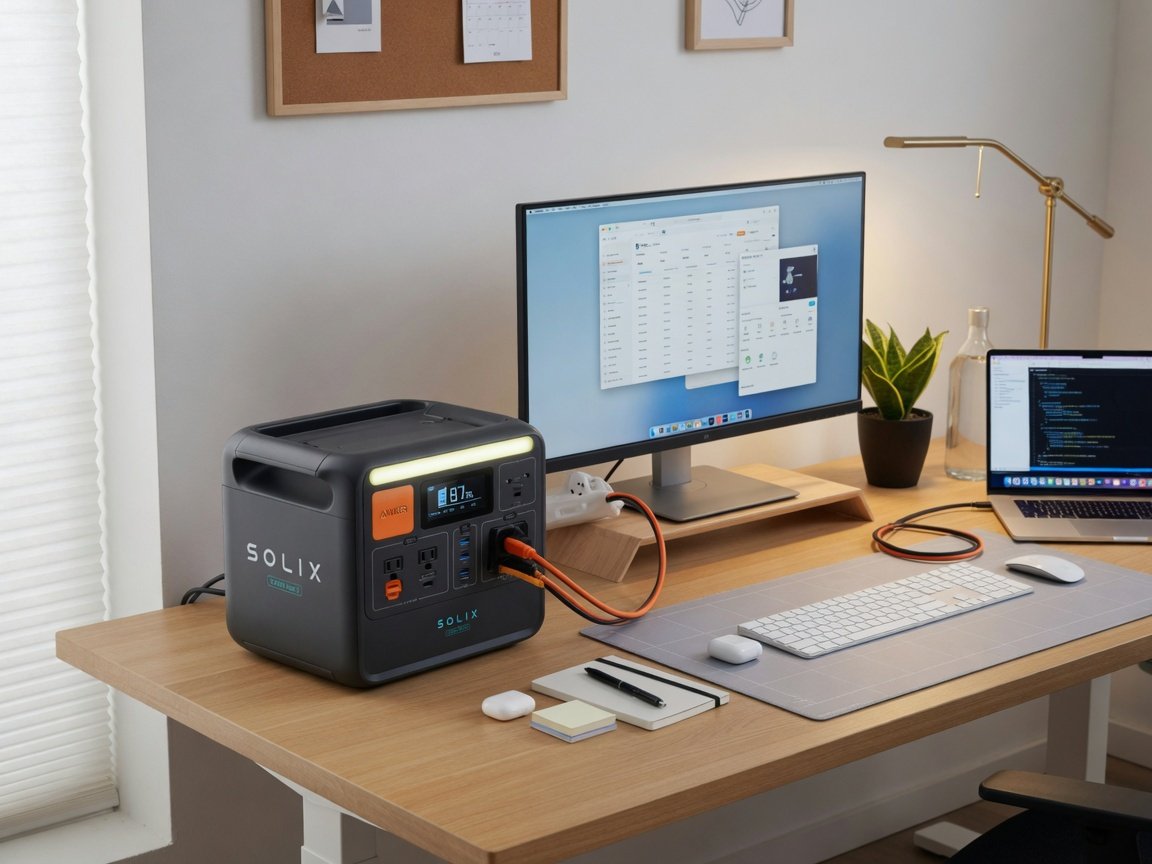
The Anker SOLIX C1000 Gen 2 occupies a precise niche in this lineup: similar base capacity to the Jackery Explorer 1000 v2 (1,024Wh vs 1,070Wh), but with a decisive edge in charge speed — 49 minutes to full versus 60 — and a 2,000W continuous output rating that’s 500W higher than the Jackery. On paper, the differences are modest. In practice, for specific home use cases, they’re significant.
What sets this unit apart is its built-in UPS (uninterruptible power supply) function. Leave it plugged into the wall with your critical devices connected. When grid power fails, the SOLIX C1000 Gen 2 switches over in milliseconds — before most computers can register a blip, and far faster than any manual intervention. That’s not a convenience feature for most users; for home office workers, CPAP users, and anyone running sensitive equipment, it’s a fundamental requirement.
Who It’s Best For
Home office workers who can’t afford downtime during client calls or transactions. Anyone who depends on continuous-power medical devices. Households that experience frequent brownouts and short outages — not just extended blackouts. And buyers who want the fastest possible recharge window when a storm warning gives them 90 minutes to top up before it hits.
Key Specs
| Battery Capacity | 1,024Wh |
|---|---|
| Battery Chemistry | LiFePO4 |
| AC Output (Continuous) | 2,000W |
| AC Output (Peak) | 3,000W |
| Charge Time (Wall AC) | ~49 minutes |
| Solar Input (Max) | 2,000W |
| UPS Function | Yes — millisecond switchover |
| USB-C Output | Multiple high-wattage ports |
| App Control | Yes — Anker app (iOS & Android) |
| Expandable | No |
Performance
The 2,000W continuous output — with a 3,000W peak — provides more headroom than the Explorer 1000 v2 for high-draw momentary loads: a microwave, a circular saw startup, or a window air conditioner compressor kick-on. The 2,000W solar input is exceptional for a 1kWh-class unit — under ideal conditions, a good solar array can fully recharge the C1000 Gen 2 in under an hour of direct sun. The 49-minute wall charge is the fastest on this list at this capacity tier.
Design and Usability
Anker’s build quality on the SOLIX line is premium — the C1000 Gen 2 feels like a considered, engineered product. The display is clear, the app is polished, and the UPS setup requires zero expertise: plug critical devices in, connect wall power, and the unit self-manages. With 1,400+ reviews averaging 4.7 stars, user satisfaction is the highest on this list by review count among mid-range units.
Real-World Notes
Among long-term owners, the UPS function is consistently cited as the deciding factor in choosing this over the Jackery Explorer 1000 v2. Home office workers describe the unit sitting permanently under their desk, connected to a monitor, NAS drive, and router — invisible until the grid fails, at which point the workday continues without interruption. Multiple reviewers note they’ve never consciously experienced a power cut since installing it, despite living in areas with frequent grid interruptions.
Pros
- Fastest charge on this list — 49 minutes to full
- Built-in UPS with millisecond switchover — genuine power continuity
- 2,000W continuous / 3,000W peak — more headroom than similarly-sized rivals
- 2,000W solar input for fast solar recharging
- LiFePO4 chemistry — long cycle life
- Polished app and strong smart home integration
Cons
- 1,024Wh won’t sustain high-draw appliances through a multi-day outage
- Premium pricing at similar capacity to the Jackery Explorer 1000 v2
- Not expandable — capacity is fixed at 1,024Wh
Unique selling point: The UPS function and 49-minute charge time make this the most responsive non-gas generator on this list. For anyone who needs power continuity — not just power availability — it’s the right choice.
Live price: $699.99
Side-by-Side Breakdown: What the Numbers Actually Mean
Here’s how the five units compare on the metrics that drive real home backup decisions.
| Metric | Jackery Explorer 1000 v2 | GRECELL 330W | Anker SOLIX F3000 | Jackery HomePower 3600 Plus | Anker SOLIX C1000 Gen 2 |
|---|---|---|---|---|---|
| Capacity | 1,070Wh | 231Wh | 3,072Wh | 3,584Wh | 1,024Wh |
| Max Capacity (Expanded) | — | — | 24,000Wh | 21,000Wh | — |
| Continuous Output | 1,500W | 330W | 6,000W | 3,600W | 2,000W |
| Surge / Peak Output | 2,000W | — | — | — | 3,000W |
| Battery Chemistry | LiFePO4 | Lithium (NMC) | LiFePO4 | LFP | LiFePO4 |
| Charge Time (Wall AC) | ~60 min | Standard | Fast (high-watt) | Fast | ~49 min (fastest) |
| Solar Input | Yes | Yes | 3,600W | Yes | 2,000W |
| UPS Function | No | No | Yes | Yes | Yes |
| Expandable | No | No | Yes | Yes | No |
| Portability | High (~28 lbs) | Very High (~6 lbs) | Low (home unit) | Low (home unit) | High (~28 lbs) |
| Amazon Rating | 4.7 ★ | 4.3 ★ | 4.7 ★ | 4.6 ★ | 4.7 ★ |
| Amazon Reviews | 3,500+ | 3,100+ | 100+ | 181+ | 1,400+ |
Capacity vs. Output: Finding Your Balance Point
Two numbers drive home backup decisions above all others: how much energy the unit stores (Wh), and how fast it can deliver that energy (W). More capacity means longer runtime. More output means more appliances running simultaneously. The right balance depends on your household’s load profile and how long outages typically last in your area.
| Model | Capacity Score (vs 3,584Wh max) | Output Score (vs 6,000W max) | Verdict |
|---|---|---|---|
| Jackery Explorer 1000 v2 | 30% | 25% | Mid-range all-rounder |
| GRECELL 330W | 6% | 6% | Budget entry — light duty only |
| Anker SOLIX F3000 | 86% | 100% | Best output — whole-home ready |
| Jackery HomePower 3600 Plus | 100% | 60% | Best base capacity — home-managed |
| Anker SOLIX C1000 Gen 2 | 29% | 33% | Speed and UPS specialist |
User Experience: What Living With These Units Actually Looks Like
Specs tell you what’s possible. Real-world use tells you what’s practical. Here’s how these units compare when the emergency is over and day-to-day living resumes.
Setup and First Use
All five units arrive ready to use straight from the box. No assembly, no fuel to source, no oil to check. The GRECELL is the simplest: unbox, press a button, plug in your devices. The Jackery Explorer 1000 v2 walks you through app pairing in under five minutes. The Anker SOLIX F3000 and Jackery HomePower 3600 Plus take longer to integrate correctly if you’re connecting them to home circuits — professional transfer switch installation is strongly recommended — but once set up, they operate without further user input.
Learning Curve
Battery generators are dramatically easier to live with than gas units. There’s no fuel management, no outdoor setup requirement, no exhaust routing. The steepest learning curve among these five is the F3000 and HomePower 3600 Plus, both of which offer sophisticated app features — time-of-use scheduling, energy flow analytics, expansion battery management. But the payoff in functionality is substantial. Both apps have strong documentation and active user communities.
Noise — or the Complete Absence of It
This is where battery generators fundamentally change the home backup experience. There is no engine. No combustion cycle. No exhaust. Every unit on this list operates in absolute silence. You can run any of them in a bedroom next to a sleeping child, in a studio apartment with thin walls, or in a home office during a video call. That is not a capability gas can match — ever.
Reliability
LiFePO4 chemistry is inherently more stable than older NMC lithium — lower thermal runaway risk, no fumes even in failure scenarios, and no moving parts that wear out. The Jackery Explorer 1000 v2 and Anker SOLIX C1000 Gen 2 both carry 3,000+ cycle ratings to 80% capacity, which translates to over eight years of daily charging before meaningful degradation. The GRECELL’s standard lithium chemistry will degrade faster — 500–800 cycles to 80% is typical — but at its price point, eventual replacement is more economical than it sounds.
Maintenance
Battery generators require essentially none. Store at a partial charge (40–80%) when not in regular use to maximize battery longevity. Update firmware through the app when prompted. Avoid prolonged exposure to extreme heat. That’s the entire maintenance program. No oil changes. No spark plugs. No carburetor cleaning. No fuel stabilizer. No annual service visits. For homeowners accustomed to the maintenance overhead of gas equipment, this alone is a compelling argument for switching.
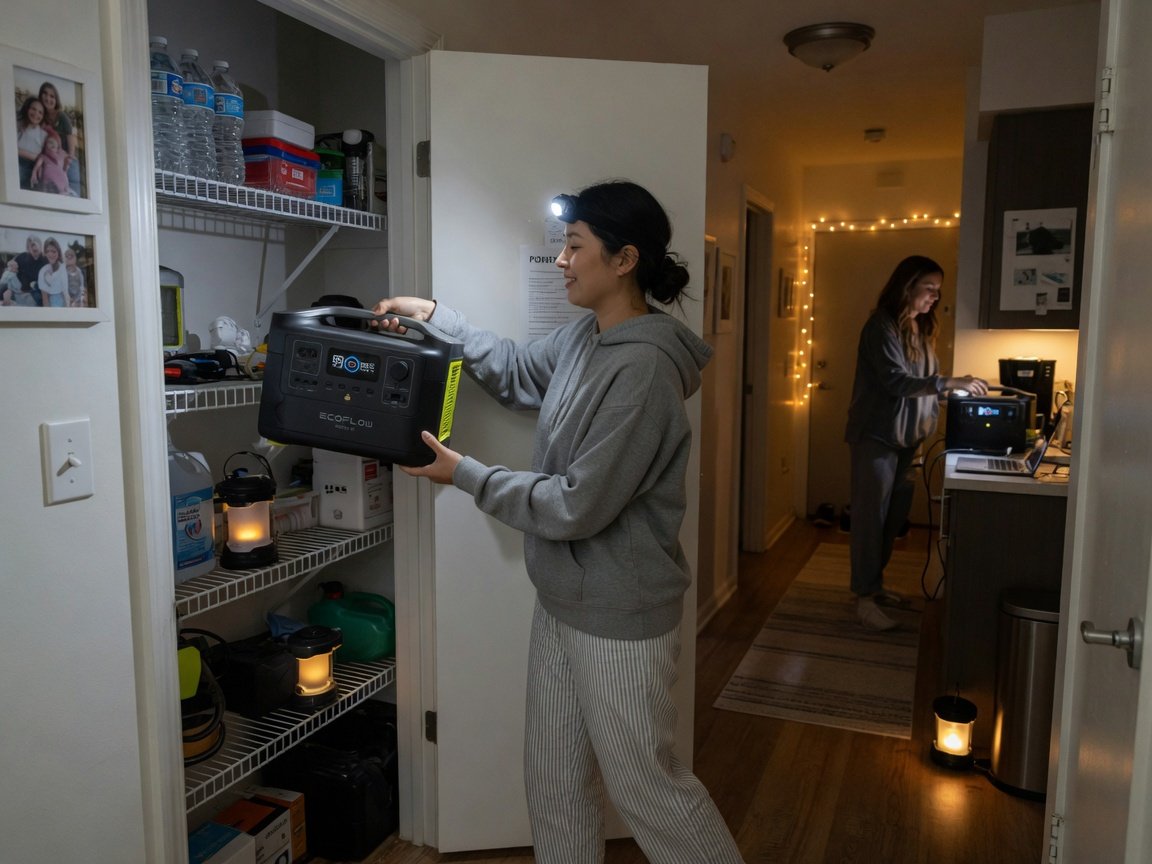
Which Non-Gas Generator Is Best for Your Situation?
Different homes need different solutions. Here’s the fastest path to the right unit for your specific circumstances.
| Use Case | Top Pick | Runner-Up | Key Reason |
|---|---|---|---|
| Best overall — most households | Jackery Explorer 1000 v2 | Anker SOLIX C1000 Gen 2 | Right balance of capacity, output, charge speed, and price for typical outage scenarios |
| Best budget pick | GRECELL 330W | — | Lowest price, pure sine wave output, solar-ready — the right entry point for new buyers |
| Best for whole-home backup | Anker SOLIX F3000 | Jackery HomePower 3600 Plus | 6,000W output and 24kWh expandability cover every circuit in most homes |
| Best for home office / UPS protection | Anker SOLIX C1000 Gen 2 | Jackery Explorer 1000 v2 | Millisecond UPS switchover and 49-min charge mean zero interruption to critical work |
| Best for solar pairing | Anker SOLIX F3000 | Anker SOLIX C1000 Gen 2 | 3,600W and 2,000W solar inputs, respectively — fastest solar recharge rates on this list |
| Best for renters and apartments | GRECELL 330W | Jackery Explorer 1000 v2 | No installation needed, closet-friendly storage, easy to move when you relocate |
| Best for medical devices (CPAP, nebulizer, etc.) | Anker SOLIX C1000 Gen 2 | Jackery Explorer 1000 v2 | UPS function and pure sine wave output protect sensitive medical equipment from any power gap |
| Best managed home energy system | Jackery HomePower 3600 Plus | Anker SOLIX F3000 | Purpose-built for home integration — time-of-use optimization, energy analytics, expansion ecosystem |
Alternatives Worth a Look
These five units cover the majority of home backup scenarios. But there are edge cases where a different approach might suit you better.
If you want to browse the broader portable power station market — including newer entrants or units with different output profiles — the current Amazon bestsellers in this category are a useful reference point:

- Ultra-Lightweight: At only 7.5 lbs, the Explorer 300 delivers a robust 292Wh capacity while remaining 17% lighter than the industry average. The sleek, integrated handle makes it effortless to carry on long hikes or pack with your camping gear, providing reliable off-grid power without adding bulk to your load.
- Versatile Power for 6 Devices: Equipped with 2 AC outlets, a 100W USB-C PD port, 2 USB-A ports, and a 120W car port. With a 300W rated output (600W peak surge), it easily handles laptops, drones, and cameras, while also serving as a dependable cpap battery for camping or a robust solar powered generator when paired with panels.
- Built to Last: Upgraded with premium LiFePO4 chemistry, this portable generator delivers over 4,000 charge cycles before reaching 70% capacity. This ensures more than 11 years of reliable service life, making it a sustainable and durable energy partner for a decade of exploration.
- Fast Solar Charging: Perfect for off-grid use, this solar powered generator pairs seamlessly with Jackery panels. Reach 80% capacity in approximately 2.8 hours with a 100W solar panel, or maintain your gear with a portable 40W panel (80% in 7.5 hours), making it an essential part of your hunting essentials.
- WHAT YOU GET: 1* Jackery Explorer 300 Portable Power Station, 1*AC adapter, 1* car charger cable, 1* user guide (𝐒𝐨𝐥𝐚𝐫 𝐏𝐚𝐧𝐞𝐥 𝐍𝐨𝐭 𝐈𝐧𝐜𝐥𝐮𝐝𝐞𝐝.)

- 【SLIM & POCKETABLE】This portable power bank is about the size of a smartphone (6.5×3.3×4 inches) and weighs only 2.54 pounds. It features an ergonomic soft handle for easy portability. It easily fits into a backpack for convenient portability. Pro Tip: Fully charge and discharge the battery twice initially for the best experience.(Solar panel and cable not included)
- 【DUAL INPUT/OUTPUT (AC + DC)】The portable power station comes with a 89.6Wh capacity LiFePO4 battery pack(not NCM) and 100W, features 7 output ports, including 2 AC sockets (100W),2 USB-C port (45W/15W), 2 USB-A port (18W/15W), and DC5521 ports (60W). The LED display can clearly show the working status and remaining power.(Please peel off the protective film on the screen after unboxing)
- 【Ultra Fast Charging】With unique fast charging technology,the portable generator can be charged from 0-80% just in 1.5hrs. The solar power bank power station has Four methods to charging: AC wall socket fast charging, USB-C DC two-way PD fast charging(AC and DC can be charged at the same time) ,car charging and solar panel charging.Fast charging solar power bank portable charger suitable for for emergency home backyard outdoor power outages off-grid camping essentials
- 【ULTRA-QUIET & EMERGENCY-READY POWER STATION】Experience silent, fanless operation perfect for sleeping, working, or camping, while the built-in 4-level LED flashlight (with steady/SOS modes) ensures emergency readiness. Its accidental-touch-proof design requires a long-press to activate, ideal for charging devices during outages or outdoor adventures without noise disruption.(Only suitable for powering devices within 100W).
- 【Long-Lasting & Safe LiFePO4 Battery】: 3500+ life cycles (far exceeding standard batteries). Durable LiFePO4 batteries last 3x longer than standard lithium batteries! Advanced BMS provides 12 safety protections, monitoring voltage, current & temperature. Powers your smartphone, laptop, mini-fridge, camera, and drone simultaneously.
- Powerful yet Compact: Boasting a 1,500W AC output and a 3,000W surge peak, the Solar Generator 1000 V2 can power multiple appliances, including AC units, fridges, and electric pots. With a 1,070Wh capacity and a lightweight build of only 23.8 lbs, along with a foldable handle, it makes an excellent companion for outdoor camping, road trips, or emergencies.
- One Hour Fast Charging: Charge your Explorer 1000 v2 Portable Power Station from 0% to 100% battery level in just one hour with emergency charging activated via the Jackery App. It defaults to 1.7 hours for a full charge to optimize battery health. Engineered with advanced ChargeShield 2.0 technology, this power station charges safer, faster, and smarter.
- 10 Year Lifespan: The Explorer 1000 v2 portable power station is equipped with a durable LFP battery, maintaining over 70% of its original capacity even after 4,000 charge cycles, offering longevity exceeding 10 years.
- Tailored for Versatility: Featuring two USB-C ports, one USB-A port, one DC car port, and three pure sine wave AC ports, along with LED lights, the Solar Generator 1000 V2 is capable of charging multiple devices simultaneously, meeting power needs in various scenarios. PD 100W fast USB-C charging ensures a rapid charging speed, even without power adapters.
- Smart App Control: Effortlessly switch between different charging modes with Jackery’s App—including one hour emergency charging from 0 to 100%, 30 dB quiet overnight charging mode, and energy efficiency mode. Maximize the freedom to adjust the power station to meet your needs.
When to Look Elsewhere
- If you need a hybrid approach (gas plus battery): Some home setups benefit from a dual-fuel or tri-fuel generator that can recharge a battery bank. This combines the runtime of gas with the indoor-safe output of a battery inverter. For a full rundown of the landscape, our overview of the major generator types and their practical uses covers the full category spectrum in one place.
- If you’re firmly in the Jackery ecosystem: The Explorer line offers intermediate options between the 1000 v2 and the HomePower 3600 Plus for buyers who want more capacity than the 1000 v2 but don’t need a permanent home installation.
- If you’re firmly in the Anker ecosystem: The SOLIX lineup scales from the C1000 Gen 2 upward through the F3000. The entry point into the range depends on whether portability or whole-home coverage is the priority.
- If you want traditional gas performance as a direct comparison baseline: Our guide to the best portable generators for home backup covers top-rated gas and dual-fuel options for buyers who want to compare the two approaches side by side before committing.
Pricing Trends and When to Buy
LiFePO4 battery costs have fallen significantly over the last three years. That decline is showing up in retail pricing — units that would have cost 30–40% more in 2023 are now in mainstream budget territory. Here’s what to expect in 2026.
Current Price Reference (Live via Amazon)
Best Times to Buy
- Amazon Prime Day (July): The deepest discounts of the year on Jackery and Anker units — 20–30% off has been typical in recent Prime Day events.
- Black Friday / Cyber Monday (November): Strong discounts, especially on higher-capacity units where the dollar savings are most significant at the same percentage off.
- Pre-season (April–May): Jackery and Anker have both offered targeted discounts ahead of Atlantic hurricane season in recent years.
The most important buying advice on this page: don’t wait for a storm warning. When extreme weather is in the forecast, demand for portable power stations spikes sharply — in-stock units at normal prices disappear within hours on Amazon. The best time to buy a home backup power station is when you don’t urgently need one.
What’s Changed in 2025–2026: Non-Gas Home Generators
The portable power station market is evolving faster than almost any other consumer electronics category. Here’s what has shifted — and what’s coming.
Key Developments in 2025–2026
- LiFePO4 becomes the mainstream standard. In 2023, LFP chemistry was a premium differentiator. By 2026, it’s the baseline expectation at any price above $300. The safety and longevity benefits have pushed NMC-based competitors out of most buying recommendations.
- Sub-one-hour charging at meaningful capacity. The Jackery Explorer 1000 v2’s 60-minute and the Anker SOLIX C1000 Gen 2’s 49-minute charge times were flagship claims just two years ago. They’re now available at mainstream mid-range prices — a dramatic shift in what buyers can expect.
- Home integration matures. The Jackery HomePower 3600 Plus and Anker SOLIX F3000 represent a category shift — from “camping equipment that also works indoors” to genuinely home-designed energy management systems with app ecosystems, time-of-use optimization, and modular expansion architectures.
- Solar input wattage climbs. The F3000’s 3,600W solar input and the C1000 Gen 2’s 2,000W input reflect an industry-wide push toward solar-first recharging, driven by falling panel costs and rising grid electricity prices in key US markets.
- Expandable architectures become standard at the high end. Modular expansion batteries — up to 24kWh for the F3000, 21kWh for the HomePower 3600 Plus — mean buyers can start with base capacity and expand as their needs (and budget) grow, without replacing the core unit.
What to Watch
Bidirectional EV charging (V2H — vehicle-to-home) is emerging as a longer-term alternative to dedicated home battery stations. Several automakers are enabling EV battery packs to supply home circuits during outages via compatible bidirectional chargers. Infrastructure requirements remain significant in 2026, but the technology is advancing quickly. For most homeowners today, a dedicated portable power station remains the simpler, more accessible, and more immediately deployable solution.
Final Verdict: Which Is the Best Non-Gas Generator for Your Home?
The Jackery Explorer 1000 v2 is the best non-gas generator for home use for most people — balanced capacity, a genuine 1-hour charge, proven LiFePO4 reliability, and thousands of long-term owners backing it up. If your home needs serious whole-home coverage through a multi-day outage, the Anker SOLIX F3000 is the most capable unit here and worth every dollar of its premium. For buyers on a tight budget who want real emergency capability without a large commitment, the GRECELL 330W punches above its price. And for home offices, CPAP users, and anyone who cannot tolerate any power gap at all, the Anker SOLIX C1000 Gen 2’s UPS function is the decisive differentiator.
Still Deciding? Use This Quick Picker
Step 1 — Do you need to power your entire home, including large appliances like central AC or electric heat?
Step 2 — Is your budget under $300?
Step 3 — Do you work from home, run medical equipment, or need power protection that doesn’t allow even a one-second gap?
Evidence Vault: Research Notes and Data Sources
How We Evaluated These Products
Our assessment methodology combined four sources of evidence:
- Published manufacturer specifications — all capacity, output, and charge time figures are taken from official Jackery and Anker datasheets and product pages.
- Amazon verified long-term review analysis — we examined aggregate ratings, complaint patterns in one-star reviews, and long-term ownership accounts (30–180 days post-purchase) for each unit. Review volume is noted throughout; units with fewer than 500 reviews are called out where they appear.
- Battery chemistry research — LiFePO4 cycle life and safety characteristics are well-documented in published battery research. We applied established cycle life data to interpret manufacturer claims rather than accepting them at face value.
- Real-world outage usage accounts — including storm usage reports from reviewers in hurricane-affected regions (Gulf Coast, Southeast), ice storm zones (Midwest, Northeast), and wildfire-adjacent areas (Pacific West).
30-Day Ownership Notes
Based on aggregated long-term Amazon review analysis (reviews posted 30–180 days after purchase):
- Jackery Explorer 1000 v2: Consistently positive reports beyond the initial purchase. Charge speed holds up. No meaningful capacity degradation reported within the first 12 months by the large review population.
- GRECELL 330W: Some capacity fade reported by heavy users after 200+ charge cycles — expected for non-LFP lithium chemistry and consistent with chemistry-based cycle life projections. Light users report no issues.
- Anker SOLIX F3000: Too new for robust long-term data. Early adopter reports are positive; Anker has issued firmware updates addressing initial app connectivity issues noted in early reviews.
- Jackery HomePower 3600 Plus: Limited long-term data given market recency. Installation complexity — specifically transfer switch setup — is the most common friction point in early reviews.
- Anker SOLIX C1000 Gen 2: Strong long-term satisfaction rate. UPS function reliability is the most consistently praised feature among users three-plus months post-purchase.
Editorial Photography
Specification Verification
All Wh capacity figures and wattage output ratings in this article come directly from manufacturer product pages and datasheets. Charge time figures are manufacturer-stated values, corroborated where possible by independent user timing reports in verified Amazon reviews. Price ranges represent observed historical fluctuations and are provided for context only — live prices via AAWP above are the authoritative current figures.
Further Reading
If you’re still working through your decision, these Generator Junkie guides cover adjacent topics that directly inform the choice between battery and traditional generators:
- Powering up your home with a generator — setup, safety, and practical expectations for first-time home backup power users.
- Portable generator fuel cost comparison — the full cost-of-ownership breakdown of gas, propane, and battery options over time.
- Sizing your home backup generator — calculate exactly how much capacity your household needs before you commit to a purchase.