Starting a portable generator takes under two minutes when you know the steps. Set it up outdoors, check the oil, add fresh fuel, close the choke, flip the engine switch to ON, and pull the cord. That’s the whole sequence. This guide walks you through both pull-start and electric-start methods in detail, covers what to do when your generator refuses to cooperate, and explains the safety rules that protect your family every time you fire it up.
Key takeaways:
- Most generators start in 1–3 cord pulls when the choke is properly set and the fuel is fresh
- Incorrect choke position is the single most common reason portable generators fail to start on the first attempt
- The U.S. Consumer Product Safety Commission (CPSC) reports that portable generators cause approximately 70 CO poisoning deaths per year — where you place yours is a life-or-death decision
- A simple monthly 20-minute test run is the one habit that guarantees your generator starts when you actually need it
What Do You Need Before Starting a Portable Generator?
Skipping the pre-start checklist is the fastest route to a no-start situation. Two minutes of preparation prevents the overwhelming majority of first-pull failures and keeps everyone around the generator safe throughout the process.
Check the Oil Level First
Low oil is the most overlooked starting obstacle beginners face. Nearly every modern portable generator includes a low-oil shutoff sensor that prevents the engine from starting — and staying on — when oil drops below a critical level. Pull the dipstick out, wipe it clean with a rag, reinsert it fully, then pull it again to get a clean reading. Add oil if the level falls below the full mark. Most portable generators take 10W-30 motor oil and hold roughly 20 ounces. Always confirm the correct specification in your owner’s manual before adding oil.
Use Fresh Gasoline
Gasoline begins to oxidize within 30 days of purchase. Old fuel forms gum and varnish deposits inside the carburetor’s tiny passages — which is exactly why so many generators sitting in garages refuse to start during actual emergencies. Use fuel purchased within the last 30 days, and choose ethanol-free gasoline whenever your local station carries it. Most generator manufacturers approve up to E10 (10% ethanol) but specifically warn against E15 or higher, which degrades rubber fuel lines and carburetor gaskets over time.
A 6,500-watt generator burns approximately 0.6 to 1 gallon of fuel per hour at 50% load. Fill the tank fully before starting and keep extra fuel in approved containers for extended outages — just store it in a cool, detached location, never inside your home or attached garage.
Choose Your Location With Care
Generator placement is not a convenience decision — it is a safety-critical one. The CPSC reports that portable generators are responsible for more non-fire carbon monoxide poisoning deaths than any other consumer product in the United States, with roughly 70 fatalities annually and more than 900 poisoning incidents per year. Carbon monoxide is colorless and odorless. By the time symptoms appear, incapacitation can set in within minutes.
⚠️ Critical safety rule: Always operate your generator on a flat, dry surface at least 20 feet from all doors, windows, and vents. Direct the exhaust away from your home. Never run a generator in a garage, carport, basement, enclosed porch, or any partially enclosed space — even with a door or window open. Install battery-operated CO detectors on every level of your home, including near sleeping areas.
Prepare Your Extension Cords
Before you start the engine, have your outdoor-rated extension cords ready to go. The wire gauge matters more than most people realize: use 14-gauge cords for small appliances drawing under 15 amps, 12-gauge for refrigerators, air conditioners, and power tools, and 10-gauge for high-draw equipment. Undersized cords overheat under load, reduce the voltage reaching your appliances, and create fire hazards. Keep cord runs as short as practical and never route them under rugs, through wall openings, or in any arrangement that traps heat.
How Do You Start a Portable Generator With a Pull Start?
Pull-start generators are the most common type you’ll encounter. The sequence becomes second nature after you’ve done it a few times. Follow these steps in order for consistent results.
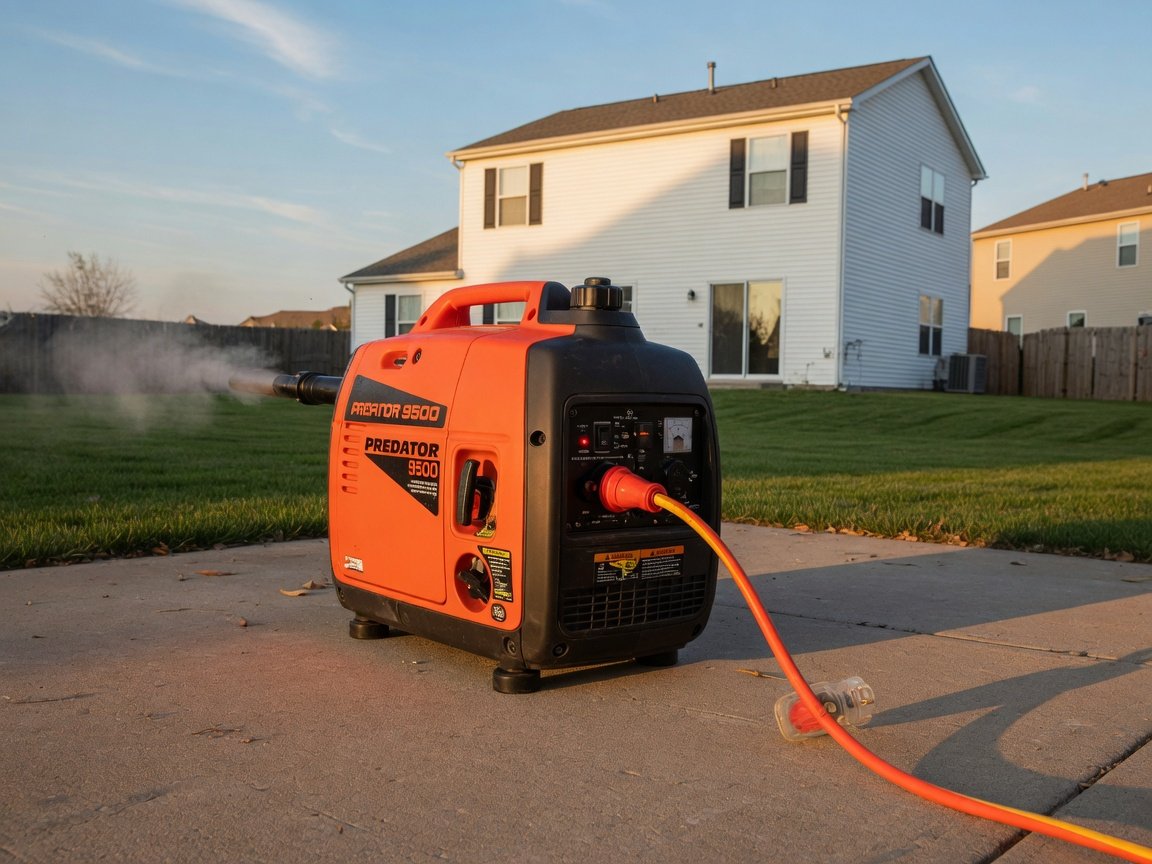
- Position the generator outdoors, at least 20 feet from your home. Set it on level ground with the exhaust stack directed away from all windows, doors, and vents. This is not a step you revisit after the engine is running — get the placement right before you touch anything else.
- Verify the oil level. No oil, no start — the safety shutoff sensor will prevent it. Add the correct oil to the full mark if needed before moving on.
- Fill the fuel tank with fresh gasoline. Use fuel purchased within the last 30 days. Ethanol-free is ideal; E10 is acceptable. Don’t overfill — leave about an inch of headspace to allow for fuel expansion in warm weather. Secure the fuel cap tightly.
- Turn the fuel valve to the ON position. The fuel valve is typically a red or black lever on the fuel line near or under the tank. ON is parallel to the fuel line; OFF is perpendicular. If the fuel valve is closed, the carburetor starves and the engine cannot start no matter how many times you pull.
- Set the choke lever to CLOSED (Full Choke). This is the step most beginners get wrong. For a cold engine — one that hasn’t run in the last 20–30 minutes — the choke must be fully CLOSED. This restricts airflow into the carburetor, creating a richer fuel-to-air mixture that a cold engine needs to fire up. If the engine is already warm from recent use, set the choke to OPEN instead.
- Turn the engine switch or ignition key to ON. Without this, the ignition system won’t produce a spark. The engine will never fire. This sounds obvious, but it’s a step that gets skipped under stress more often than you’d expect.
- Pull the recoil starter cord with a firm, smooth motion. Grip the handle, pull slowly until you feel resistance engage, then pull through briskly and firmly. Don’t jerk it abruptly from a slack position and don’t let the cord snap back uncontrolled — ease it back to protect the recoil spring. Repeat up to 3–4 times if the engine doesn’t catch on the first pull.
- As the engine fires, gradually move the choke toward OPEN over 10–15 seconds. You’ll hear the engine tone shift from rough and sputtery to a smoother idle. That’s your signal to begin opening the choke. Move it slowly — not all at once. Running on full choke once the engine is warm will flood the engine and cause it to stall.
- Let the generator warm up for 2–3 minutes before connecting any load. This allows the engine to reach operating temperature and stabilizes the voltage output. Starting with a heavy load already connected can trip the overload protection and stress the engine unnecessarily.
- Plug in your appliances and connect your extension cords. Start with your highest-wattage device to test capacity, then add smaller loads. Watch and listen for signs of overload — stuttering power, dimming, or automatic shutdown.
Generator technicians consistently report that roughly 90% of pull-start failures trace back to two things: wrong choke position or stale fuel — not mechanical failure. Get those two right and your generator will start reliably every time.
Generator Junkie
How Do You Start a Generator With an Electric Start?
Electric-start generators use a small 12V battery and starter motor — the same concept as starting a car. They’re significantly easier to operate, especially for users who find the pull cord physically challenging or who need to start the generator in very cold weather. The process mirrors the pull-start sequence almost exactly, with one key difference at step five.
- Complete all the same pre-start checks. Oil level, fresh fuel, outdoor placement at least 20 feet from home — everything from the pull-start checklist applies identically here.
- Confirm the battery is charged. The electric start system runs on a small 12V battery that self-discharges during storage. If your generator has been sitting for several months, the battery may be flat. Keep it connected to a quality trickle charger or battery maintainer between uses. If the battery is completely dead, most electric-start generators include a backup pull cord — use that to get running, then let the generator charge the battery while it runs.
- Turn the fuel valve to ON and set the choke to CLOSED for a cold start. The choke requirement is identical whether you’re pressing a button or pulling a cord. Cold engine, closed choke — every time.
- Insert the key and turn to ON, or flip the ignition switch to ON. Verify the system is active before pressing start.
- Press and hold the electric start button for up to 5 seconds. The starter motor will crank the engine. Release the button the moment the engine fires. Don’t hold the starter longer than 5–7 seconds at a stretch — this protects the starter motor from overheating. If it doesn’t start, wait 10–15 seconds and try again for up to three attempts before pausing to diagnose.
- Gradually move the choke to OPEN as the engine warms up. Identical to a pull-start — ease the choke from CLOSED toward OPEN over 10–15 seconds as the engine smooths out, then let it idle for 2–3 minutes before adding any load.
Pull Start vs. Electric Start: Which One Is Right for You?
Both starting methods are reliable when properly maintained. Your choice comes down to ease of use, budget, climate, and how frequently you’ll be starting the generator.
| Feature | Pull Start | Electric Start |
|---|---|---|
| Ease of use | Moderate — requires physical effort | Very easy — press a button |
| Cold-weather starting | Harder in very cold temps | Easier, but battery output drops in cold |
| Cost | Lower — no starter motor or battery | Adds $50–$150+ to typical retail price |
| Maintenance | Minimal — recoil spring occasionally | Battery requires periodic trickle charging |
| Backup option | None | Pull cord usually included |
| Best for | Occasional use, tight budgets | Frequent use, older users, cold climates |

Why Won’t My Portable Generator Start? Common Problems and Fixes
Even a well-maintained generator can refuse to fire up. Before calling a repair shop, run through this troubleshooting sequence. Most failures resolve in under five minutes with no tools required.
Problem 1: Choke Is in the Wrong Position
Symptoms: Engine cranks or briefly fires, then dies immediately.
Fix: Confirm the choke is fully CLOSED for a cold start. If the engine was running recently and you’re restarting it warm, move the choke to OPEN — warm engines don’t need the enriched mixture. This single adjustment resolves more starting problems than anything else on this list.
Problem 2: Stale or Contaminated Fuel
Symptoms: Engine cranks, tries to fire but won’t sustain. Fuel may smell sour or off.
Fix: Drain the tank completely using a hand pump or turkey baster, then refill with fresh gasoline. For stubborn cases after refueling, spray a small amount of carburetor cleaner into the air intake and try starting — this can clear mild blockages. Heavy varnish buildup requires a carburetor cleaning kit ($15–$40) or professional service.
Problem 3: Low or No Oil
Symptoms: Generator won’t start at all — the pull cord or starter motor may feel or sound different than normal.
Fix: Check the oil immediately. The low-oil shutoff sensor on most modern generators completely disables starting when oil is critically low — this protects the engine from seizure. Add the correct oil to the proper level, then try again.
Problem 4: Fouled or Worn Spark Plug
Symptoms: Engine cranks with correct choke and fresh fuel but still won’t fire.
Fix: Remove the spark plug with a spark plug socket wrench and inspect it. Heavy black carbon buildup, cracks in the white ceramic insulator, or a visibly worn electrode all indicate the plug needs attention. A lightly fouled plug can be cleaned with a wire brush; a worn plug requires replacement. Spark plugs for portable generators cost $3–$8 and take five minutes to swap — include one in every annual tune-up.
Problem 5: Dead Battery (Electric-Start Models Only)
Symptoms: Press the start button and nothing happens, or the starter makes a rapid clicking sound.
Fix: The 12V battery is dead or has a failed cell. Charge it with a standard battery maintainer for several hours and try again. If it won’t hold a charge after a full cycle, replace it — replacement batteries run $20–$50 at most auto parts stores. Use the pull-start backup cord in the meantime if your model includes one.
What Are the Safety Rules for Running a Portable Generator?
These rules exist because people have died ignoring them. The CPSC has documented more than 900 generator-related CO poisoning incidents annually — almost all preventable. The Electrical Safety Foundation International (ESFI) additionally warns that backfeeding a home’s electrical panel through an outlet has caused utility worker fatalities during storm restoration work. Follow every rule below, every time.
- Operate outdoors only — no exceptions. Not in a garage with the door open. Not in a carport. Not on a covered porch. Outdoors, in open air, at least 20 feet from any structure opening.
- Direct exhaust away from all living areas. Point the exhaust stack away from your home, your neighbor’s home, and any shared outdoor spaces.
- Install CO detectors throughout your home. Place battery-operated carbon monoxide detectors on every floor and near all sleeping areas. Test them monthly. CO can reach dangerous concentrations inside a home within minutes even when the generator is properly positioned outdoors.
- Never refuel while running. Shut the generator off and let it cool for at least 2 minutes before adding fuel. Gasoline spilled on a hot exhaust system ignites instantly.
- Use a licensed electrician and proper transfer switch for hardwired appliances. To power circuits in your home’s electrical panel, a transfer switch is required. Never plug a generator into a wall outlet to “backfeed” the home — this creates an electrocution hazard for utility workers restoring power on the line and can destroy your home’s wiring.
- Keep children and pets away. Engine housing, mufflers, and exhaust components regularly exceed 200°F during operation.
- Stay at or below 80% of rated capacity. Running continuously at 100% load shortens engine life and increases the risk of thermal shutdown. Leave a 20% power buffer.
- Never operate in rain or wet conditions without protection. Use a generator canopy or tent designed for wet-weather operation — one with open sides for ventilation.
How Do You Connect Appliances to a Portable Generator?
Once your generator is running and warmed up, connecting devices is straightforward — provided you respect the wattage limits. The single biggest mistake users make is overloading the generator by not accounting for starting watt surges.
Starting Watts vs. Running Watts: Know the Difference
Every motor-driven appliance requires a brief surge of extra power the moment it starts up — this is the starting wattage. Once running, it settles into a lower sustained draw — the running wattage. When loading your generator, add up all running watts, then confirm that your single highest-draw motor’s starting surge won’t push you over the generator’s peak output capacity.
| Appliance | Starting Watts | Running Watts |
|---|---|---|
| Refrigerator / freezer | 1,200 | 700 |
| Window AC (10,000 BTU) | 2,200 | 1,400 |
| Sump pump (½ HP) | 2,150 | 1,050 |
| Furnace blower motor | 2,350 | 875 |
| Microwave (1,000W) | 1,000 | 1,000 |
| Box fan (medium) | 200 | 200 |
| LED lights (10 × 10W bulbs) | 100 | 100 |
| Phone / laptop charger | 50 | 50 |
A 6,500-watt generator running at 80% capacity (5,200 watts) can simultaneously power a refrigerator, a window AC unit, a sump pump, several LED lights, and a phone charger — covering most emergency household needs comfortably. Add a microwave temporarily when needed and drop it back off the load when done.
How Long Can You Run a Portable Generator Continuously?
Most portable generators are engineered to run 8–12 hours on a full tank at 50% load. Actual runtime varies by model size, fuel tank capacity, and how hard you’re working the engine.
| Generator Size | Tank Size | Runtime at 50% Load | Runtime at 100% Load |
|---|---|---|---|
| 2,000W (inverter) | ~1 gallon | Up to 8 hours | 4–5 hours |
| 3,500W | ~3.5 gallons | 9–11 hours | 5–6 hours |
| 6,500W | ~6 gallons | 10–12 hours | 6–7 hours |
| 10,000W | ~7 gallons | 8–10 hours | 5–6 hours |
Never let the tank run dry during operation. Running out of fuel causes the engine to die abruptly, which can leave carburetor deposits as residual fuel evaporates — making the next cold start harder. Refuel when the gauge hits the quarter-full mark, always after shutting the engine off and letting it cool for at least two minutes.
For multi-day outages, plan deliberate rest periods into your schedule. Let the generator cool for 30–60 minutes every 8–12 hours of sustained runtime. This reduces heat stress on the alternator windings and engine components and meaningfully extends overall service life.
What Maintenance Keeps a Portable Generator Starting Every Time?
The generators that fail during emergencies are almost always the ones that sat unused without maintenance for years. The generators that start on the first pull every time belong to owners who follow a simple, consistent routine. Here is what that routine looks like.
Change the Oil on Schedule
Most portable generators require an initial oil change after the first 5–8 hours of break-in operation, then every 50–100 hours of runtime — or at minimum once per year, even if you haven’t reached the hour threshold. Use the oil type specified in your owner’s manual (commonly 10W-30 for temperatures above 32°F). Fresh oil means better cold-weather starting, better lubrication under load, and a longer-lasting engine overall.
Add Fuel Stabilizer Before Any Storage Over 30 Days
Fuel stabilizer is inexpensive insurance against the most common post-storage starting failure. Add it to the tank according to the bottle’s instructions any time you’re storing the generator for more than 30 days. After adding it, run the engine for 2–3 minutes to circulate the treated fuel through the carburetor and fuel lines. This single step prevents the gum and varnish buildup responsible for the majority of “won’t start after winter” calls that generator repair shops receive every spring.
Inspect and Service the Air Filter Every Season
A clogged air filter restricts airflow to the carburetor, makes starting harder, and causes the engine to run overly rich. Check the filter at the start of each season and every 25 hours of use in dusty conditions. Foam filters can be washed with mild soap, rinsed thoroughly, and re-oiled with a light film of engine oil before reinstalling. Paper filters should be replaced when they’re visibly soiled or torn. Replacement filters cost $5–$15 and take under five minutes to swap.
Run the Generator Monthly During the Off-Season
This one habit separates generators that start from generators that don’t. Once a month, roll it out, start it up, and let it run for 20–30 minutes under a light load — a lamp or a box fan is enough. This keeps oil circulating, prevents fuel system deposits from forming, keeps the electric-start battery properly charged, and confirms the unit will be ready when a real outage hits. Generator repair technicians consistently report that the most common repair they perform is clearing carburetor deposits from units that weren’t operated for over twelve months.
Annual Tune-Up Checklist
- Replace the spark plug ($3–$8)
- Change the engine oil — check for leaks while you’re at it
- Replace or clean the air filter ($5–$15)
- Inspect all fuel lines for cracks, brittleness, or deterioration
- Test the low-oil shutoff sensor
- Check the recoil starter cord for fraying near the handle
- Charge or load-test the 12V battery (electric-start models)
- Run a 30-minute test under realistic load before storing for the season
Generator technology is advancing quickly heading into 2025 and 2026. Dual-fuel models that run on either gasoline or propane are gaining popularity because propane stores indefinitely without degrading — solving the stale-fuel problem entirely. Inverter generators with parallel capability are becoming the go-to choice for powering sensitive electronics like laptops and CPAP machines. And smart generator apps that monitor runtime, fuel level, and electrical load from your phone are already appearing on premium models. If you are shopping for your first generator or an upgrade, these features are worth factoring into your decision.

Frequently Asked Questions About Starting a Portable Generator
How do you start a portable generator for the first time?
Check the oil and add fresh gasoline first. Place the generator outdoors on level ground, at least 20 feet from your home. Set the choke to CLOSED, turn the fuel valve and engine switch to ON, and pull the recoil cord firmly. Most generators fire within 1–3 pulls on a first start. Gradually open the choke over 10–15 seconds once the engine catches, and let it idle for 2–3 minutes before plugging anything in.
Why does my generator start then immediately stop?
Three causes cover nearly every case: the choke is still CLOSED after the engine warmed up (move it toward OPEN), the low-oil shutoff sensor is triggering because the oil level is low (check and top up), or there is a fuel delivery problem — either stale fuel or a partially clogged carburetor. Check these three things in order. The choke issue is by far the most common.
How many times should you pull the cord to start a generator?
A properly maintained generator with the choke set correctly and fresh fuel in the tank should start within 1–3 pulls. If it hasn’t fired after 5–6 solid attempts, stop pulling and diagnose — more pulls won’t fix a choke, fuel, or oil issue, and aggressive pulling fatigues the recoil spring over time.
Can you run a portable generator in the rain?
Not without protection. Rain reaching the electrical outlets and components creates real shock hazards and can permanently damage the unit. If you need to run a generator in wet weather, use an open-sided generator canopy or tent rated for outdoor wet conditions. Never fully enclose it — ventilation is essential to prevent CO buildup under the cover.
How long should a portable generator warm up before I plug anything in?
Give it 2–3 minutes at idle before connecting any load. In cold weather below 40°F, extend the warm-up to 3–5 minutes. Letting the engine reach operating temperature before adding load stabilizes voltage output, reduces wear on cold engine components, and prevents nuisance trips of the overload protection when you first connect high-draw appliances.
What type of gas does a portable generator use?
Regular unleaded gasoline, purchased fresh within the last 30 days. Most manufacturers recommend ethanol-free fuel or E10 (up to 10% ethanol). Avoid E15 and E85 — the higher ethanol content degrades rubber fuel lines, carburetor gaskets, and plastic fuel system components over time. If you can’t find ethanol-free fuel locally, E10 from a busy station with high fuel turnover is a solid second choice.
Is it safe to leave a generator running overnight?
Yes — with the right precautions in place. Most generators run 8–12 hours on a full tank at moderate load, covering a full night. Confirm the unit is positioned correctly outdoors, that you have enough fuel to last (or that you’re prepared to refuel safely after a cool-down), and that your home has working CO detectors on every floor. The danger isn’t overnight operation itself — it’s refueling in the dark without letting the engine cool, or placement that was wrong from the start.
Ready to Start Your Generator? Here’s Your Action Plan
The best time to practice starting your portable generator is now — in daylight, in good conditions, before any emergency forces the issue. Here’s a concrete timeline to make sure you’re genuinely prepared:
- Today: Locate your generator and check the oil and fuel. If it hasn’t run in the last 30 days, start it up and let it run under a light load for 20 minutes. Confirm it starts reliably and runs smoothly before you need it for real.
- This week: Buy fresh gasoline and a bottle of fuel stabilizer. Pick up a replacement spark plug and air filter so they’re on the shelf for your next tune-up.
- This month: Inspect the spark plug and air filter. Replace both if it’s been over a year. Change the oil if you’re at or past the 50-hour mark — or if it has been sitting for 12 or more months without a change.
- Before storm season: Do a full load test — run the generator at 75% capacity for 30 minutes with real appliances connected. Verify that your transfer switch is functioning correctly if you have one. Confirm your CO detectors have fresh batteries.
- Year-round: Run the generator for 20 minutes every single month. This one habit is the most reliable predictor of whether your generator starts when you actually need it.
For more in-depth coverage — including how to choose the right generator size for your home, the best inverter generators for sensitive electronics, how a transfer switch installation works, and best practices for long-term fuel storage — explore the full resource library at Generator Junkie. We cover everything from first-time buying decisions to advanced maintenance, so you’re always ready when the lights go out.
—