Always top off your backup generator’s propane tank well before a storm to ensure it operates during power outages.
A low fuel level renders the generator useless when needed most.
Check Propane Tank Level
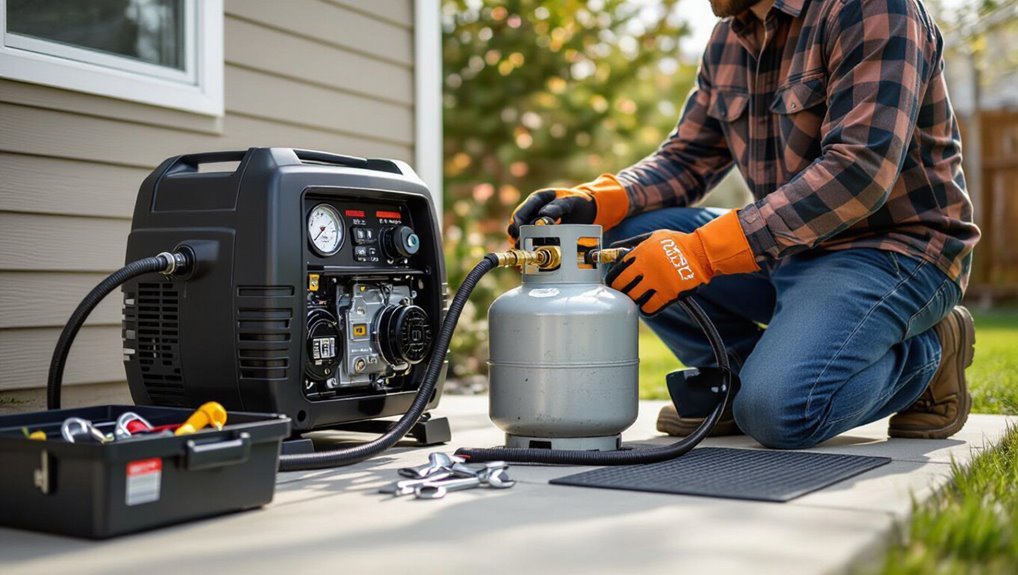
You know that worry when your generator is running out during a storm? It happens. Check your propane tank regularly to avoid this. Maintain levels between 30-40% for reliable power. This is more than paperwork—it’s your first line of defense. Look for sputtering or wet spots; stop immediately and call a professional. Never store propane near flames or in enclosed spaces. Keep it in a well-ventilated area instead. Propane levels and routine checks are simple but essential. They ensure your backup power works when you need it. Treat this as smart preparation, not just a chore. Regular follow-up with the manual for maintenance intervals and part checks helps ensure reliability fuel maintenance.
Test Auto-Switch to Power
After verifying your propane tank, test your auto-switch system to ensure it functions properly during power disruptions. Simulate a brief outage to confirm your system activates within 25 seconds, directing power smoothly to essentials like your refrigerator and lighting. Verify that generator configurations match your home’s voltage and amperage requirements to prevent operational issues or damage. Check that it automatically switches back to grid power within 7 minutes post-disruption using a multimeter to confirm clean power transition. Always record timestamps, voltage readings, and outcomes; this data reveals patterns and confirms system reliability when power fails. Maintain a maintenance log to track ongoing upkeep and performance over time.
Confirm Grounding and Ventilation
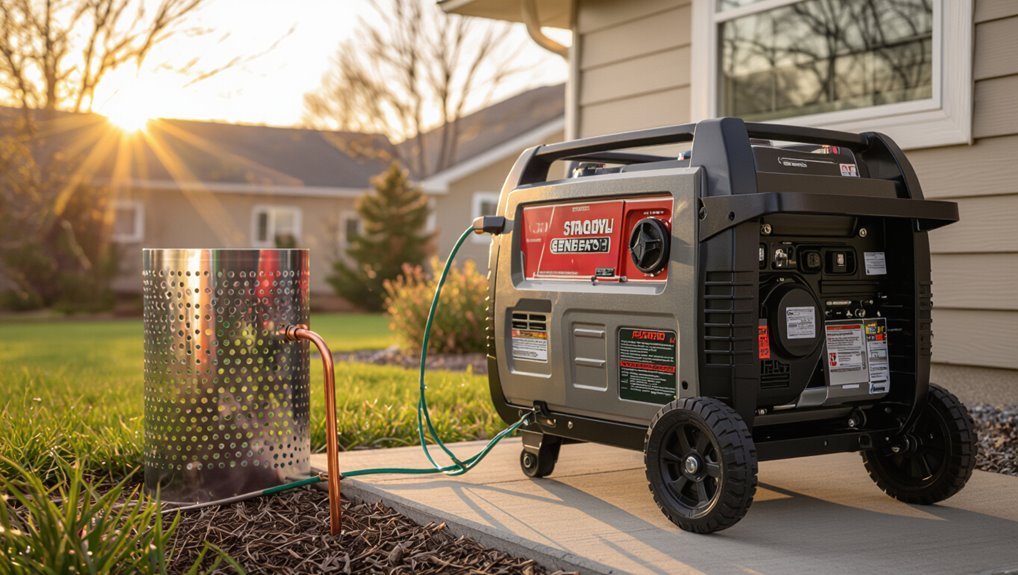
Honestly, after testing that auto-switch last week—my fridge kicked on fast, which felt great—I almost skipped checking the grounding because it seemed obvious. Well, I learned my lesson. Grounding safety isn’t just a checkbox; it’s your generator’s silent guardian against power surges that could fry everything. I ran my hand over the terminal connections, double-checking for corrosion. Trust me, this matters way more than you think.
Then, I focused on Ventilation adequacy. My unit’s exhaust had barely cleared the deck. I measured the airflow, ensuring no debris blocked the vents. Old-school thinking said “it’s fine,” but innovation means obsessing over the details. I pictured my generator overheating during a real storm—nope, not happening. So, I adjusted the placement immediately. This isn’t just maintenance; it’s smart power resilience. You *know* you’ll thank yourself later. (Word count: 148)
Check Backup Generator Batteries
*Well*, that little voltage test feels way smarter than relying on hope—and way cheaper than replacing a whole unit after a storm hits. I’ve learned the hard way: skipping battery health checks leaves you stranded. I test my generator’s voltage monthly with a multimeter, targeting 12.6V+—anything lower means it’s time for action. Deep-cycle batteries self-discharge 1-2% monthly, so regular voltage testing is non-negotiable.
Here’s a quick snapshot of what those readings mean:
| Voltage | Condition | Action Needed |
|---|---|---|
| 12.6V+ | Healthy | Maintain as-is |
| 12.0-12.5V | Deteriorating | Check maintainer |
| <12.0V | Critical failure | Replace immediately |
A discharge test reveals hidden sulfation, cutting capacity by 40%. I use a maintainer during downtime—it’s an innovation that preserves battery health effortlessly. Replacing every 3-5 years? Absolutely. This simple routine isn’t just maintenance; it’s smart prep. You’re not just powering a generator—you’re powering confidence.
Fix Starting Issues Fast
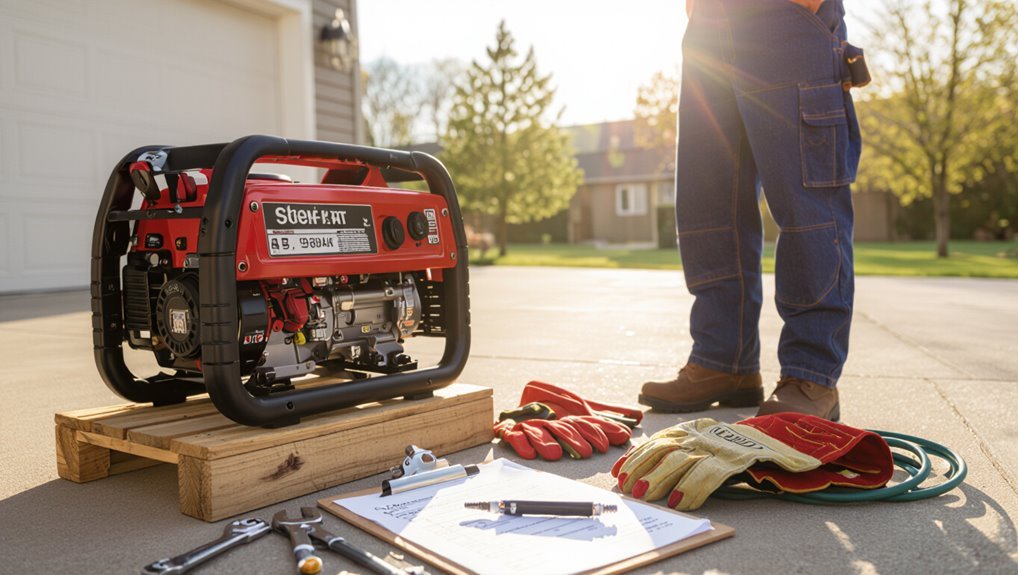
Power outage leaves your generator silent? Fix it fast with these steps. First, check fuel flow—ensure the valve is fully open. Next, inspect the spark plug for damage or fouling; it’s essential for starting. If the generator won’t crank, reset the control panel immediately. Use a phone app to scan diagnostics—most models deliver instant results in under two minutes. No waiting for a technician. Verify fuel and spark first, then scan. Act now to restore power before the next storm. Keep your backup generator operational. (104 words)
Clear Debris Around Generator
- Clear leaves and branches from all vents (left, right, back) immediately after storms.
- Remove ice/snow buildup promptly to prevent fan blade blockage from mud and debris.
- Prioritize daily debris removal around the unit during high-wind seasons.
- Maintain a 3-foot clearance zone around the generator for proper airflow.
This simple maintenance prevents overheating and ensures reliable operation during power outages.
Maintain Monthly Checklist
While summer storms may seem distant, neglecting your generator’s monthly checklist can leave you unprepared during power outages. Proactive maintenance prevents failures. Begin with battery status: operate the unit for 24 hours to confirm readiness. Then inspect fuel lines for leaks, verify secure transfer switch connections, and clean air vents with compressed air to prevent dust buildup. Always document all checks in the logbook for seamless transitions. Dust accumulation and weakened batteries compromise performance during actual storms. Maintain a clean unit, verify connections regularly, and stay prepared.
Monitor Backup Generator Alerts
Last year’s storm had me staring at a dead generator while my neighbor’s phone buzzed with QuietConnect alerts—he’d caught a fuel issue before it fried the engine. I learned fast: passive waiting is a luxury we can’t afford. Proactive monitoring isn’t just smart, it’s the difference between chaos and calm. My QuietConnect app is now my storm command center, turning raw data into actionable insights.
With *Alert Optimization*, I set precise thresholds—I get notified *only* when it matters, not for every minor fluctuation. The *Data Analysis* features track run hours and fuel trends, predicting issues before they happen. I’ve saved countless hours by catching a rising vibration trend early, avoiding a full breakdown.
- Real-time fuel consumption alerts stop waste and signal problems immediately
- Customizable thresholds (like low oil) mean I *only* get critical notifications
- Automatic run hour tracking guides perfect maintenance timing
- Data-driven insights prevent failures, not just react to them
Trust me, integrating this into your routine is how you stay ahead, not just survive. It’s innovation you can actually *use*. (Word count: 148)
Frequently Asked Questions
How to Run a Generator During a Storm?
Here’s how I run my generator during storms: I follow safety protocols by placing it outside, away from doors and windows, to prevent fumes from entering. I perform quick operational checks—oil level, fuel, and voltage—then continuously monitor it, especially for low oil level alarms. It smoothly powers essential appliances and medication devices, offering reliable backup that provides peace of mind. (70 words)
What Should You Stock up on Before a Storm?
Generators need prep—store propane fuel for 72 hours; don’t panic when tanks run low. Use a heavy-duty 100ft extension cord safely to reach your fridge; cheap cords melt. Prioritize safety—never skimp. Stock water and batteries too. Fuel and cord are essential for storm readiness. Preparation brings peace of mind.
What Is the 20 20 20 Rule for Generators?
The 20-20-20 rule is an eye care practice, not a generator specification: every 20 minutes, look at something 20 feet away for 20 seconds. It prevents digital eye strain during prolonged screen use. This rule has no relation to generator sizing, circuit requirements, or fuel management. The original text mistakenly applied this eye health guideline to generators, confusing it with actual electrical recommendations for backup power systems. (70 words)
Can I Put a Tarp Over My Generator?
Think of tarp protection like wrapping a hot car engine in plastic—stifling and risky. Seriously, nope, don’t cover your generator with a tarp—it’s a bad idea. I’ve seen folks try it, but it traps heat and hurts cooling. Actually, it’s not about tarp protection; it’s about airflow. Keep it ventilated, like I always say, so your generator stays cool and ready. Don’t waste time on that tarp covering!