
Generator Junkie — Ranked & Compared
Best Gas Powered Portable Generator: Ranked and Compared
Research updated November 2026 · Based on manufacturer specifications and verified Amazon owner reviews · By the Generator Junkie Editorial Team
The right gas powered portable generator can keep your home running during a blackout, power a job site through the week, or run your RV hookups on a long weekend — but pick the wrong wattage or the wrong generator type and you will either be underpowered at the worst moment or out of pocket on features you never needed. This guide compares four top-rated gas generators across a range of price points and use cases, from a $256 open-frame budget pick to a $999 dual-fuel home backup powerhouse with more than 9,100 owner reviews.
No products were purchased or tested hands-on. Every recommendation is built from manufacturer specifications in Amazon product listings and verified owner reviews. Research was checked in November 2026.
Why Trust This Guide?
The Generator Junkie editorial team compared these generators using manufacturer specifications sourced from Amazon product listings, together with verified owner review data, to surface meaningful differences across price tiers and use cases. No hands-on testing was conducted. Where a specification could not be confirmed from the manufacturer’s listing, it is noted as “confirm listing” rather than assumed or guessed — a wrong compatibility figure is the most damaging error a buying guide can make.
Selection criteria used in this comparison:
- Starting watts — does the output ceiling cover your biggest appliance load?
- Generator type — inverter (clean power, quieter, lighter) vs conventional (higher output per dollar, louder)
- Fuel flexibility — single-fuel gas only vs dual-fuel gas and propane
- Transfer switch readiness — required for safe, legal home circuit backup
- Outlet types — standard 120V, heavy-duty 240V, or RV-ready 30A
- Verified owner satisfaction — star rating and review volume as a proxy for real-world reliability
- Price-to-watt value — cost per starting watt across price tiers
Quick-Look Comparison: Gas Powered Portable Generators
Which generator handles your load? The table below puts all four models side by side on the specs that matter most. The Westinghouse holds the winner badge. Scroll right on a phone to see all columns.
Starting watt figures are manufacturer-stated from product listings. Live prices and ratings are served by Amazon via AAWP and may differ from values at time of research (Nov 2026).
Browse by Use Case
Use the filters to narrow by need or sort by price, rating, or power output. The winner appears first by default.


Westinghouse 12500 Watt Dual Fuel — Best Overall
12,500 starting watts, remote electric start, dual-fuel gas and propane, and transfer switch readiness — backed by over 9,100 owner reviews and a 4.7-star rating.
The most proven, most powerful gas generator in this comparison. The default recommendation for home backup and large job sites.
Best for: whole-home backup, extended outages, job sites, and buyers who want propane as a fuel fallback.

PowerSmart 4000 Watt Portable — Best Inverter Generator
Closed-frame inverter generator rated at 4,000 starting watts — produces clean sine-wave power that is safe for laptops, smart TVs, and sensitive home electronics.
The right choice when inverter power quality matters more than raw wattage. Mid-range price, strong owner feedback.
Best for: home use with sensitive electronics, tailgating, and camping where quiet and power quality count.

4400-Watts Open Frame Inverter — Best Budget Pick
Open-frame inverter design rated at 4,400 starting watts with an RV-ready 30A outlet and EPA compliance — the highest watt-per-dollar in this comparison at $256.47.
Most power for the money. The open frame trades noise and weather protection for a significantly lower price tag.
Best for: budget shoppers, RV owners, and emergency backup on a tighter budget.

Generac 3,300 Starting Watt — Premium Inverter Generator
Inverter generator from one of North America’s most established generator manufacturers. 3,300 starting watts with Generac’s brand support and dealer network behind it.
The premium brand option. You are paying for Generac’s manufacturer reputation and service access, not for raw wattage value.
Best for: Generac brand loyalists and buyers who place a high value on local dealer support.
In-Depth Reviews: Gas Powered Portable Generators
What do you actually get for your money? Here is a closer look at each model — covering who it is for, what to watch out for, and when you should choose something else instead.
1. PowerSmart 4000 Watt Portable Inverter Generator for Home Use, Gas Powered
What It Is
The PowerSmart 4000 Watt is a closed-frame portable inverter generator rated at 4,000 starting watts and marketed specifically for home use. As an inverter generator, it produces a clean sine-wave output — meaning the electricity it delivers is stable enough to power laptops, televisions, medical devices, and other electronics that conventional generators can damage over time due to harmonic distortion in their AC output. The closed-frame housing encloses the engine, which reduces noise output and provides a degree of weather protection compared to an open-frame design.
Critical Compatibility Specs
- Starting watts: 4,000W (per manufacturer listing)
- Generator type: Inverter — clean sine-wave output, safe for sensitive electronics
- Fuel: Gasoline only
- Transfer switch ready: Not confirmed in listing — verify before home circuit use
- Outlet types: Confirm in product listing — standard 120V outlets typical for this output class
- CARB/EPA compliance: Confirm in listing before purchasing for California use
Who It Is For
Homeowners who want a quieter, fuel-efficient inverter generator they can run outdoors to power household essentials during a power cut — specifically one that will not harm computers, smart TVs, routers, or voltage-sensitive appliances. It is a strong pick for campsite use as well, where noise is a concern and power draw is moderate.
Do Not Buy If
Do not buy this generator if you need to run a central air conditioning unit, a well pump, or multiple high-draw appliances simultaneously. At 4,000 starting watts, it handles essential home circuits well, but it will not cover the surge demand of whole-home backup. For that level of output, the Westinghouse 12500W is the appropriate choice. Also skip this model if propane flexibility matters — it runs on gasoline only, with no dual-fuel capability.
Performance and Owner Feedback
With a 4.5-star rating across 1,100 Amazon reviews, the PowerSmart 4000W has built a solid body of verified owner feedback. Owners commonly report easy startup, stable power delivery for household appliances, and noise levels consistent with an enclosed inverter design. As with any gas-powered generator, cold-weather performance depends on proper maintenance and fresh fuel — a point that surfaces in owner reviews as a general reminder rather than a product-specific defect.
Pros
- Clean inverter power — safe for laptops, TVs, and sensitive devices
- Closed-frame design — meaningfully quieter than open-frame conventional models
- Strong owner satisfaction: 4.5 stars from 1,100+ reviews
- Purpose-built for home use
- Mid-range price — more affordable than the Generac inverter option in this comparison
Cons
- Gasoline only — no propane fallback for extended fuel storage
- 4,000W starting is a ceiling for high-draw appliances
- Transfer switch compatibility not confirmed in listing — extra research required for home circuit use
Unique Selling Point
Clean inverter power at a mid-range price point, purpose-designed for home use — it sits between the budget open-frame and the premium Generac without compromising on output quality or noise profile.
Full Specs
| ASIN | B0H98TT1MN |
|---|---|
| Starting watts | 4,000W (per manufacturer listing) |
| Generator type | Inverter — clean sine-wave output |
| Fuel type | Gasoline |
| Frame type | Closed frame |
| Use case | Home use (per listing) |
| Amazon rating | 4.5 / 5 |
| Review count | 1,100+ (Amazon, Nov 2026) |
| Price at research | $409.99 |
Ready to check the current price and availability? Buy on Amazon
2. 4400-Watts Inverter Generator, Open Frame Generator Gas Powered
What It Is
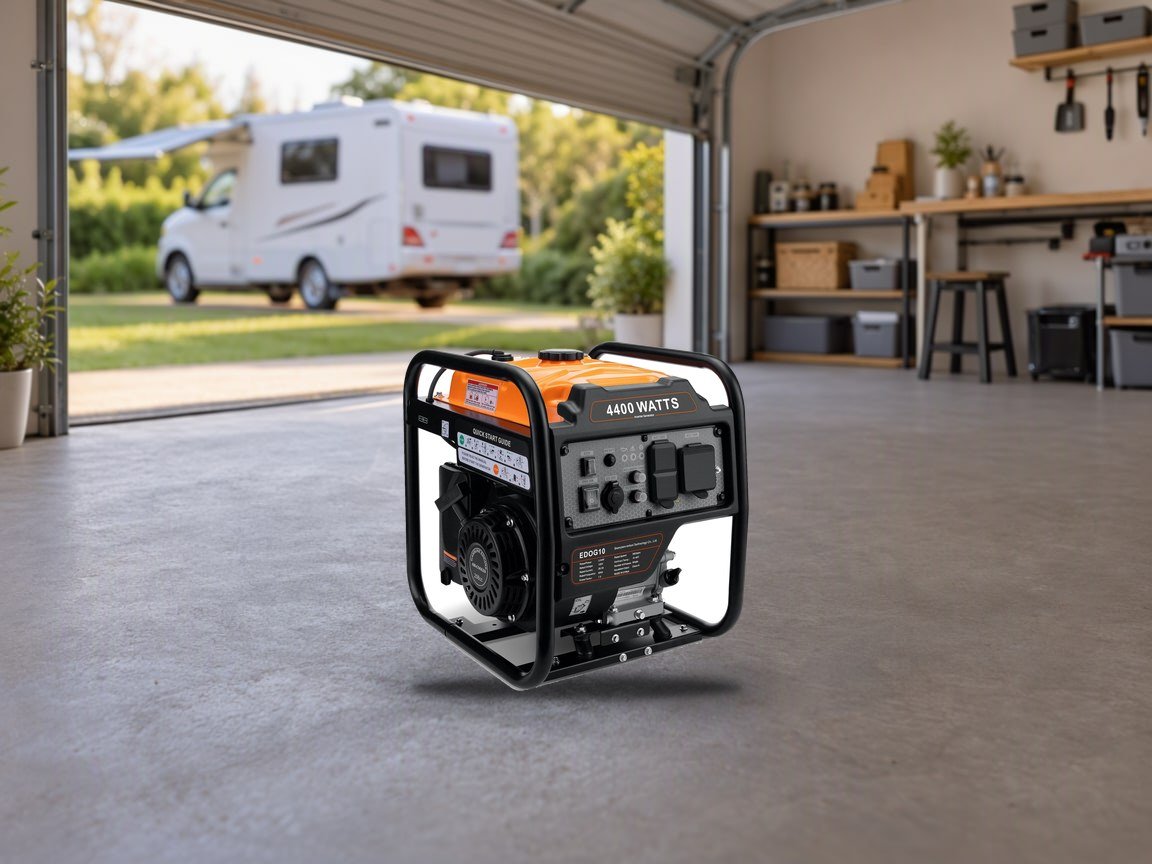
This open-frame inverter generator is rated at 4,400 starting watts, runs on gasoline, and is listed as EPA compliant. It is designed for emergency home backup and RV use, and includes a 30A RV-ready outlet — a convenience that many budget generators omit. The open-frame design exposes the engine and alternator rather than enclosing them in a housing shell. This keeps manufacturing cost low and simplifies air cooling, but results in more noise and less weather protection than a comparably powered closed-frame unit. If you are weighing up the differences between open-frame, closed-frame, and other generator configurations, our guide to different types of portable gas generators breaks each design down in practical terms.
Critical Compatibility Specs
- Starting watts: 4,400W (per manufacturer listing)
- Generator type: Inverter — clean sine-wave output, safe for sensitive electronics
- Fuel: Gasoline only
- RV outlet: 30A — compatible with standard RV shore power connectors (per listing)
- EPA compliant: Yes (per listing)
- CARB compliance: Not confirmed in listing — California buyers must verify separately before purchasing
- Transfer switch ready: Not confirmed in listing
Who It Is For
Budget-conscious shoppers who need reliable RV hookup capability or occasional emergency home backup and do not want to spend over $300. It is the highest watt-per-dollar option in this comparison (approximately $0.06 per starting watt at the listed price) and suits RV owners who want a 30A outlet without paying for a closed-frame enclosure they may not need.
Do Not Buy If
Do not buy this generator if you need to operate it in a noise-sensitive location, store it outdoors in wet conditions, or run it unattended near sleeping areas. Open-frame generators run considerably louder than their enclosed counterparts, and without a housing shell they are more exposed to rain splash and dust ingress. Also skip it if you are in California or another CARB-regulated state — confirm the CARB compliance status of this specific model before purchasing, as EPA compliance alone does not satisfy California’s requirements.
Performance and Owner Feedback
At 4.6 stars from 507 Amazon reviews, it performs well above expectations for its price tier. Owners frequently highlight the value for money and the convenience of the 30A RV outlet as standout positives. Noise level, typical of open-frame designs, is noted as an acknowledged trade-off in the review body rather than a defect.
Pros
- Lowest price in this comparison at $256.47
- Highest starting watt output among the inverter models compared here (4,400W)
- RV-ready 30A outlet included
- EPA compliant (per listing)
- Strong owner rating: 4.6 stars
Cons
- Open frame — louder and less weatherproof than closed-frame units
- CARB compliance not confirmed — California buyers must verify before purchasing
- No fuel flexibility — gasoline only
- Transfer switch compatibility not confirmed in listing
Unique Selling Point
The most affordable inverter generator in this comparison, with an RV-ready 30A outlet and the best watt-per-dollar ratio — the right call for buyers who want clean inverter power and RV capability without spending $400 or more.
Full Specs
| ASIN | B0FXLTM47G |
|---|---|
| Starting watts | 4,400W (per manufacturer listing) |
| Generator type | Inverter — open frame |
| Fuel type | Gasoline |
| RV outlet | 30A (per listing) |
| EPA compliance | Yes (per listing) |
| CARB compliance | Not confirmed — verify for CA use |
| Amazon rating | 4.6 / 5 |
| Review count | 507 (Amazon, Nov 2026) |
| Price at research | $256.47 |
See the current Amazon price: Buy on Amazon
3. Generac 3,300 Starting Watt Gas Powered Portable Inverter Generator
What It Is
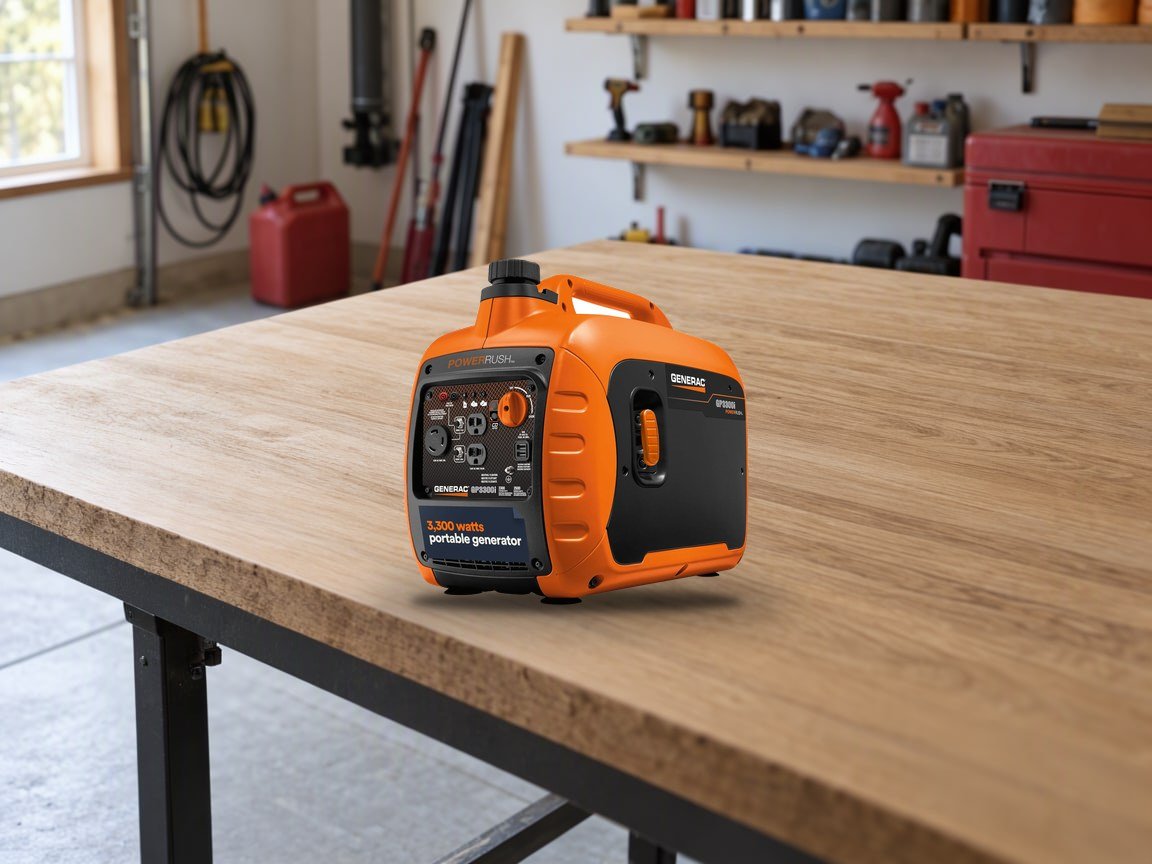
Generac is one of the most established generator manufacturers in North America, with decades of history across standby and portable power. This inverter model is rated at 3,300 starting watts, produces clean sine-wave output appropriate for sensitive electronics, and sits at $719 on Amazon — the second-highest price in this comparison. It is a newer listing with 189 reviews at the time of this research, which means its performance record is still accumulating. For buyers who have an existing relationship with the Generac brand — whether through a home standby generator or a local dealer — it represents a known quantity from a manufacturer with established support infrastructure.
Critical Compatibility Specs
- Starting watts: 3,300W (per manufacturer listing)
- Generator type: Inverter — clean sine-wave output, safe for sensitive electronics
- Fuel: Gasoline only
- Brand support: Generac dealer network available across much of North America
- Transfer switch ready: Not confirmed in listing — verify before home circuit use
- Outlet types: Confirm in product listing
Who It Is For
Buyers with a specific preference for the Generac brand — perhaps because they already own a Generac standby generator and want service consistency, or because they live in an area with strong Generac dealer coverage and want local access to parts and support. It may also suit buyers for whom brand warranty support and manufacturer reputation carry significant weight in purchasing decisions.
Do Not Buy If
Do not buy this generator if watt-per-dollar value is a priority. At $719 for 3,300 starting watts, it offers approximately $0.22 per starting watt — the least cost-efficient output ratio in this comparison. The PowerSmart 4000W delivers 700 more starting watts for $310 less. The Westinghouse 12500W offers nearly four times the output for $280 more. The Generac’s price premium is paid for brand reputation and service access, not raw output or feature set. If you do not have a specific reason to prioritize the Generac brand, the value case is difficult to justify against the other models here.
Performance and Owner Feedback
With 4.3 stars from 189 reviews, the Generac has the smallest and youngest review base in this comparison — expected for a newer listing. Owners report clean power output and satisfaction with Generac’s build quality. Because the review count is still modest, the rating will continue to evolve as more owners report in over time. Generac’s standing as an established manufacturer is a reasonable signal of build standards, but it does not substitute for a large body of verified owner experience.
Pros
- Generac brand — established manufacturer with North American dealer network
- Clean inverter power for sensitive electronics
- Positive early owner reviews at 4.3 stars
Cons
- $719 for 3,300W — least watt-per-dollar ratio in this comparison
- Fewest reviews (189) — least validated by owner experience at time of research
- Gasoline only — no propane option
- Lowest wattage ceiling among the four models compared here
Unique Selling Point
Generac brand backing and North American dealer network access — the right choice for buyers who value manufacturer service infrastructure over raw output value.
Full Specs
| ASIN | B0DD1R1CXC |
|---|---|
| Starting watts | 3,300W (per manufacturer listing) |
| Generator type | Inverter — clean sine-wave |
| Fuel type | Gasoline |
| Amazon rating | 4.3 / 5 |
| Review count | 189 (Amazon, Nov 2026) |
| Price at research | $719.00 |
Check current price and stock: Buy on Amazon
4. Westinghouse 12500 Watt Dual Fuel Home Backup Portable Generator — Best Overall
What It Is
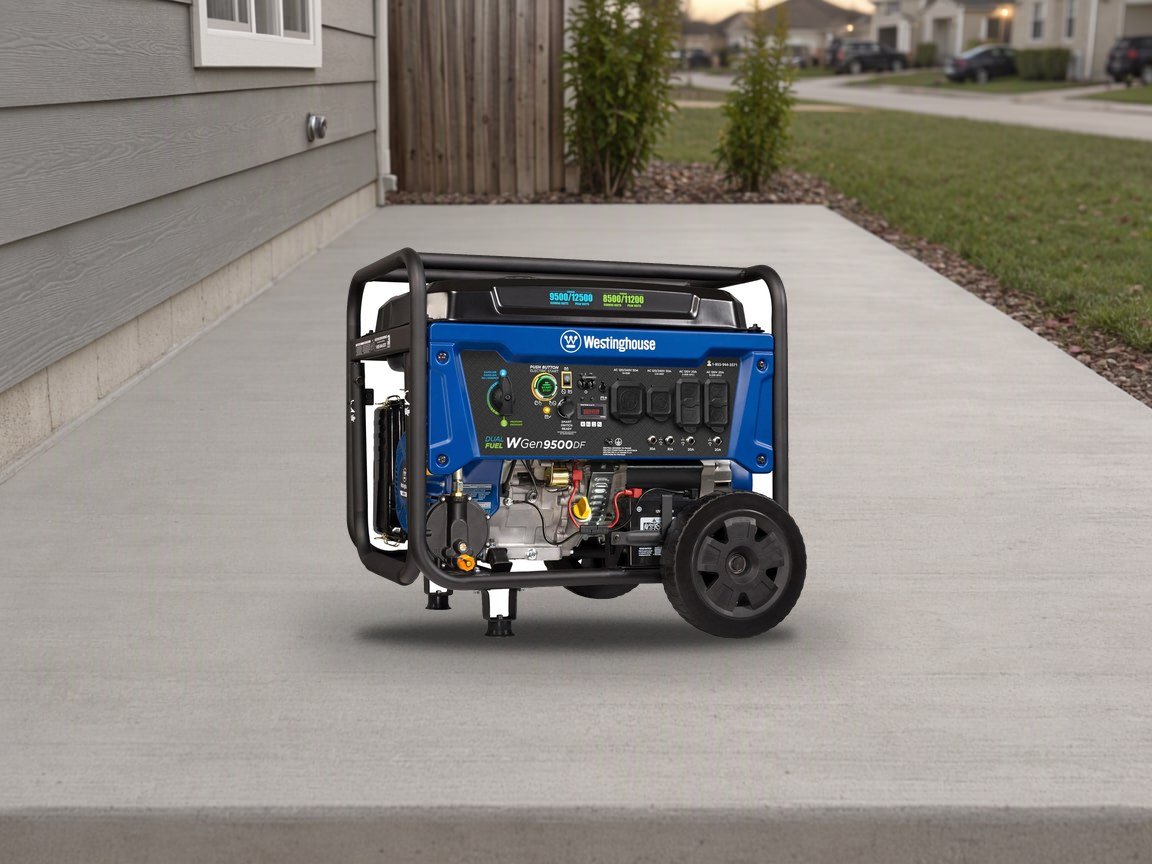
The Westinghouse 12500W is a high-capacity conventional portable generator rated at 12,500 starting watts, capable of running on either gasoline or propane. It features a remote electric start, is listed as transfer switch ready for safe connection to home circuits, and has accumulated more than 9,100 Amazon reviews at a 4.7-star rating — the most validated and highest-rated product in this comparison by a significant margin. This is the generator that earns the winner badge, and it earns it clearly.
For whole-home backup during extended outages, pairing this generator with a properly installed transfer switch is the safest way to power your home’s circuits without risk of back-feeding the utility grid — a legal and safety requirement that applies wherever a generator is connected to household wiring.
Critical Compatibility Specs
- Starting watts: 12,500W (per manufacturer listing)
- Generator type: Conventional — standard AC output, not inverter
- Fuel: Gasoline and propane — dual-fuel (per listing)
- Electric start: Remote electric start included (per listing)
- Transfer switch ready: Yes (per listing)
- ⚠ Not an inverter generator: Sensitive electronics such as laptops, medical equipment, and smart TVs may need a UPS or quality surge protector between the generator and the device. Conventional generators produce less stable AC output than inverter generators.
Who It Is For
Homeowners who experience multi-day outages and need to run central air conditioning, a refrigerator, sump pump, well pump, and essential lighting at the same time. Also well-suited to large job sites that need to power multiple heavy-draw tools simultaneously, and to buyers who want propane as a backup fuel option — particularly useful when gasoline supply is disrupted following a storm or regional emergency.
Do Not Buy If
Do not buy this generator if you primarily need clean inverter output for sensitive electronics, or if you need something genuinely portable and lightweight to carry by hand. Conventional generators of this wattage are heavy machines designed for semi-stationary use — they are not the same carry-and-go experience as a 4,000W inverter unit. If your main use case is camping, tailgating, or powering a few personal devices in an apartment, the PowerSmart 4000W Inverter is a better fit for the job. Similarly, if you need a machine that produces absolutely clean sine-wave power for medical equipment with strict power quality requirements, confirm compatibility with the equipment manufacturer before purchasing a conventional generator.
Performance and Owner Feedback
The Westinghouse 12500W has the largest and most mature review base in this comparison — 9,100+ reviews at 4.7 stars. This volume of verified owner feedback provides the strongest available real-world signal about reliability. Owners commonly highlight reliable startup, strong output under heavy home backup loads, the dual-fuel convenience when gasoline is scarce, and the remote electric start as a significant practical benefit during night-time and cold-weather outages. As with all gas generators, manufacturers specify outdoor operation with adequate clearance from windows, doors, and enclosed spaces.
Pros
- 12,500 starting watts — highest output in this comparison
- Dual-fuel gas and propane — flexibility when one supply is disrupted
- Remote electric start — no pull cord required for routine starts
- Transfer switch ready — safe, legal home backup wiring
- 4.7 stars from 9,100+ reviews — most proven product in this comparison
- Established Westinghouse brand
Cons
- Conventional generator — not ideal for directly powering sensitive electronics without surge protection
- Highest price in the comparison at $999
- Heavy — designed for semi-stationary deployment, not lightweight portability
- Requires outdoor operation with proper ventilation at all times
Unique Selling Point
The most proven gas powered portable generator in this comparison by a wide margin. 9,100+ owner reviews, dual-fuel flexibility, remote start, and confirmed transfer switch readiness make it the clear leader for home backup and high-demand power. This is the winner.
Full Specs
| ASIN | B07Q1DLKBG |
|---|---|
| Starting watts | 12,500W (per manufacturer listing) |
| Generator type | Conventional (dual-fuel) |
| Fuel type | Gasoline and propane |
| Electric start | Remote electric start (per listing) |
| Transfer switch ready | Yes (per listing) |
| Amazon rating | 4.7 / 5 |
| Review count | 9,100+ (Amazon, Nov 2026) |
| Price at research | $999.00 |
Check live pricing and confirm availability: Buy on Amazon
Side-by-Side: How These Gas Generators Stack Up
Numbers in a spec sheet only tell half the story. Here is a structured comparison across the dimensions that determine real-world suitability — based on manufacturer data and owner feedback.
| Dimension | PowerSmart 4000W | 4400W Open Frame | Generac 3300W | Westinghouse 12500W 🏆 |
|---|---|---|---|---|
| Starting Watts | 4,000W | 4,400W | 3,300W | 12,500W |
| Generator Type | Inverter | Inverter, open frame | Inverter | Conventional |
| Safe for Sensitive Electronics | Yes | Yes | Yes | Use surge protector |
| Fuel | Gas only | Gas only | Gas only | Gas + Propane |
| Electric Start | Confirm listing | Confirm listing | Confirm listing | Remote electric start |
| Transfer Switch Ready | Confirm listing | — | Confirm listing | Yes |
| RV-Ready 30A Outlet | Confirm listing | Yes | Confirm listing | Confirm listing |
| EPA Compliant | Confirm listing | Yes (per listing) | Confirm listing | Confirm listing |
| Owner Rating | 4.5 ★ | 4.6 ★ | 4.3 ★ | 4.7 ★ |
| Review Count | 1,100+ | 507 | 189 | 9,100+ |
| Price at Research | $409.99 | $256.47 | $719.00 | $999.00 |
| $/Starting Watt | ~$0.10 | ~$0.06 | ~$0.22 | ~$0.08 |
$/Starting Watt calculated from prices and starting watt figures in manufacturer listings (Nov 2026). Prices are live on Amazon and may differ from figures at time of research.
Living With a Gas Powered Portable Generator: What to Expect
Picking the right generator is step one. What does actually using, starting, fuelling, and maintaining one look like in practice?
Starting Up
All gas generators require a brief setup before the first use: checking and adding engine oil, filling the fuel tank, and running through the startup sequence in the owner’s manual. For the three inverter models in this comparison, the routine typically involves setting a choke, opening a fuel valve, and pulling a recoil cord or pressing an electric start button. The Westinghouse 12500W simplifies this considerably with its remote electric start, which owners frequently cite as a meaningful convenience — particularly during night-time outages or in cold weather when a pull cord demands more effort. Our step-by-step guide to starting a portable generator covers the full first-start and cold-start process for all common generator types.
Noise Level
Inverter generators — the PowerSmart 4000W, the 4400W Open Frame, and the Generac 3300W — are inherently quieter than conventional generators of comparable wattage. Their variable-speed engines throttle down under light loads, which reduces both noise and fuel consumption. Of the three inverter options here, the 4400W Open Frame is the loudest because there is no enclosure absorbing sound from the engine. The Westinghouse 12500W, as a high-capacity conventional generator, is the loudest model in this comparison — expected for a machine of that output class. If quiet operation is a primary requirement that rules out all four of these options, see dedicated quiet-focused inverter models in our separate guide.
Fuel Management
All four generators require fresh gasoline. Stale fuel — gasoline that has broken down from sitting unused — is one of the most common causes of generator startup failure, and it is the kind of problem that surfaces at exactly the wrong moment. Know how long gas stays usable in a generator before you store your machine for the season — the answer often surprises first-time owners. The Westinghouse 12500W’s propane capability offers a meaningful advantage here: propane stores stably in cylinders for far longer than gasoline, making it a reliable fuel source for a generator that may sit unused between outages for months at a time.
Ongoing Maintenance
Gas powered generators require periodic oil changes, air filter inspections, spark plug checks, and carburettor cleaning if the machine is stored with gasoline in the fuel system. The maintenance schedule varies by manufacturer and accumulated run hours, but most generators need an oil change after the initial break-in period and then at regular intervals thereafter. Our portable gas generator care and maintenance guide covers each of these tasks in full, including pre-storage preparation and what to do at the start of a new season.
Safety
All gas generators produce carbon monoxide and must be operated outdoors with adequate distance from windows, doors, and vents. Never run a gas generator inside a garage, shed, or any enclosed or semi-enclosed space — even with a door or window open. Modern generators often include automatic CO shutoff sensors; check the specification for your specific model to confirm whether this feature is present before purchase.
Which Gas Powered Portable Generator Is Right for Your Situation?
The Westinghouse 12500W is the default recommendation. The table below answers when a different model is the better call — and why.
| Your Situation | Best Pick | Why Deviate from the Winner |
|---|---|---|
| Default — whole-home backup, job site, or dual-fuel flexibility | 🏆 Westinghouse 12500W | 12,500W, remote start, transfer switch ready, gas + propane, 9,100+ verified reviews. This is the default. |
| You need clean inverter power for a laptop, smart TV, medical device, or other power-sensitive electronics | PowerSmart 4000W Inverter | Closed-frame inverter produces clean sine-wave output. The Westinghouse does not. If electronics quality matters, choose this instead. |
| Budget is under $300 or you need an RV-ready 30A outlet without overspending | 4400W Open Frame | $256.47, 30A RV outlet included, highest watt-per-dollar in the comparison. Trade-off is more noise and no weatherproof enclosure. |
| You want Generac brand backing and local North American dealer support | Generac 3300W | Established manufacturer with dealer network. Expect to pay a watt-per-dollar premium for the brand access. |
| Primarily camping, tailgating, or recreational use where noise and portability matter most | PowerSmart 4000W or 4400W Open Frame | Both are inverter generators — significantly quieter at partial load than the 12500W conventional. The PowerSmart is quieter; the Open Frame is cheaper. |
| Extended fuel storage is a concern (generator may sit unused for many months) | Westinghouse 12500W | Propane stores far longer than gasoline. The dual-fuel capability means the machine is ready when you need it even if the gasoline has degraded. |
Alternatives Worth a Look
None of these four models the right fit? Here are other directions to explore.
-
Compact inverter generators under 2,000W: If you need ultra-light portability for camping or van life, smaller inverter generators in the 1,000–2,000W range have a significantly lower weight and noise profile. The Amazon category has a wide selection:
SaleBestseller No. 1

- Tri-fuel or dual-fuel generators at lower wattage: If you want propane flexibility without paying for 12,500W of output, dual-fuel options exist across a range of wattages. Our guide to gas, propane, and natural gas portable generators compares the fuel types and explains which situations favour each.
- Non-gas alternatives: If gasoline storage, emissions, or indoor-safe operation is a priority, solar generators, battery stations, and propane-only units address those needs. Our guide to the best non-gas generators for home use in 2026 covers the leading options.
- Generators for welding: Running a welder from a portable generator requires specific outlet types and wattage headroom. Our portable welder generator guide explains what to look for and which configurations work.


Gas Powered Portable Generator Prices: What Each Tier Gets You
How much should you spend? The honest answer is: spend to your actual wattage need, not aspirationally up and not penny-pincingly short.
- Under $300 — open-frame inverter generators, 2,000–4,400W: Good for occasional emergency backup, campsite use, and RV hookup. The 4400W Open Frame at $256.47 sits here and delivers the best watt-per-dollar in this comparison. Trade-offs are noise and no weatherproof housing.
- $300–$500 — closed-frame inverter generators, 3,500–5,000W: Better noise control, better weatherproofing, cleaner power output. The PowerSmart 4000W at $409.99 is the representative option in this comparison. This tier suits home use where power quality and reasonable quiet are both priorities.
- $500–$800 — premium inverter generators: This is brand-premium territory — Generac, Honda, and similar. The Generac 3300W at $719 falls here. You are largely paying for manufacturer reputation and service infrastructure rather than a step up in raw wattage or features over the mid-tier.
- $800–$1,200 — high-capacity conventional generators for home backup: The Westinghouse 12500W at $999 represents the top of this comparison’s range. At this tier you get dramatically more starting watts, dual-fuel flexibility, transfer switch readiness, and electric start. This is the right spend if you are buying for whole-home outage protection.
Gas generator prices in the US tend to spike around hurricane season — typically August through October — when demand surges and stock tightens across the category. If you are purchasing for storm or outage preparedness, buying before that window typically means better pricing and more reliable availability. For a detailed look at what each generator type actually costs to run per hour of use, our portable generator fuel cost comparison covers gas, propane, and diesel costs at different load levels so you can calculate your real running cost before you buy.
The Gas Portable Generator Market in 2026
These are physical hardware products rather than software services, so there are no firmware roadmaps or rolling feature updates. What is worth noting in 2026 is that open-frame inverter generators have become available at significantly lower price points than even a few years ago — the 4400W Open Frame at $256.47 in this comparison illustrates that trend. The entry price for inverter technology has come down, narrowing the gap between budget and mid-tier inverter options.
Dual-fuel capability continues to be a differentiator at the conventional generator tier. As a category feature, it is now expected rather than exceptional at the $900–$1,200 price point, and the Westinghouse 12500W exemplifies why: propane storage stability makes a dual-fuel machine meaningfully more reliable as an emergency backup compared to a gas-only equivalent.
EPA emission standards continue to shape what models are sold legally in the US market. California has its own CARB requirements that go beyond the federal EPA standard — something California buyers must verify independently for any generator they consider purchasing. The 4400W Open Frame is listed EPA compliant; its CARB status should be confirmed before purchase for California use.
Final Verdict: The Best Gas Powered Portable Generator
The Westinghouse 12500 Watt Dual Fuel wins this comparison clearly and without close competition. Its 9,100+ Amazon reviews and 4.7-star rating represent the strongest validation in this group by an order of magnitude — no other product here comes close on verified owner experience. For home backup use, its combination of 12,500 starting watts, remote electric start, dual-fuel gas and propane flexibility, and confirmed transfer switch readiness puts it in a different class from the inverter models. At $999 it is the most expensive option in this comparison, but the value case is straightforward: more watts, more features, more proven in the field, and roughly $0.08 per starting watt — a better ratio than the Generac and competitive with the PowerSmart.
Choose the PowerSmart 4000W Inverter if clean sine-wave power for sensitive electronics is the primary need and 4,000W covers your load. Choose the 4400W Open Frame if budget is under $300 and you need an RV hookup. Choose the Generac 3300W if the Generac brand and dealer network are specifically what you are after.
Buy on AmazonDecision Flow: Which Gas Powered Portable Generator Should You Buy?
Work through the questions below to confirm which model fits your situation.
Do you need to power your whole home — or multiple large appliances simultaneously — during a power outage?
Will you be powering laptops, smart televisions, medical equipment, or other electronics that require clean, stable power quality?
Is your budget under $300, or do you specifically need an RV-ready 30A outlet?
Evidence Vault: Sources and Methodology
How These Generators Were Compared
This article is a research comparison of manufacturer specifications and verified Amazon owner reviews. No products were purchased, borrowed, or tested hands-on by the Generator Junkie editorial team. All wattage figures, fuel type claims, outlet specifications, and feature descriptions are sourced from manufacturer product listings on Amazon as they appeared in November 2026. Where a specification could not be confirmed from the listing — such as transfer switch compatibility on models where it is not explicitly stated — it is noted as “confirm listing” rather than assumed. This matters most for compatibility decisions: a buyer who chooses a generator based on a guessed spec and then finds it incompatible with their transfer switch has been poorly served.
Data Sources
- Product titles, feature descriptions, and listing specifications: Amazon product pages, accessed November 2026
- Owner ratings and review counts: Amazon verified review data, November 2026
- Price figures: Amazon listing prices at time of research, November 2026 — live prices served by AAWP and may differ
- Starting watt figures: Manufacturer-stated values from product titles and listing data
- $/Starting Watt calculations: Derived from listing price and starting watt figures above — Generator Junkie calculation, Nov 2026
Editorial Photography
Editorial images in this article are generated from descriptive prompts based on the product category, use case, and context. AAWP product thumbnails, served directly from Amazon, are the authoritative product images for each reviewed generator.

Recommendation Review Schedule
This comparison was last checked in November 2026. We recommend re-checking if more than 90 days have elapsed since publication, if any listed product is discontinued or substantially revised, or if significant new owner review data materially alters the star ratings compared to those recorded here.
What to Do Next
Once you have chosen a generator, the accessories you pair with it — from heavy-gauge extension cords and a transfer switch kit to a protective cover and fuel stabiliser — make a material difference to both usability and longevity. Our roundup of essential portable generator accessories covers the must-haves for each use case so you are ready to run when the power goes out.