
BLUETTI EB3A Portable Power Station Review: Compact Backup Power
The BLUETTI EB3A is a small portable power station built around a 268Wh LiFePO4 battery and a 600W pure sine wave inverter. It’s aimed at people who want to keep phones, laptops, lights and small appliances running during a short outage or a weekend away, without the noise and fumes of a gas generator.
This review is based on BLUETTI’s published specifications and owner reviews; we haven’t tested the EB3A ourselves. Here’s what it offers, where it falls short and who it suits.
Design and Portability
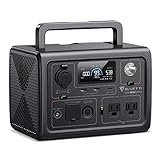
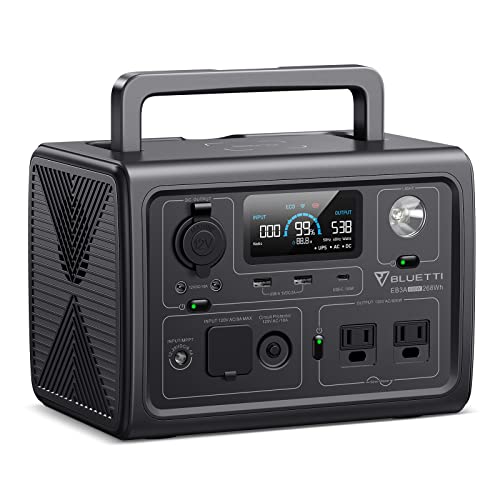
At about 10.1 pounds and 10.0 × 7.1 × 7.2 inches, the EB3A is easy to carry with one hand using its built-in handle. BLUETTI lists nine outputs in total, including two AC outlets, a 100W USB-C port, a 12V car outlet, 12V DC barrel ports and a 15W wireless charging pad on top. You can monitor and control it from the BLUETTI app over Bluetooth.
Power and Capacity
The 600W inverter (1,200W surge) produces pure sine wave power, which is what sensitive electronics such as laptops and CPAP machines need. BLUETTI says it can handle small appliances like a compact blender, a mini rice cooker or a small refrigerator.
The limiting factor is capacity. 268Wh is enough to recharge phones and a laptop several times or keep a small fan or lights going through a night, but it won’t run high-draw appliances for long: a 600W load would drain it in well under an hour. As a rough guide, divide 268Wh by a device’s wattage and allow for some conversion loss. A 60W laptop charger, for example, would run for around three to four hours.
The LiFePO4 battery is rated for 2,500+ cycles to 80% of its original capacity, so it should last for years of regular use.
Charging
Charging is one of the EB3A’s strengths. On AC power it draws up to 268W in standard mode or 350W in turbo mode; BLUETTI quotes about an hour for a full charge in turbo mode and roughly 1.5 to 2 hours in standard mode. It also accepts up to 200W of solar input (12–28V), and you can combine AC and solar for up to 430W. With a 200W BLUETTI panel in good sun, the company estimates a full charge in a little under two hours.
Specifications
| Specification | Details |
|---|---|
| Battery | 268Wh LiFePO4 |
| AC output | 600W pure sine wave (1,200W surge), 2 outlets |
| AC charging | 268W (standard) / 350W (turbo) |
| Solar input | 200W max, 12–28V, 8.5A |
| Max combined input | 430W (AC + solar) |
| USB-C | 100W |
| DC output | 12V/10A |
| Wireless charging | 15W |
| Battery life | 2,500+ cycles to 80% |
| Weight | 10.1 lbs |
| Dimensions | 10.0 × 7.1 × 7.2 in |
| App | BLUETTI app via Bluetooth |
Specifications from BLUETTI’s product pages.
Pros
- Light and compact at about 10 pounds
- Fast AC charging, about an hour in turbo mode
- LiFePO4 battery rated for 2,500+ cycles
- Pure sine wave output for sensitive electronics
- 100W USB-C port and a wireless charging pad
- App monitoring over Bluetooth
Cons
- 268Wh capacity runs out quickly with high-draw appliances
- 600W limit rules out most heaters, hair dryers and full-size kettles
- Only two AC outlets
- Solar input is capped at 200W

What Owners Say
Owner reviews on BLUETTI’s own store are overwhelmingly positive, with most buyers giving it five stars. Owners most often mention its compact size, light weight and fast charging. The main limitation to keep in mind is its capacity.
Who Should Buy the EB3A?
First-time buyers: The EB3A is an easy entry point into portable power stations. If you want to keep devices charged during a day trip or a short outage, it’s a good fit.
Campers and occasional users: If your needs fit within 268Wh, such as phones, a laptop, lights and a small fan, you get fast charging and plenty of outputs in a package that’s easy to carry.
Heavier users: If you need to run several high-draw devices or power things for days off-grid, a larger power station will serve you better. The EB3A can still work well as a grab-and-go second unit.
The Verdict
The BLUETTI EB3A balances capacity, charging speed and portability well for its size. It won’t replace a generator for a whole home, but for keeping essentials charged during short outages and trips, it’s a strong option.
Pingback: Top Picks for Solar Generators in Outages - Generator Junkie
Pingback: Why Choose Solar Over Gas Generators? - Generator Junkie