Rain on a generator is dangerous.
Water can cause electric shock or cause immediate internal damage.
Exposure to moisture can ruin a generator, leading to costly repairs or replacement.
Short circuits occur without warning and are not weather-dependent.
Why You Shouldn’t Run a Generator in the Rain
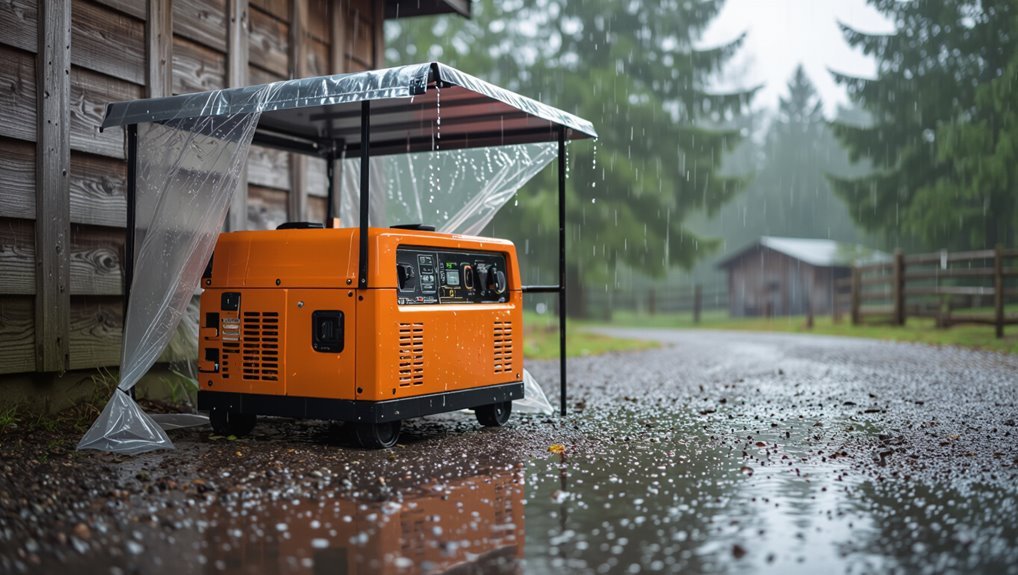
Running a generator in the rain is dangerously irresponsible. Water conducts electricity, creating immediate electrocution risks and internal water damage. Raindrops are not harmless—they saturate components, accelerate corrosion, and cause short circuits rapidly. Even light rain can trigger catastrophic failure, leading to expensive repairs and hazardous situations. Mixing fuel with moisture creates a significant explosion hazard. Modern generators have safety features, but these cannot overcome the fundamental risks of water exposure. Proper placement under a sturdy canopy isn’t optional—it’s a critical safety measure for reliable operation. Never risk your safety and equipment for a temporary power need. Protect your generator, protect yourself. Even after rain exposure, following proper storage and maintenance routines can help preserve generator health.
What Happens If Your Generator Gets Wet?
Water exposure poses significant risks to generators. Even light rain can cause instant short circuits, leading to immediate shutdown and permanent damage. Moisture accelerates internal corrosion, silently degrading engine components. Electrical panels and wiring are particularly vulnerable, often requiring full replacement after water intrusion. Submerged fuel can become contaminated, compromising performance. Contact during operation creates a severe shock hazard. Ignoring weather conditions transforms backup power into a liability. Always ensure generators operate in dry, sheltered areas. Proper protection prevents costly failures and safety risks. Additionally, ensure proper grounding is in place to prevent electrical hazards.
Emergency Steps: Fixing a Rain-Damaged Generator
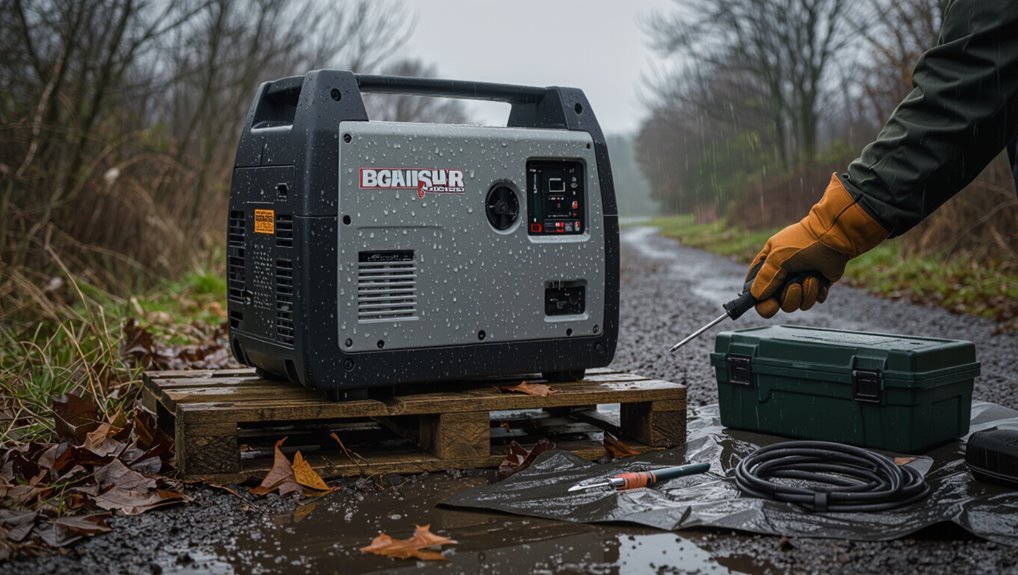
I’ve seen it happen more times than I care to admit—your backup generator suddenly drowns in a sudden downpour, and panic sets in fast. First, immediately shut off the main breaker—no exceptions. I’ve seen people try to power through it, but that risks a nasty shock or worse. Next, carefully inspect for water near the motor, panel, and wires—don’t just eyeball it; get close. Disconnect every cable, secure them, and really let the unit air dry for 24+ hours in a breezy spot. No shortcuts here; moisture loves to linger. Then, prioritize professional repair. I’ll be upfront: attempting generator troubleshooting yourself? Risky. Certified techs handle hidden damage safely. My own generator once sat soaking after a storm—repair procedures felt overwhelming until I called experts. Trust me, it’s smarter than DIY. Don’t skip steps. Your safety’s worth every minute. (148 words)
Do Generators Have Rainproof Sockets?
Most generators do not inherently come with rainproof sockets; this feature is model-specific and not standard. Rain exposure demands careful socket selection, as IP ratings dictate protection levels. For instance, an IP54 socket (found on some models) blocks dust and splashes, significantly better than basic IP44 that only handles general splashing. IP20 sockets are unsafe for rain—they invite short circuits. Choosing the right rating based on your environment isn’t optional; it directly affects safety and longevity. Innovation means prioritizing precise protection, not assuming “rainproof” is built-in. Getting caught in rain with inadequate sockets risks damage—always verify the IP rating before purchasing. (148 words)
Best Canopy Covers to Prevent Rain Damage
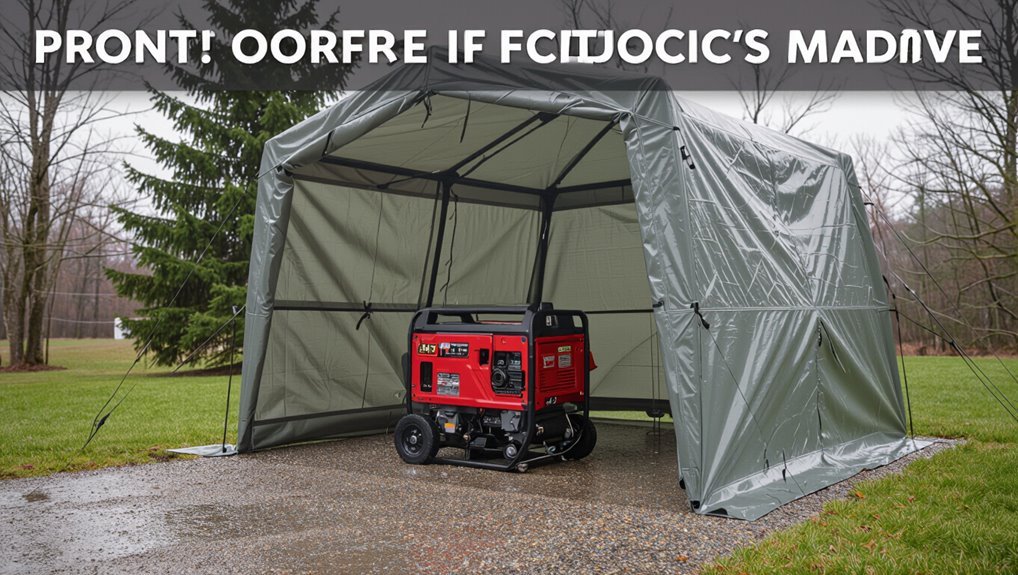
Let’s be clear—nothing causes generator failure faster than exposure to heavy rain, and I’ve seen many units fail under such conditions. Proper shelter protection is a straightforward solution. After extensive testing, GenTent’s marine-grade synthetic canopy stands out as the top choice. Its superior weather resistance handles heavy storms effectively, while the design ensures essential airflow to prevent overheating. Here’s why it excels:
Heavy rain kills generators? GenTent’s marine canopy blocks storms while keeping airflow perfect.
- Marine-grade synthetic fabric provides complete rain protection, eliminating drips and leaks.
- Intelligent ventilation system prevents exhaust gas and heat buildup during extended use.
- NFPA-rated fiberglass frame maintains stability even in strong winds.
This is the only cover I rely on to keep my generator running reliably during storms. Investing in quality now prevents costly downtime later. It’s truly worth the peace of mind. (148 words)
How to Check for Water Inside Your Generator
If you see any water, shut down immediately and disconnect the battery. Do not delay—the spark could cause a serious electrical fire. This quick check prevents costly damage. Avoid letting wet conditions compromise your power backup.
Will IP54 Sockets Protect Your Generator?
IP54 resists splashes from any direction (like light rain or splashes), not water jets or steady downpours.
The “5” blocks dust ingress, while the “4” only repels splashes—meaning heavy rain or pooling water can still enter.
For true storm protection, you need IP65-rated enclosures: fully dust-tight and jet-resistant to water from any angle.
Never rely on IP54 during heavy rain—its design limits make it unreliable for actual weather conditions. Protect your generator investment and prevent costly internal damage from water exposure. (148 words)
Final Safety Check Before Restarting
| Check | What to Scan | Why It Matters |
|---|---|---|
| Electrical Paths | Wet wires, corrosion | Prevents shorts and electrical shock |
| Ground Connection | Tight terminal, no rust | Ensures safety protocol compliance |
| Fuel & Oil | Level below max, correct grade | Prevents spills and engine stress |
| Exhaust Flow | Clear of debris, no blockage | Prevents CO buildup and fire hazards |
Verification is required. All checks must be confirmed prior to restart. Preventive checks avoid costly repairs.
Frequently Asked Questions
What Happens if My Generator Gets Wet?
Water damage causes immediate electrical failure, short circuits, and sparks. Moisture rapidly corrodes internal components, and standing water creates serious shock hazards. Never operate a generator in rain without proper weather protection. Prioritizing safety is essential—always ensure it remains dry and protected during use.
Can You Run a Backup Generator in the Rain?
Generators can operate in rain if properly covered with a weatherproof canopy or enclosure designed for generator use. Without such protection, rainwater can cause electric shock, damage internal components, and void the warranty. Never operate an unprotected generator in wet conditions—this risks serious harm during power outages. Always maintain dry operation for safety and equipment longevity. (70 words)
Are Backup Generators Waterproof?
Truth is, most backup generators aren’t waterproof—actually, they’re just splash-proof with IP43 ratings. Rain might not cause immediate damage, but water exposure risks damage if soaked. I’ve seen people skip covers, which is a serious electrical safety hazard. Always use a proper weatherproof cover and seal it tightly. Smart maintenance prevents costly emergency repairs.
Do Generators Get Damaged by Rain?
Exposure to rain can cause water damage, internal corrosion, and power surges in generators. Manufacturers strongly recommend using protective covers to prevent these issues. Leaving a generator exposed risks short circuits and costly repairs. Always protect your generator from rain and moisture to ensure reliable operation and extend its lifespan.